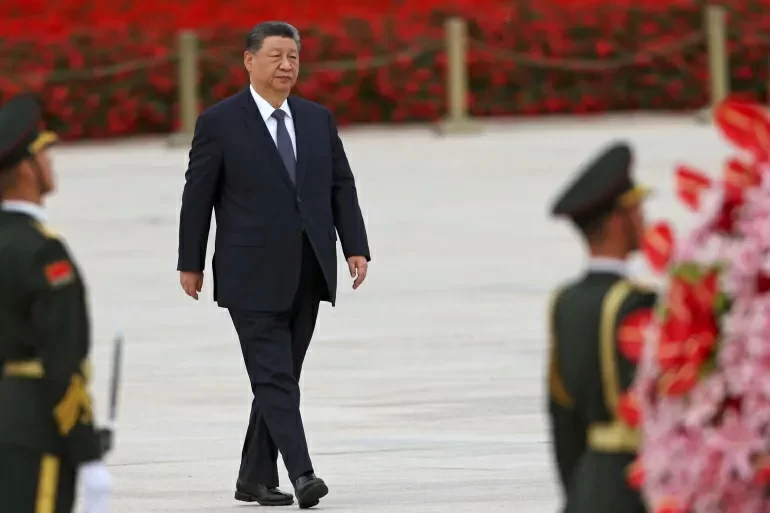
On October 26, China’s top political leadership kicked off the fifth plenary session of the 20th Central Committee of the Communist Party of China (CPC), a four-day closed-door gathering running through October 29 that centers on bolstering internal party discipline, strengthening top-down oversight of cadres, and ensuring unwavering implementation of central leadership directives under President Xi Jinping. Attended by roughly 300 full Central Committee members, the high-stakes meeting is being closely watched by global observers for signals on China’s near-term political trajectory, adjustments to senior leadership rosters, and preparations for the anticipated 2027 CPC National Congress, where a major top leadership reshuffle is scheduled to take place. As outlined by Chinese state news agency Xinhua, President Xi delivered a work report on behalf of the Political Bureau at the session’s opening, and presented a draft resolution focused on deepening internal party supervision and improving intra-party governance. The policy document is framed to boost administrative efficiency, curb complacency among party members, and sustain the nationwide anti-corruption campaign that Xi first launched in 2012. Over the past 12 years, that sweeping anti-graft drive has targeted thousands of officials, ranging from mid-level local cadres to high-ranking party figures and senior military commanders, which the CPC leadership frames as a critical safeguard to preserve the party’s public credibility and operational integrity. Independent analysts note, however, that these ongoing disciplinary measures have also consolidated Xi’s political authority and narrowed space for dissenting views within the sprawling 90-million-plus party apparatus. In public remarks released by state media ahead of the plenum, Xi repeatedly warned against so-called “fake loyalty” among officials: cadres who appear to comply with central mandates on the surface but quietly undermine implementation, prioritize personal factional or financial interests over national policy goals, or drag their feet on delivering centrally set development targets. The plenum’s agenda extends far beyond routine anti-corruption enforcement, as the leadership aims to roll out stricter accountability mechanisms to penalize officials who fail to fully execute central directives. Analysts anticipate upcoming measures will include tightened oversight of public spending and large-scale infrastructure projects, expanded deployment of digital monitoring tools to detect administrative misconduct, and harsher disciplinary penalties for senior leaders who do not align with the central government’s policy priorities. The ongoing internal cleanup campaign has also rippled through China’s military ranks, with a string of high-ranking People’s Liberation Army officials removed from their posts or placed under formal investigation in recent months. This has placed the composition of the Central Military Commission, the CPC’s top national defense governing body, under intense external scrutiny, with potential leadership adjustments to be discussed during the closed-door sessions, though no immediate public announcements of new appointments are guaranteed. Reports ahead of the plenum also indicate that a notable number of sitting Central Committee members have been removed from their positions or placed under ongoing investigation as part of the disciplinary push, leading analysts to project a historically low attendance rate that could mark the lowest turnout for a Central Committee plenum since the death of CPC founder Mao Zedong in 1976. No official attendance figures have been released to date. The timing of the plenum, held roughly 12 months ahead of the 2027 CPC National Congress, is designed to lay institutional groundwork for Xi’s widely anticipated bid to secure a third term as the party’s core leader, though major formal personnel reshuffles are expected to be deferred until the national congress convenes. Unlike most fifth plenary sessions of past Central Committee terms, which are traditionally used to outline core priorities for the upcoming five-year national development blueprint, the 2025 gathering is focused exclusively on internal party governance, as recommendations for the 2026-2030 14th Five-Year Plan were already finalized during the fourth plenary session held a month earlier. The closed-door political deliberations are unfolding against a backdrop of persistent economic headwinds for China, including sluggish domestic consumer demand, a years-long liquidity crisis in the residential property sector, and strained trade and diplomatic relations with the United States that continue to dampen growth outlooks. The leadership now faces a dual challenge: enforcing strict top-down policy compliance across all levels of government, while mitigating administrative disruptions caused by the large number of officials who have been sidelined or placed under investigation in the ongoing disciplinary campaign. A formal closing statement and full details of the draft internal governance resolution are scheduled to be released to the public once the four-day plenum concludes on October 29.