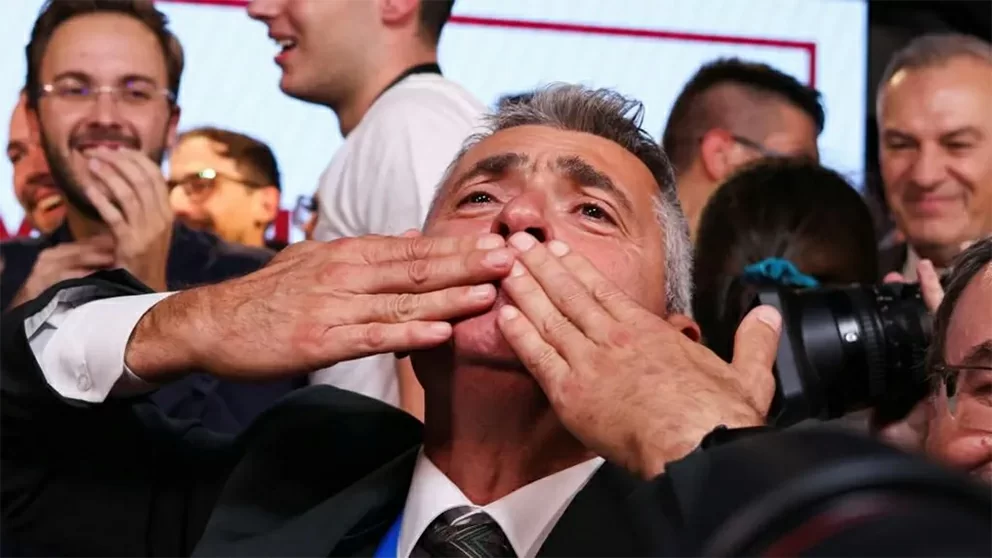
On October 25, Serbian long-time political strongman Aleksandar Vučić publicly conceded his Serbian Progressive Party (SNS)’s loss in the country’s snap parliamentary elections, marking a seismic political shift after more than a decade of unbroken SNS dominance over national governance. Addressing supporters at his party’s Belgrade headquarters, Vučić confirmed that preliminary vote tallies projected the grassroots, student-founded opposition bloc “Student List” would capture between 135 and 140 of the 250 total parliamentary seats, leaving his own faction with roughly 105 mandates, well short of a governing majority. Official final results are still pending formal verification from Serbia’s national election commission. The announcement triggered spontaneous, widespread celebrations across Serbia: jubilant Student List supporters flooded the streets of capital Belgrade, sounding car horns and setting off fireworks, while festivities also erupted in Novi Sad, the northern city where the mass protest movement that spawned the opposition party first took root. The watershed electoral contest was the culmination of nearly two years of sustained nationwide demonstrations that ignited in November 2024, after a catastrophic overpass collapse at Novi Sad’s central railway station killed 16 people. The disaster sparked widespread public fury, with citizens decrying systemic corruption, gross official negligence, and unenforced oversight for public infrastructure projects. What began as student-led demands for full transparency into the collapse, public release of all related official documents, and legal accountability for responsible officials quickly snowballed into a broad cross-society movement that drew in thousands of voters unaffiliated with traditional opposition parties. The movement ultimately decided to contest national elections with a diverse, cross-sectoral candidate roster featuring medical professionals, university academics, actors, and other public figures, running on a platform centered on eradicating systemic corruption, strengthening independent rule of law, and ending undue political interference in state-owned enterprises and the national public broadcaster. Vučić and the SNS have repeatedly denied all longstanding allegations of corruption against their administration. The 2026 snap elections saw record-breaking voter turnout of roughly 68% according to preliminary independent observer data, far exceeding participation rates for the December 2023 parliamentary vote, with long lines reported at polling stations both inside Serbia and for diaspora voters abroad. Independent election monitoring group CeSID also documented more than 300 separate reports of potential electoral irregularities, including voter intimidation, photographed completed ballots, group coordinated voting, and alleged vote buying, though the organization emphasized these uninvestigated claims do not on their own invalidate the overall election results. Tight security cordons were deployed around the national election commission building in Belgrade in anticipation of post-vote unrest. The election outcome upends Vučić’s carefully laid political plans: barred by the Serbian constitution from running for a third presidential term after holding the office since 2017, he had called the snap elections in a bid to shift to the prime minister’s post and retain de facto control of national governance. The Student List, led by prominent cardiologist Ilija Srdanović as its top ballot candidate, now faces the immediate task of negotiating a new governing cabinet and selecting a prime ministerial nominee, with Srdanović’s status as the movement’s public face not guaranteeing him the top executive post. Analysts note the historic electoral win does not erase Serbia’s deep-seated institutional challenges: the new parliamentary majority will face immediate pressure to deliver on its campaign promises of anti-corruption enforcement, independent institutional reform, and expanded media freedom. Foreign policy also remains a high-stakes unresolved priority for the incoming government: Serbia holds official European Union candidate status, but has maintained close diplomatic and economic ties with Russia and refused to implement Western sanctions against Moscow over the ongoing conflict in Ukraine, even as EU officials have repeatedly made rule of law and democratic reform benchmarks a precondition for advancing accession talks. The coming months will reveal whether the broad, disparate protest coalition that propelled Student List to power can consolidate into a stable, functional government, and what long-term policy direction Serbia will pursue under its new leadership.