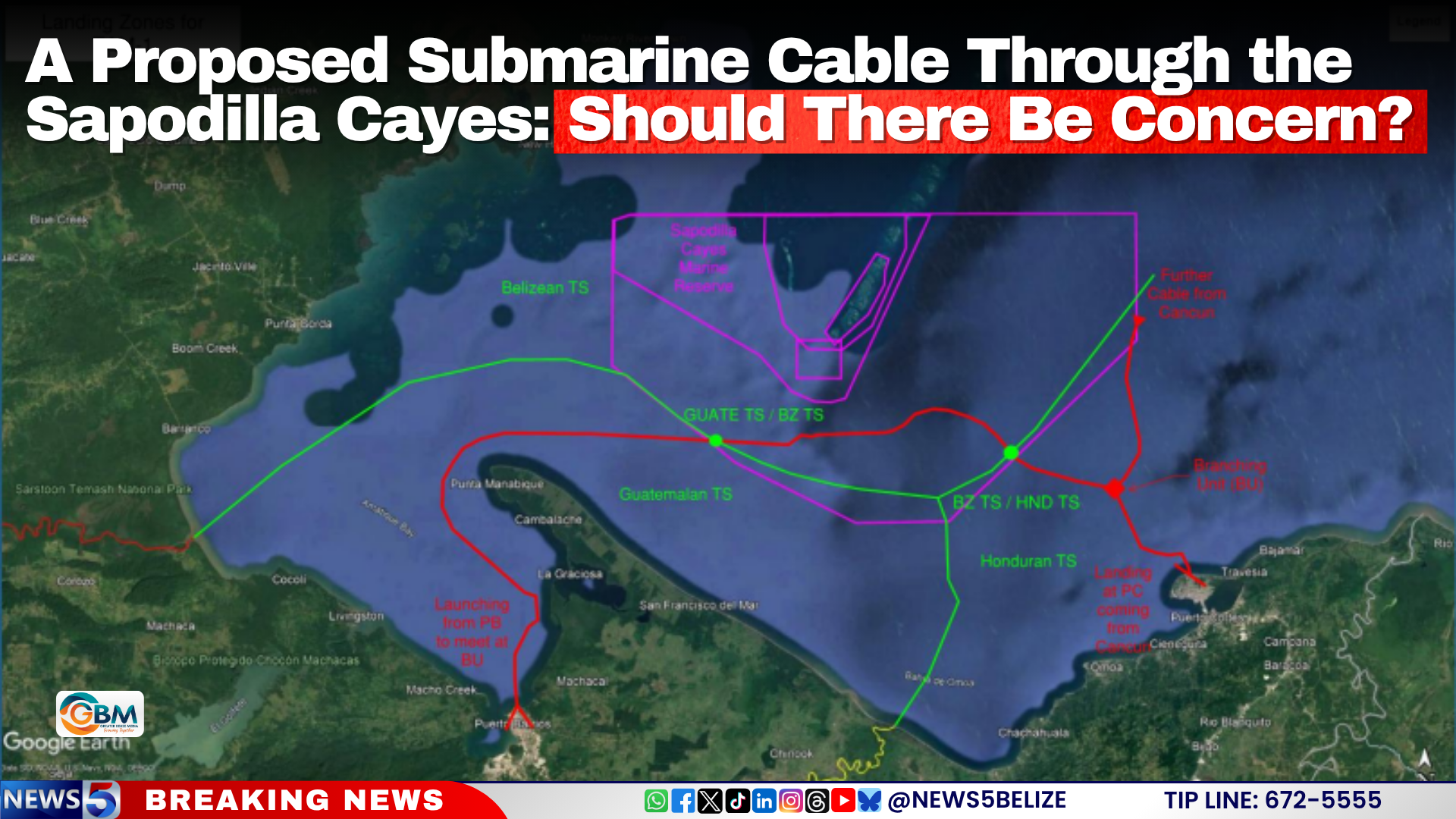
On October 26, 2026, leading Belizean conservation non-profit the Toledo Institute for Development and Environment (TIDE) released key findings following a full technical review of the planned Trans Americas Fiber System (TAFS) TAM-1 submarine telecommunications cable segment that cuts through the protected Sapodilla Cayes Marine Reserve.
TIDE Executive Director Leonardo Chavarria Jr. shared the assessment outcomes with local outlet News 5, explaining that the organization had cross-examined the cable’s full proposed route alongside independent marine ecology specialists to map out all potential ecological disruptions. According to Chavarria, nearly all initial conservation concerns flagged during the preliminary review process have been fully addressed by the project’s design team.
Unlike earlier draft alignments that came within proximity of fragile coral reef colonies and critical fish spawning and aquaculture zones, the final proposed path of the cable runs almost exclusively through designated deep-sea fishing zones, entirely avoiding high-sensitivity marine habitats. While Chavarria confirmed that the cable laying process will generate temporary, localized seabed disturbance, the cumulative long-term impact on the reserve’s broader marine ecosystem is projected to be negligible.
The full, official Environmental Impact Assessment for the project documents all foreseeable risks associated with installation, operation and maintenance of the cable, and outlines a tiered set of mitigation protocols designed to cap environmental disruption at acceptable levels. This segment of the cable forms part of a far-reaching regional fiber optic network that will deliver high-speed, high-capacity internet connectivity linking multiple nations across the Caribbean and Central America.
Notably, Belize is not scheduled for a direct connection to the TAM-1 network in the project’s first phase, and will see no immediate tangible benefits from the cable’s passage through its territorial waters. However, Chavarria emphasized that granting access for the cable to traverse the Sapodilla Cayes reserve creates a future option for Belize to join the regional network at a later date, a move that could drastically expand the country’s international bandwidth capacity and reduce reliance on more expensive, lower-performance satellite and older undersea cable infrastructure.
The project will only move forward to construction once all required regulatory approvals are finalized, with the Belize Fisheries Department holding full statutory authority to either approve or veto any development activity proposed within the boundaries of the Sapodilla Cayes Marine Reserve.
A Proposed Submarine Cable Through the Sapodilla Cayes: Should There Be Concern?