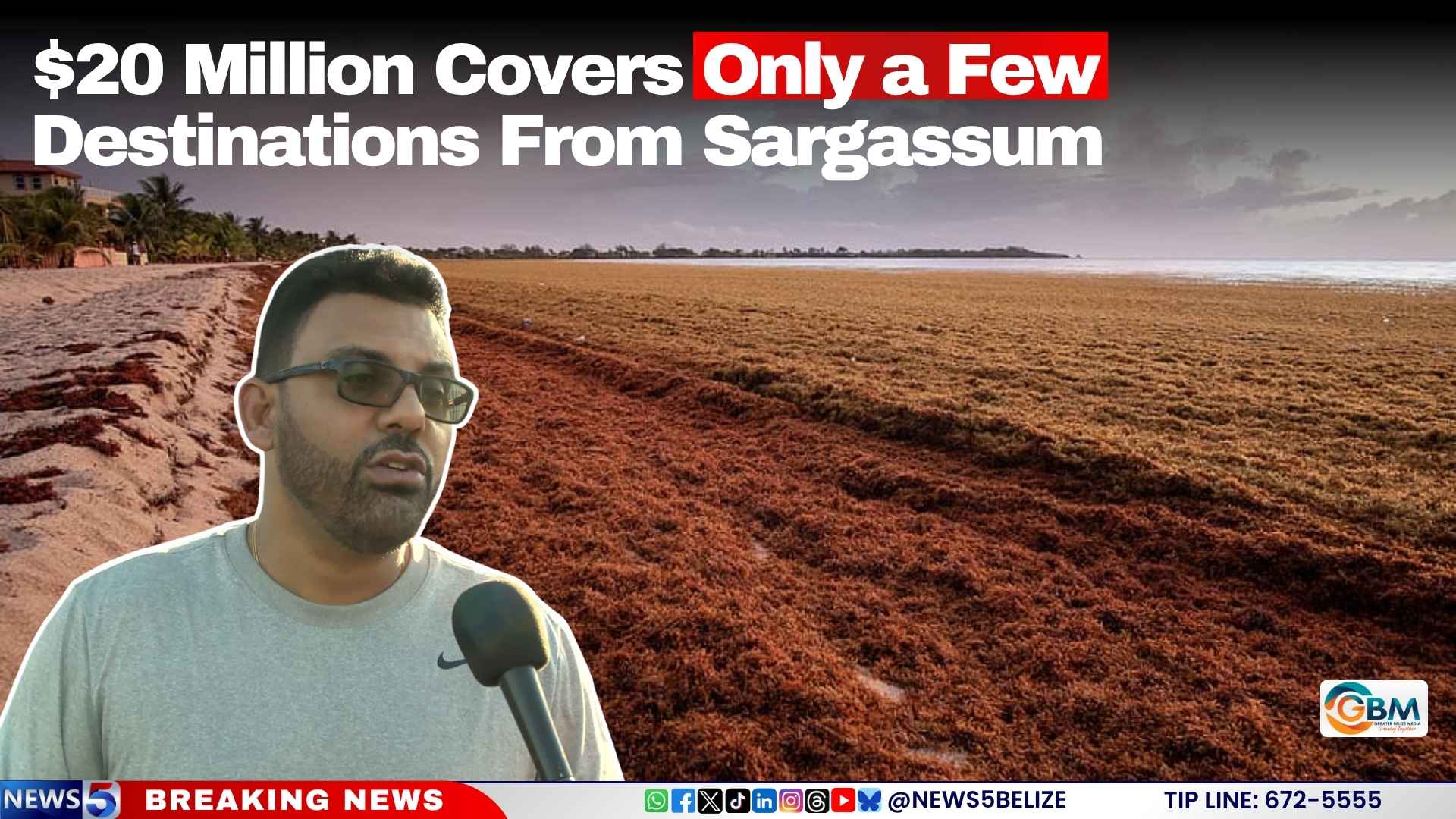
On October 26, 2026, Belize’s Tourism Minister Anthony Mahler laid out the stark realities of the country’s escalating sargassum management challenge, revealing that a proposed $20 million investment would only be sufficient to deploy specialized sargassum mitigation equipment across three to four of the nation’s highest-priority tourism hotspots. The announcement comes as the Briceño administration actively pursues World Bank financing to mount a coordinated, national response to the fast-worsening ecological and economic threat. Prime Minister John Briceño elevated the crisis to the global stage during recent high-level diplomatic gatherings in Bangkok, framing the widespread Caribbean sargassum blooms as a direct, cascading consequence of human-driven climate change that demands cross-border collaborative action. For Mahler, the government’s heightened focus on the issue marks a long-awaited turning point: he noted he had been publicly warning of the looming sargassum disaster for nearly five years, and expressed relief that policymakers were finally allocating serious resources and attention to the issue. Even once the initial equipment purchase is finalized, the financial burden will not end, Mahler emphasized. The annual operational costs to run the specialized sargassum collection and processing machinery for the small handful of covered destinations are projected to fall between $400,000 and $500,000, a recurring line item the government has not yet fully budgeted for. Compounding the urgency of the situation is fierce regional competition for limited supplies of purpose-built sargassum mitigation hardware, as multiple Caribbean nations grapple with the same crisis and rush to secure equipment, leading to extended manufacturing lead times that could delay deployment if Belize does not move quickly. The minister also outlined the widespread economic harm the unaddressed sargassum influx is already inflicting: beyond documented drops in international tourist arrivals tied to the unsightly, odorous seaweed mats that choke coastal shorelines, Belize’s domestic tourism market is also collapsing, as local residents increasingly avoid offshore islands and coastal communities where rotting sargassum accumulates, making the areas unappealing for leisure visits. Mahler stressed that the $20 million allocation represents only a modest first step, and far more sustained investment will be required to build a full national sargassum management system that protects all vulnerable coastal communities and tourism assets across the country.