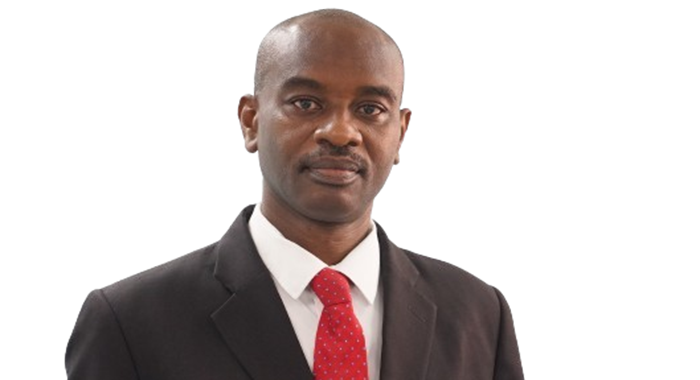
Authored by Professor C. Justin Robinson, Pro Vice-Chancellor and Principal of The UWI Five Islands Campus, this analysis unpacks the pervasive, underdiscussed financial strain crippling households across the Caribbean, a reality so ubiquitous that local residents’ complaints about the suffocating cost of living have become more widespread than hit tracks from regional musical icons Machel, Skinny, Beenie Man and Buju Banton. Casual conversations across every island open with laments that monthly salaries no longer stretch far enough to cover household needs through to the end of the pay cycle, a frustration amplified by what the author defines as the “Endurance Economy” – a system that forces ordinary residents to pay a crippling “money tax” on top of the previously documented “time tax” that erodes their daily quality of life.
The tangible evidence of this double payment is impossible to miss in any middle-income Caribbean neighbourhood: rows of rooftop water tanks, portable backup generators, and multiple household vehicles sit as visible markers of the extra costs families incur, while far less visible expenditures pile up for private tutoring, independent school tuition, supplementary private health insurance, personal pension plans, and private security services. The core of this burden lies in a brutal reality: households are forced to purchase private, market-based substitutes for fundamental public goods including piped water, grid electricity, education, healthcare, personal security and public transit, while still paying full taxes, mandatory fees and statutory social contributions that are supposed to fund those very same public services. This double expenditure ranks among the largest unacknowledged costs of daily life across the Caribbean, yet it is almost entirely excluded from mainstream public conversations about the region’s cost of living crisis.
This heavy burden creates a self-reinforcing feedback loop that locks the Endurance Economy in place permanently. As household financial strain erodes public trust in state institutions, it becomes a rational choice for families to “exit” failing public systems by buying private alternatives. This mass exodus of engaged, resourceful citizens from public services drains those systems of the collective advocacy voice needed to drive improvement, leading to further degradation of public infrastructure and services, which in turn pushes more households to opt for private substitutes. For example, a family that installs a private water tank will no longer file formal complaints to the national water authority or call local radio stations to report supply failures; parents who pay for private tutoring or enrol their children in private schools, and professionals who hold private health insurance, rarely leverage their social capital and professional networks to lobby for upgrades to public education and public healthcare systems. While these individual choices make perfect sense for each household navigating daily instability, their cumulative effect strips underfunded public systems of the voices most capable of forcing meaningful, long-term change.
This dynamic also creates a bizarre distortion in national economic metrics: Caribbean economies can report positive GDP growth even as ordinary households are pushed deeper into financial precarity, because all the spending on backup generators, water tanks, extra vehicles, private security systems, cross-border remittance fees for unbanked households, and high-interest payday loans counts as positive economic activity. Even households earning the relatively respectable regional average of US$3,000 per month (a sum far higher than what many low-income Caribbean residents take home) cannot sustain this endless cycle of coping spending, leaving millions trapped in a permanent paycheque-to-paycheque cycle with no ability to accumulate long-term household wealth.
The Endurance Economy persists because it creates clear, tangible benefits for a specific set of stakeholders: private suppliers of substitute public services see booming sales, brokers earn steady income helping households navigate convoluted, inefficient government administrative processes, and existing supply chain operators generate extra profits from the unnecessary layers of complexity built into the current system. The author emphasizes that these actors are not acting unethically, but simply making rational, profit-driven choices to capitalize on the market gaps created by failing public services.
To dismantle this system, reform efforts need a broad, united constituency with a clear, direct stake in change: the large mass of middle-income households that cannot afford the full cost of exiting the public system, or that are already stretched to their financial limits to do so. For low-income households that cannot access private substitutes at all, failing public services create life-altering harms: children trapped in underresourced public schools are often incorrectly labelled as academic underachievers, while gaps in public healthcare can lead to preventable loss of life. Even for households that can afford to buy private alternatives, the combined annual cost of backup power, water storage, supplementary education, private healthcare, extra vehicles and security can add up to tens of thousands of local currency units – money that could otherwise be saved, spent on leisure, or invested in local communities according to the household’s own priorities.
The author’s core proposed solution is the implementation of a “paying twice budget test” to give this large middle constituency a formal, collective voice. This mechanism would first calculate a standardized “household coping cost” that quantifies all the money families spend out of pocket to compensate for unreliable or inaccessible public services. Critically, every major new public service investment would be required to clearly state exactly which category of private coping expense it is designed to reduce, which specific groups of households will benefit, and exactly how much money those households will save as a result. This university-led, community-focused initiative could start with a small, manageable scope, targeting two high-impact priority sectors: urban public transport and piped water reliability, with clear three-year measurable targets for household savings. For example, a public transit project could set a key performance indicator measuring the share of low- and middle-income households that no longer need to maintain a second vehicle solely for commuting to work or school, paired with a target for increased public transit ridership among households that previously owned private cars. A water sector improvement programme, meanwhile, could aim to cut household spending on expensive trucked water deliveries, emergency plumbing repairs, and replacement of home appliances damaged by inconsistent, sediment-heavy water supply.
The paying twice budget framework would also expose wasteful, poorly designed public investments that look impressive on paper but deliver no tangible benefit to ordinary households. For example, a government might roll out electric vehicle subsidies while the region still lacks widespread, accessible charging infrastructure, or fund residential solar panel installations without updating grid connection rules to allow households to feed excess power back into the network, or construct a new food processing plant without first securing consistent, reliable supply agreements with small local farmers. These projects may look good in official press releases and promotional photos, but missing supporting institutional frameworks mean they do nothing to cut the private coping costs that households bear.
The author notes that even after public services are fully upgraded, some families will still voluntarily choose to send their children to private schools, pay for private healthcare, or purchase larger personal vehicles, and that is a perfectly acceptable outcome. The sole goal of these reforms is to dismantle the Endurance Economy, so that households can spend their income on goods and services they actively prefer, rather than being forced to spend it on coping mechanisms to compensate for failing public infrastructure.
All three parts of the author’s proposed reform series are intentionally modest in scope: they aim to amplify the voices of residents who do not have the financial means to exit the public system entirely, through the creation of a public “endurance account” that publishes the full aggregate private cost of coping with failing services for all to see. This is paired with a citizen service warranty that creates automatic, pre-defined consequences for government agencies that miss publicly stated administrative service standards, and the paying twice budget that clearly links every public investment to measurable reductions in household coping costs. The Endurance Economy was built gradually, one piece of patchwork policy and unaddressed institutional failure at a time, and it can be dismantled the same incremental, deliberate way once Caribbean societies choose to prioritize change. The end goal is a future where ordinary residents no longer have to waste money on double payments for basic services: where Keisha can spend an extra hour resting at home with Rhaj because the taps deliver consistent, reliable running water, and Rhaj can trust the public bus service to get him to work on time. If this reform succeeds, families across the region will finally be able to save up for long-held dreams like that long-planned African safari, instead of pouring all their disposable income into paying twice for services their taxes were already supposed to fund. This analysis represents the personal opinion of the author, and does not necessarily reflect the official editorial stance of iWitness News.