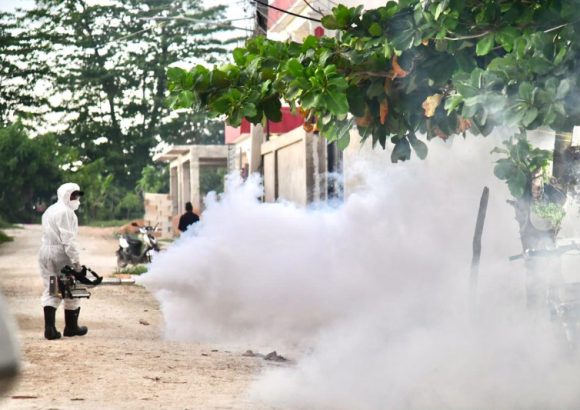
The Dominican Republic’s Ministry of Public Health has launched a scaled-up, multi-stakeholder national dengue prevention and control strategy, prioritizing high-incidence regions to curb transmission of the mosquito-borne viral disease. The comprehensive intervention framework integrates source reduction campaigns, targeted space fumigation, continuous epidemiological monitoring, proactive community case detection, and door-to-door public education, implemented in close partnership with public agencies, grassroots community groups, and private sector stakeholders.
According to the official Week 40 2026 epidemiological bulletin, 15 new confirmed dengue cases were recorded in the preceding seven days, bringing the total cumulative caseload for the year to 415. Regional breakdowns show La Altagracia province bears the highest burden with 131 total cases, followed by La Romana at 37 and Puerto Plata at 33. Frontline response teams have concentrated enhanced operations in these high-burden zones, with targeted resources deployed specifically to the Higüey and Verón-Bávaro districts of La Altagracia to cut Aedes aegypti mosquito breeding sites and accelerate early identification of undiagnosed infections.
Under the leadership of La Altagracia’s Provincial Health Director Wendy Castillo, a recent neighborhood fumigation drive covered 114 streets across four residential zones: Vista Hermosa, Cerro Lindo, Villa Palmera, and Brisa Duey, serving 342 households and an estimated 1,242 local residents. Complementary door-to-door outreach teams visited an additional 433 homes, where they removed 96 confirmed mosquito breeding sites from residential water storage tanks, and inspected a total of 355 tanks, 37 of which were found to harbor Aedes larvae. Teams distributed targeted preventative supplies including BTI and Abate larvicides, liquid chlorine for water purification, tank covers, and bed mosquito nets to at-risk households.
For epidemiological surveillance, medical teams carried out active case searches across health facilities and community spaces in Higüey, Anamuya, and Verón. At the Anamuya Primary Care Unit, clinicians identified 10 individuals presenting with fever and headache, 8 of whom were children, and collected diagnostic samples for laboratory testing. Response teams also conducted home visits around the residences of 4 previously confirmed dengue cases in Villa Cerro, delivering targeted health guidance to nearby households to prevent secondary transmission.
To strengthen the national health system’s capacity for rapid response, the Ministry of Public Health has delivered specialized training for hospital epidemiologists and National Health Service staff covering timely mandatory case notification, standardized sample collection protocols, accurate epidemiological data recording, and proper completion of official surveillance forms, to close gaps in case detection, reporting, and post-diagnosis follow-up.
The cross-sector coordination component of the strategy has brought together local municipal authorities, emergency response agencies, schools and educational institutions, community associations, and representatives from the tourism and commercial sectors. During a recent Water, Sanitation and Hygiene Group (GASH) meeting held in Verón-Punta Cana, participants aligned on joint actions to remediate illegal waste dumps and informal landfills that serve as unregulated mosquito breeding sites, boost community engagement in prevention efforts, and roll out dengue protection protocols across local tourist accommodations.
The Ministry has issued clear public guidance for residents to take personal protective action: keep all water storage containers covered and regularly cleaned, flip over any outdoor receptacles that can collect standing rainwater, and discard unused items that could act as potential mosquito breeding habitats. Health officials also advise members of the public to avoid self-medicating if they develop a fever, and to seek immediate care at a formal health facility. A public health warning notes that severe symptoms including persistent abdominal pain, repeated vomiting, nose or gum bleeding, unusual drowsiness, and sudden irritability are critical red flags that require urgent emergency medical attention to prevent life-threatening dengue complications.
Health authorities emphasize that while the Dominican Republic is classified as a region with relatively high dengue incidence across the Americas, its current national cumulative case rate of 4.89 per 100,000 residents is 95% lower than the average incidence rate for the wider Americas region. The latest joint data from the World Health Organization and Pan American Health Organization records 1.7 million total suspected dengue cases across the Americas, with far higher transmission rates reported across multiple South American and Caribbean nations. For additional public health updates, readers can access DominicanScope’s dedicated health news section.