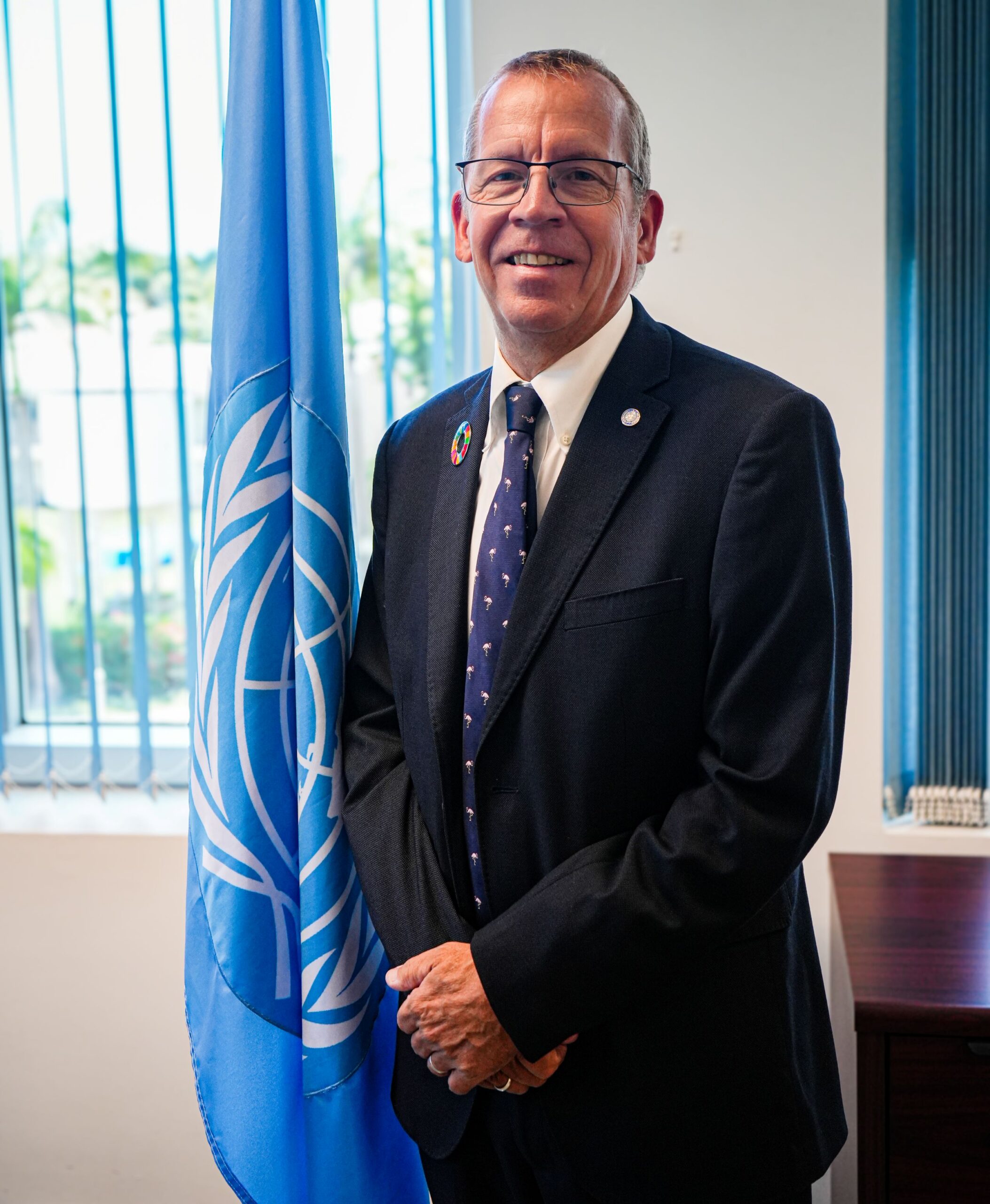
Authored by Simon Springett, the United Nations Resident Coordinator for Barbados and the Eastern Caribbean, this 2025 United Nations Day statement marks the annual 24 October observance by centering a foundational, timeless truth: no single nation, local community, or formal institution can independently resolve the cascading, interconnected 21st-century crises facing populations worldwide. For the small island developing states of the Eastern Caribbean, this reality is not a distant theoretical concept but a daily lived experience. The subregion continues to bear the brunt of worsening climate disruption, including increasingly powerful and frequent hurricanes, accelerating coastal land loss, rapid biodiversity collapse, and mounting strains on household livelihoods and already stretched public budgets. Compounding these environmental pressures are longstanding structural hurdles: persistent gaps in food and energy security, widening socioeconomic inequality, inherent economic fragility tied to narrow export bases, and overstretched public services operating with severely constrained natural and financial resources. Springett notes that across every corner of the Eastern Caribbean, he has directly observed a groundswell of cross-stakeholder collaborative action, bringing national administrations, regional intergovernmental bodies, civil society networks, youth advocates, grassroots community collectives, private sector actors, and global development partners together in coordinated efforts to boost local climate resilience, expand accessible social safety nets, roll out regenerative sustainable food systems, and nurture more diversified, inclusive, long-term local economies. These priorities are far from abstract policy targets: they translate directly to whether families can rebuild their homes and livelihoods in the immediate aftermath of a catastrophic storm, whether smallholder farmers can adopt adaptive practices to withstand shifting weather patterns and secure stable incomes, whether young people can access dignified, meaningful work that lets them build long-term futures in their home communities rather than migrate abroad, and whether every resident, no matter their background or socioeconomic status, can lead lives defined by dignity, safety, and optimism for what comes next. The United Nations system, Springett emphasizes, is deeply committed to walking in solidarity with the Eastern Caribbean’s populations and elected governments through this ongoing work. Its core mandate in the subregion is not to impose top-down external solutions, but to act as a listening convener that unites the full cross-agency expertise, on-the-ground operational experience, and pooled resources of the broader UN ecosystem to align with and advance priorities defined by local national governments themselves. Above all, the global body’s overarching commitment is to turn high-level international agreements and global development pledges into tangible, measurable improvements in the daily lives of ordinary Eastern Caribbean residents. This year’s United Nations Day falls at an exceptionally critical inflection point, with fewer than five years left to meet the global Sustainable Development Goals, leaving no room for delay in scaled, accelerated action. Meaningful, transformative progress remains well within reach, but it demands far greater collective ambition, faster implementation, and most of all, deep, trusting cross-sector partnership. While the stacked challenges facing the subregion are undeniably substantial, the collective capacity of coordinated, collaborative action to address them is equally powerful. The United Nations was founded 81 years ago on the core 1945 conviction that lasting peace, equitable development, and universal human dignity are most effectively advanced through intentional, cooperative action across national borders – a principle that holds just as much, if not more, relevance in today’s interconnected world as it did at the global body’s founding. This United Nations Day, Springett calls on all stakeholders to reaffirm their shared collective responsibility to co-build a far more resilient, inclusive, and sustainable future for every person. The Eastern Caribbean has already demonstrated time and again that when communities align around shared purpose and act with unwavering determination, they can deliver extraordinary, transformative progress. That enduring, collaborative spirit of partnership, he concludes, provides every reason for measured, grounded optimism, and he extends warm wishes for a happy United Nations Day to all across the subregion.