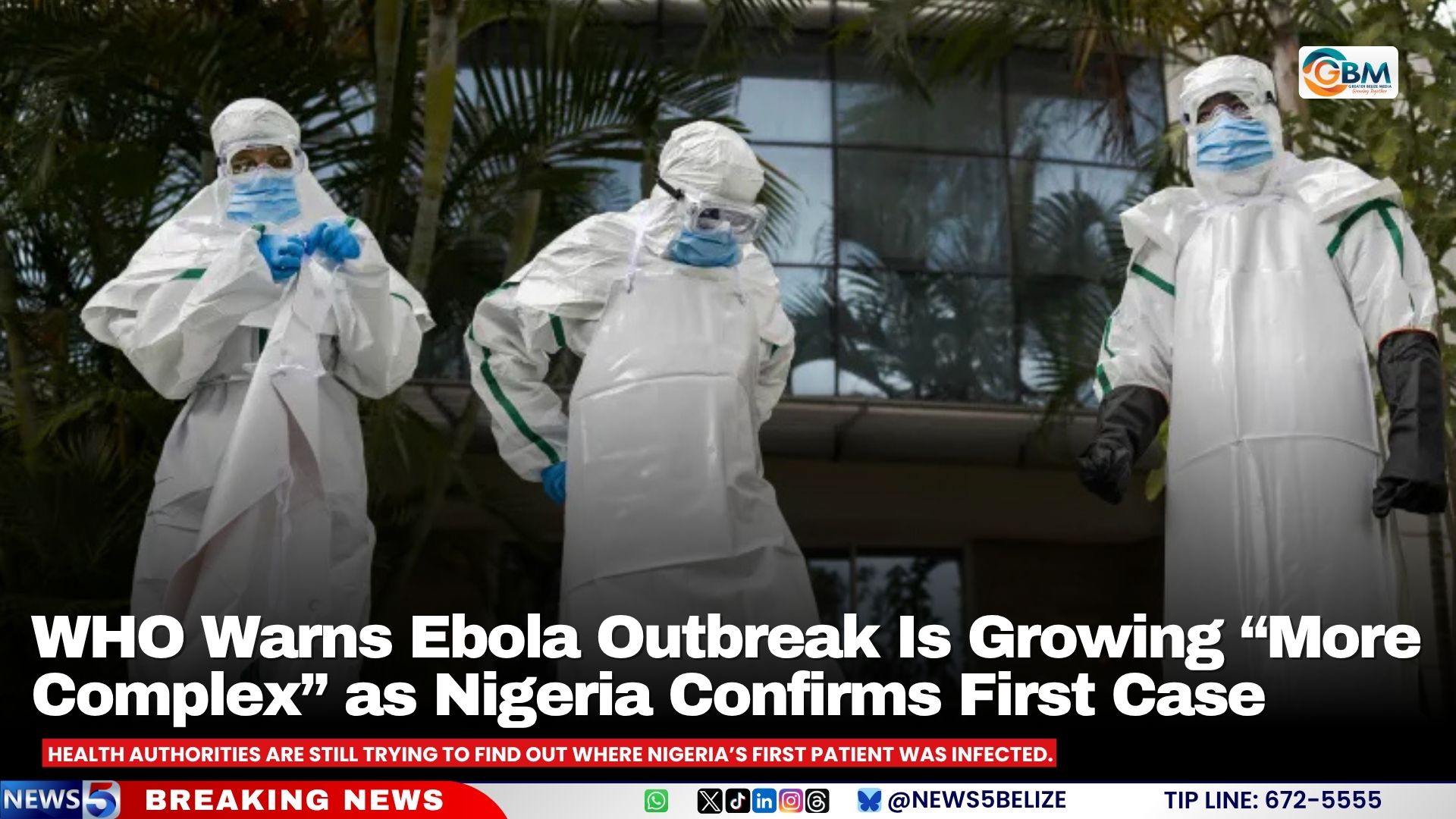
In a development that has deepened public health concerns across the African continent, the World Health Organization (WHO) has warned that the months-long Ebola outbreak originating in the Democratic Republic of the Congo (DRC) is growing increasingly complicated, with confirmed cases now detected in both East and West Africa.
During a Thursday virtual media briefing, Mohamed Janabi, WHO’s Regional Director for Africa, laid out the grim new reality facing frontline health responders: “We are facing a more complex outbreak landscape.”
The latest turning point came Tuesday, when Nigeria confirmed its first documented case of the Bundibugyo Ebola strain, making it the fourth African nation impacted by the outbreak that was first detected in DRC in mid-May. As the most populous country in Africa, Nigeria’s confirmation of an active case marks a significant escalation of the crisis. Currently, DRC, Kenya, and Nigeria all have active cases of the strain, while Uganda, which recorded cases earlier in 2026, was officially declared Ebola-free in August.
The index patient in Nigeria is a Ugandan-born woman married to a Swiss diplomat based in the Nigerian capital Abuja. To date, conflicting accounts have emerged about the location where she contracted the virus, leaving epidemiologists still scrambling to pinpoint the source of her infection.
Ugandan authorities say the woman traveled to eastern DRC before passing through Uganda en route to Nigeria. However, the WHO and the Africa Centres for Disease Control and Prevention (Africa CDC) have yet to receive verified evidence confirming her trip to DRC. A statement from the Swiss government claims the woman was infected during travel within Uganda, a claim that Ugandan officials have forcefully rejected. “It is preposterous,” said Ugandan government spokesperson Alan Kasujja, to link Uganda to the case solely because the patient took a holiday in the country.
Wessam Mankoula, head of emergency preparedness and response at Africa CDC, revealed one key investigative lead: both the Nigerian index patient and Kenya’s first confirmed case departed from Entebbe International Airport on October 3. Officials are now probing whether the two individuals had any contact during their time at the airport that could explain the cross-country spread. WHO emergency response manager Patrick Otim emphasized that the origin of the Nigerian patient’s infection remains undetermined. Investigators are also reviewing which Abuja healthcare facilities the patient visited between the onset of her symptoms and her hospitalization 48 hours later, a critical step to identify potential secondary exposures.
As of this update, Nigerian health officials are actively monitoring 44 close contacts of the index patient, with Mankoula confirming that additional contacts have been identified in recent days. Earlier this month, Kenya confirmed its first case of the outbreak, and national health authorities announced they have successfully traced all 135 known contacts of that patient.
According to DRC’s national health authorities, this outbreak is already the deadliest Ebola event in the country’s history. Since the first cases were detected in May, more than 9,000 people have tested positive for the virus, and over 4,000 have died, pushing the case fatality rate in DRC close to 50 percent. Africa CDC has already labeled the outbreak an “extremely serious threat” to regional public health. Before being declared Ebola-free in August, Uganda recorded 20 confirmed cases, 15 of which were imported from DRC, and two deaths linked to the virus.