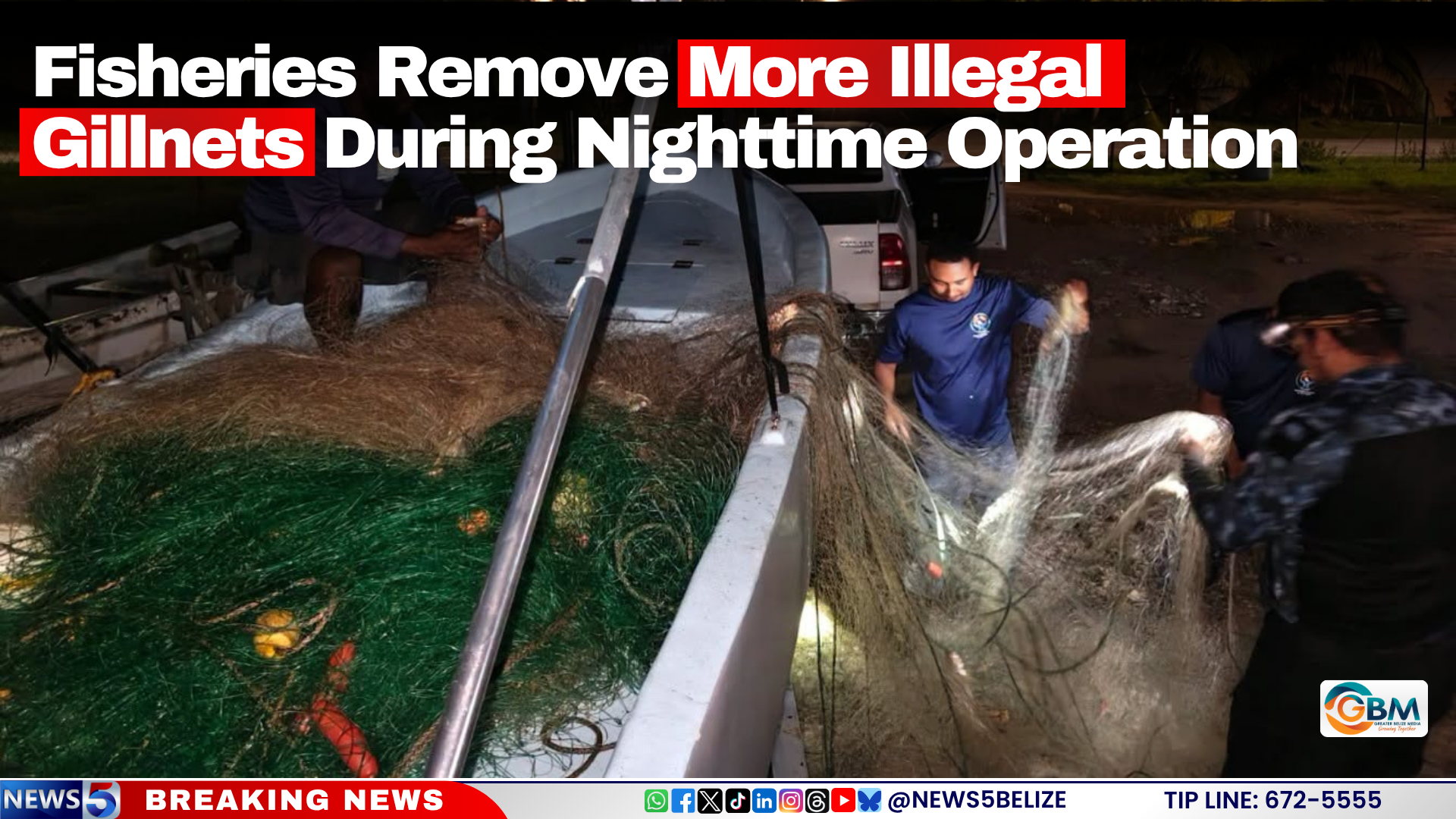
On October 15, 2026, the Monitoring, Control and Surveillance Unit of Belize’s Fisheries Department, based in Punta Gorda, carried out a targeted nighttime enforcement operation in the ecologically sensitive Temash River Estuary in southern Belize. By the end of the two-hour mission, officers had pulled four unattended illegal gillnets from the water, with a combined total length of approximately 3,120 feet – more than half a mile of banned fishing gear cleared from protected waters.
Among the recovered nets, the largest stretched more than 2,400 feet and featured two-inch mesh openings designed to trap small marine life. When officers extracted the net, they found roughly 300 small juvenile fish already entangled, while a separate 3,100-foot net held the body of a two-foot-long dead tarpon, a popular sport fish species native to the region’s coastal waters.
The operation did not go smoothly, however. Department officials confirmed that local community members confronted the enforcement team with open hostility as they worked to remove the prohibited gear. Because the nets had been left unmanned, investigators have not yet been able to identify or locate the parties that set them in the estuary. A follow-up extended patrol of the surrounding waters failed to turn up any additional banned fishing equipment, bringing the operation to a close.
Gillnets have been fully outlawed across all Belizean fisheries waters since the passage of the 2020 Fisheries Resources (Gill Net Prohibition) Regulations. The regulatory framework not only bans the use and possession of the gear within Belize’s territorial waters, but also prohibits the landing, sale, purchase and even possession of any fish caught using gillnets.
Fisheries department officials warn that unregulated gillnet fishing is an indiscriminate practice that poses severe risks to juvenile fish populations, non-target aquatic species, and the long-term ecological sustainability of Belize’s marine resources. To support ongoing enforcement efforts, the department is calling on both licensed commercial fishers and members of the general public to report any suspected illegal gillnet fishing activity through the government’s official public reporting channels.