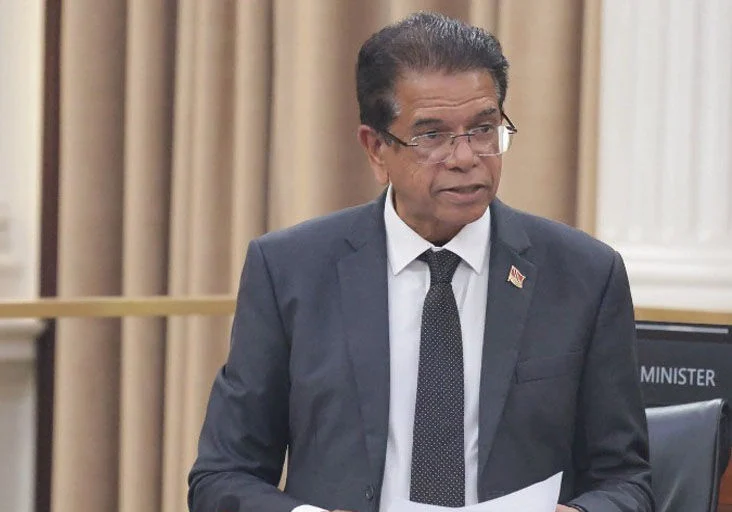
In a key address during Saturday’s national budget debate, Trinidad and Tobago’s Education Minister Dr. Michael Dowlath has announced two major policy commitments for the nation’s education sector, addressing long-running teacher advocacy and persistent concerns over school safety.
First, Dowlath confirmed plans to fully restore the Employee Assistance Programme (EAP), a critical work-based support service that provides confidential, short-term psychological, emotional and social assistance to educators across the country. The Minister outlined the fiscal context of the programme’s recent disruption, explaining that when the current administration took office, it inherited an outstanding EAP debt of $1,996,312 accrued in 2023. Over the past year, the ministry has cleared that entire liability, but service providers notified the government in December 2025 that they would suspend operations without new funding commitments. To resolve the impasse, Dowlath confirmed that the 2026 fiscal budget has already allocated funds to reactivate the programme, and the ministry will move forward with facilitating continued service delivery in the current fiscal year.
The move comes after months of pressure from the Trinidad and Tobago Unified Teachers’ Association (TTUTA), which has repeatedly raised alarms over service disruptions that forced teachers to pay out of pocket for EAP support starting in January 2025. The association had characterized the disruption as a violation of its collective bargaining agreement with the government and had made repeated calls for the programme’s immediate restoration. In a January statement, the Education Ministry already clarified that EAP funding was secured in the 2026 budget and that no teacher would be required to pay for access to the service.
Alongside the EAP commitment, Dowlath pushed back against opposition criticism of the government’s School-Oriented Policing Initiative, a program launched in September 2025 at 51 public schools across the country to curb rising school violence. Opposition lawmakers have argued that deploying police officers to campuses amounts to criminalizing students, but Dowlath rejected that claim, framing the initiative as a targeted effort to restore safety and order to campuses grappling with persistent violent incidents.
“Protecting children from violence is not criminalizing children,” Dowlath told parliament. “When parents send their children to school they expect them to be safe. When teachers enter their classrooms, they expect to work without fear of violence or intimidation. What about the children who are bullied, assaulted, and threatened? Don’t they have rights, too?”
The minister emphasized that the government’s zero-tolerance policy is directed at harmful behavior, not students themselves. “Zero tolerance for violence does not mean zero compassion for children. We recognise that children make mistakes. We recognise that some need counselling, guidance, rehabilitation and a second chance and that is why our approach considers appropriate disciplinary measures,” he explained, adding the government would not apologize for prioritizing student safety or abandon vulnerable learners who need protection.
Launched at the start of the 2025/2026 school year, the School-Oriented Policing Initiative aims to reduce violent incidents, de-escalate conflict and foster long-term behavioral change among students. In September, Deputy Commissioner of Police Junior Benjamin, who leads the program, told local outlet *Express* that the Trinidad and Tobago Police Service (TTPS) had no immediate plans to expand the unit due to limited resources. Benjamin noted that TTPS will continue collaborating with the Education Ministry to deploy existing officers to the campuses where they are most needed.
Dowlath also highlighted the $8.033 billion total allocation to the nation’s broader education and training sector in the 2026 budget, noting that the ministry’s core responsibility is to ensure this public investment delivers tangible, meaningful improvements for educators and learners across the country.