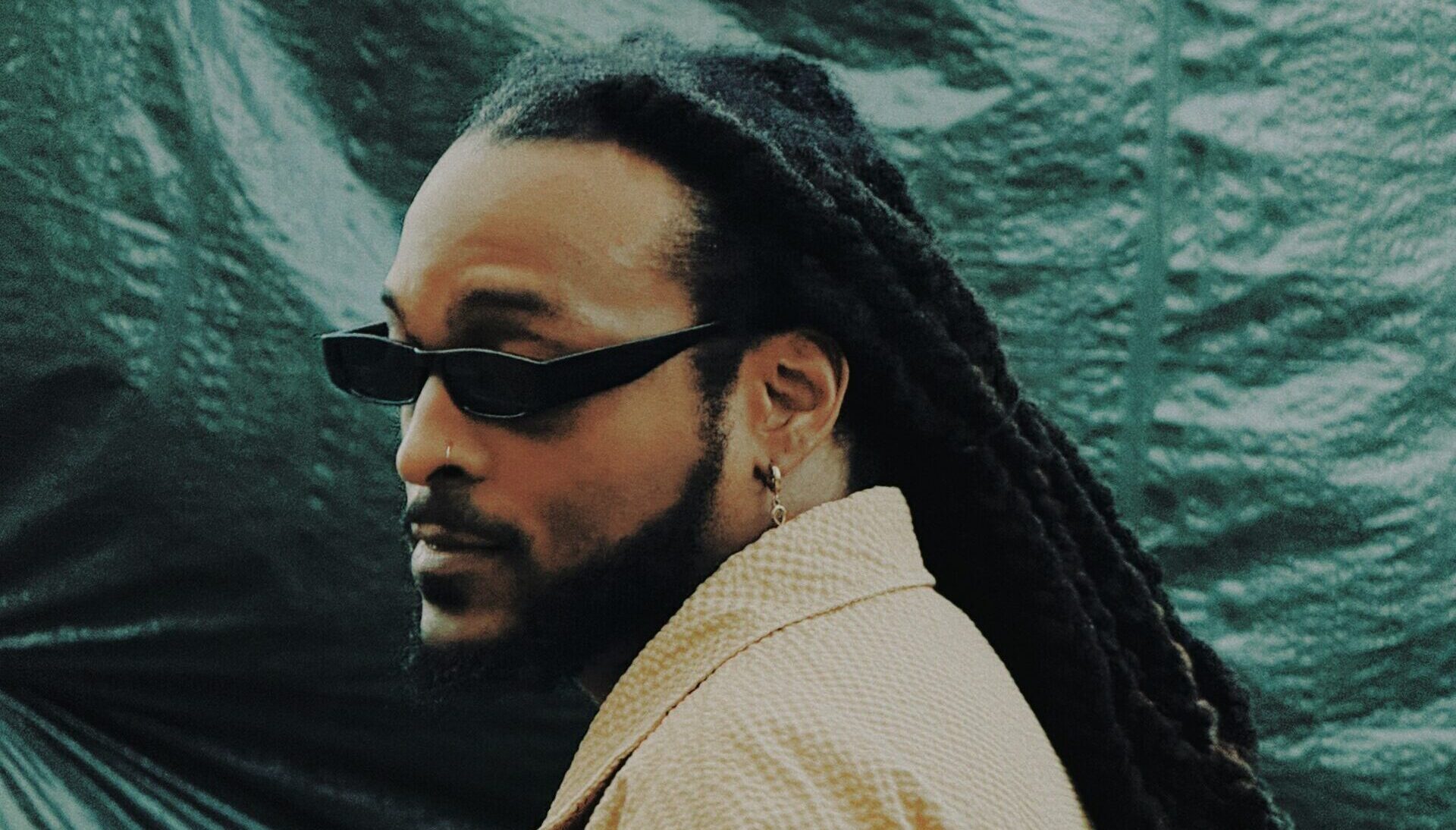
Against the backdrop of a rapidly evolving Caribbean music scene, a new generation of independent creators is reshaping the traditional genre of bouyon, and at the forefront of this movement is Guadeloupean artist TIITII NBA. Starting his career with nothing more than a smartphone, basic recording tools, and a relentless passion for the genre, he has built a thriving fanbase and millions of streams entirely without the support of major record labels, professional studio facilities, or paid promotional campaigns.
Hailing from Morne-à-l’Eau, Guadeloupe, TIITII NBA’s stage name carries a deliberate mission that many listeners misinterpret: far from referencing the popular phrase “Never Broke Again,” NBA stands for “New Bouyon Age” — a title that encapsulates his goal of reimagining the genre for a modern era. His musical journey began modestly, using the free mobile recording app BandLab and wired earphones to lay down his first tracks. As his work gained traction, revenue from bouyon streams allowed him to upgrade his equipment and improve his quality of life, marking one of the first tangible wins of his independent career. Today, his streaming metrics speak for themselves: he boasts more than 68,000 monthly listeners on Spotify, his hit track “Kitty Kitty” has crossed 1.65 million streams, and he has put out over 30 original releases since 2021 — all achieved without spending a cent on targeted advertising.
TIITII NBA’s connection to bouyon traces back to his childhood, when his parents first introduced him to the Dominican group WCK, where he knew the sound simply as “jump up” rather than the name bouyon. While he enjoyed the genre’s upbeat, infectious rhythms from an early age, his deep commitment to creating bouyon grew years later, as the sound gained a foothold in Guadeloupe through local artists and collectives including Suppa, Vador, and Yellow Gaza. His first experimental recording with friends was never officially released, stuck on a forgotten hard drive at a time when digital distribution was far less accessible to independent creators. A pivotal turning point came when Dominican artist Mr Ridge shared his innovative approach to blending cross-genre influences with classic bouyon percussion, opening TIITII NBA’s eyes to the genre’s untapped creative potential.
“When he started dropping live freestyles, a new way of riding a beat, of singing, pulling sounds from other genres and dropping them into the drums, the percussion, the snare, that’s when I saw what this genre could become. That’s when I decided to go for it,” he recalled in an interview with Dominica News Online.
He began scouring YouTube and SoundCloud for original bouyon instrumentals from creators across Dominica, Guadeloupe, and Saint Martin, honing his craft at a time when the genre had not yet reached its current mainstream popularity in the region. His first major validation came when his cousin, DJ Softee, incorporated lyrics from that long-forgotten unreleased track into the hit “Mouvman Chodong,” which became a viral local favorite in Guadeloupe. The positive audience response convinced TIITII NBA that his songwriting resonated with contemporary listeners, prompting him to record his breakout track “Brene Sa” — again, entirely on his iPhone using BandLab and wired earphones. Built around a popular instrumental from producer Pyroman, a beat that was considered a benchmark for emerging bouyon artists in Guadeloupe to prove their skill, “Brene Sa” gained traction at local parties and earned him his first widespread regional recognition, while also inspiring other up-and-coming creators including Aknose, Cocotteland, and MiiMii to pursue their own independent bouyon projects.
He followed this success with his debut EP *New Bouyon Age*, another project recorded entirely on his mobile device. For TIITII NBA, the EP title represents a new era of opportunity, where aspiring artists can break into the industry without connections to major labels, expensive production teams, or industry managers. One track from the collection, “Kitty Kitty” produced by DJ Luchshiy, became his first release to cross one million streams — a feat he achieved without even a formal music video, relying only on a simple cover image and the strength of the track itself to draw listeners. In the years since, he has expanded his discography to explore a wide range of themes within the bouyon framework, from playful party anthems and romantic ballads to more provocative lyrical content.
Despite his central role in growing bouyon’s popularity across Guadeloupe, TIITII NBA remains committed to honoring the genre’s Dominican origins. “Bouyon isn’t ours, it’s Dominica’s, and Guadeloupe is the second chapter,” he emphasized. He traces the genre’s introduction to Guadeloupe to the period between 2007 and 2015, when artists including Vador, DJ Joe, and Asa Banton brought the sound to wider audiences through the Yellow Gaza project. Dominican artist Suppa, based in Guadeloupe, further cemented the scene with the founding of Gaza Crew, laying the groundwork for the first generation of local Guadeloupean bouyon performers. During that early era, the genre evolved to feature faster tempos of around 160 beats per minute, giving rise to the hardcore bouyon subgenre. Today, TIITII NBA says the genre is entering a new evolutionary phase, driven by young creators who have access to low-cost digital recording tools and global online distribution platforms.
Key milestones for the current new wave include the 2023 Keneth Riddim project, a one-riddim collection that featured four emerging artists, with TIITII NBA opening the release with his track “No Sex Over Money” — a release that generated major momentum for the young generation of creators. Later that year, the collaborative recording “New Bouyon Wave #1” brought eight rising artists together to unify the movement: TIITII NBA, 1T1, Softee, Aknose, Nils, Lucky Lukee, Le Juh, and Théomaa. What makes this movement unique is that all of these artists create and distribute their music from home using mobile devices, cutting out reliance on traditional music industry structures and allowing the genre to spread organically at an unprecedented pace. Even so, TIITII NBA is clear that the current generation’s work is not a reinvention of bouyon, but an extension of the foundation laid by earlier pioneering artists.
For the independent creator, the greatest reward of his work has never been fame or large-scale festival performances — it comes from seeing audiences connect with his music. He describes the electric energy of a crowd when the first notes of a bouyon instrumental drop, as fans dance, sing along, and set aside the stresses of daily life to enjoy the moment. Messages from listeners, many of whom tell him he deserves wider international recognition and opportunities to perform across the Caribbean and beyond, keep him motivated to create. Even so, he says that mainstream stardom is not his primary goal: while he values connecting with international audiences, his greatest satisfaction comes from the act of creating music itself. His creative process typically starts with original ideas and samples, which he then develops collaboratively with producers to build finished instrumentals that complement his lyrics, a back-and-forth approach that keeps his work fresh and his passion for the genre alive.
Looking toward the future, TIITII NBA identifies deeper cross-border collaboration with Dominican musicians as a core part of his artistic path. He has already released collaborative tracks including “Full Speed” featuring Milly (produced by DJ Taffy for Big Bang Records 767) and “Shake It” with Trixz Migos, while his fellow New Bouyon Wave artist 1T1 has produced work for his early inspiration Mr Ridge. These collaborations, he says, are more than a way to reach new audiences — they represent the growing, mutually beneficial exchange of musical ideas and talent between the two islands, a connection that laid the groundwork for his own career.
TIITII NBA’s rapid rise from a bedroom artist recording on an iPhone to a creator with millions of streams highlights how digital technology is opening new doors for independent Caribbean musicians. While young Guadeloupean artists are bringing fresh perspectives to production, songwriting, and distribution, he maintains that the genre’s Dominican roots remain central to its identity. “Direction-wise, it points straight back toward Dominica, and that’s not a line for your readers,” he said. “The circulation between our two islands is real and it’s getting denser.”