As everyday Belizean households continue to slash discretionary spending, stretch every dollar from their monthly salaries, and make agonizing trade-offs to keep up with skyrocketing living costs, a top government official is demanding that the nation’s political leaders match the sacrifice they ask of ordinary citizens. Deputy Prime Minister Cordel Hyde has put forward a bold proposal: the government must reopen discussions on cutting generous ministerial allowances that currently total more than $31,200 annually per minister, covering housing, entertainment, and telecommunications expenses — a sum that is nearly double the average annual income of a fully employed Belizean worker. Prime Minister John Briceño has signaled he is open to the debate, but as of this reporting, no concrete action toward a cut has been finalized. Political correspondent Paul Lopez brings this report on the growing push for shared sacrifice in Belize.
For months, Belizean leaders have urged the general public to rein in spending, tighten household budgets, and accept personal financial sacrifices to weather the ongoing cost of living surge. But Deputy Prime Minister Hyde argues that this burden cannot fall exclusively on working and middle-class families. In his view, the nation’s cabinet ministers must also examine and reduce the public-funded benefits they collect.
“I think we as a government have to tighten our own belts, have to make some sacrifices and look at our own allowances too, because we can’t be living one way and have the people living another way,” Hyde stated in remarks that have sparked a national conversation about executive compensation and accountability.
Hyde’s intervention has opened up wider public debate over whether the generous benefits afforded to government ministers align with the harsh economic reality that most Belizean households navigate daily. He emphasizes that the government cannot reasonably expect ordinary citizens to absorb unrelenting financial pressure while its top leaders remain fully insulated from those same struggles. Prime Minister Briceño has acknowledged that Hyde’s critique is fair, but he pushed back slightly, noting that many ministers routinely dip into their own personal funds to provide assistance to hundreds of constituents who seek help every month.
“That is a fair comment, but at the same time, to be fair, hundreds of people come to us every month asking for assistance and in many instances, we have to dig from our own pockets. I am one of the fortunate ones that I don’t depend on my salary, so I can afford to do more. Some of our ministers, that is all they have, and people come knocking at their doors every day for assistance,” Briceño explained.
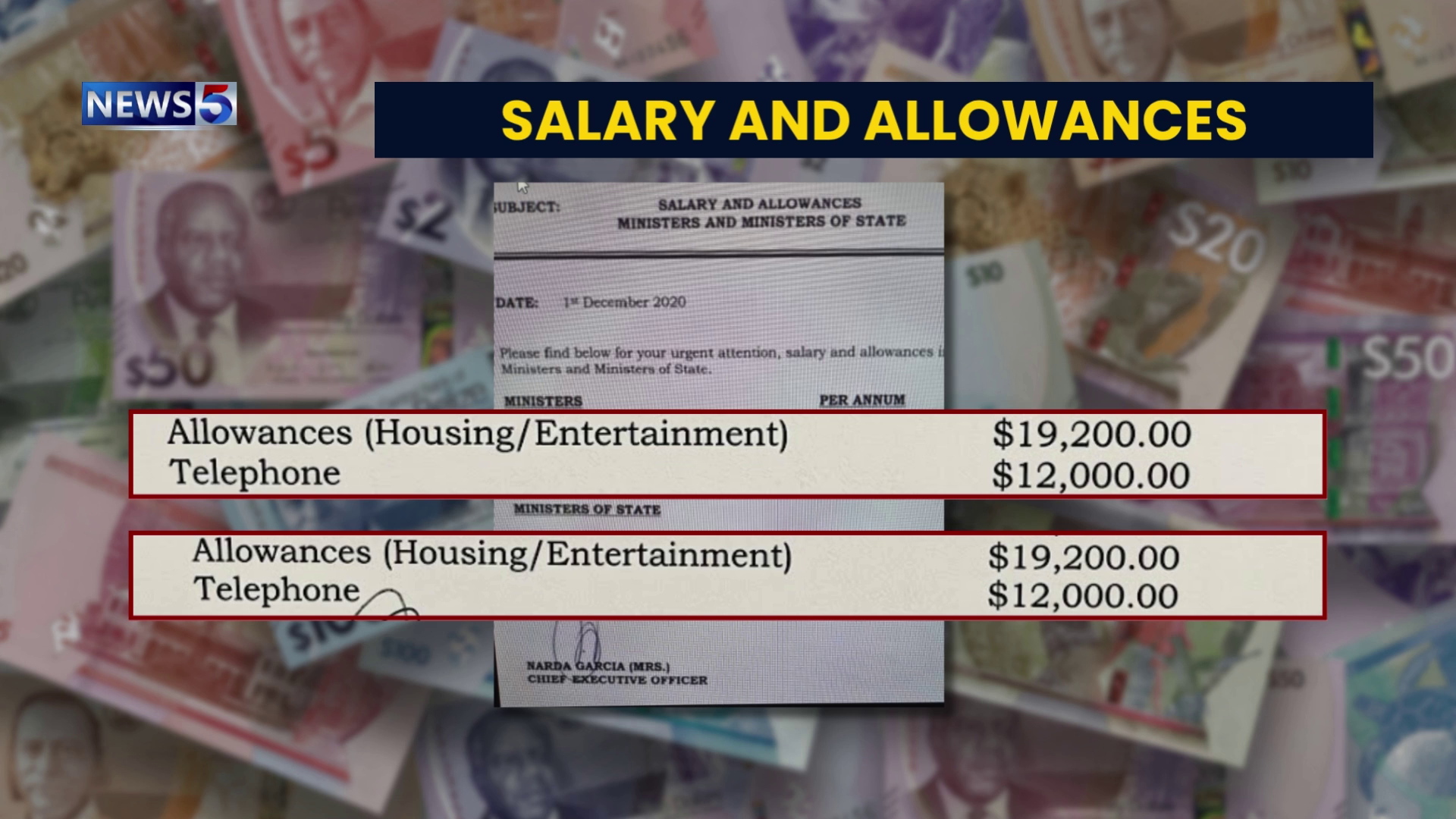
A breakdown of official government records, from a 2020 cabinet memo, lays out the full scope of current ministerial benefits: senior and junior ministers receive $19,200 per year for housing and entertainment, plus an additional $12,000 annually for telephone costs, adding up to $31,200 in untaxed allowances alone. That figure alone is nearly double the average working Belizean’s annual income of $17,976. When base salaries are included, senior ministers take home a total of $112,200 per year, while junior ministers earn $85,200 annually. Despite the context, Briceño says he would not stand in the way of an allowance cut that delivers measurable savings for public coffers.
“If we believe that will make some kind of dent or some kind of help, fine. Personally, I don’t have an issue,” the prime minister said.
Still, public willingness to discuss cuts does not equate to immediate policy change. No formal announcement of a reduction has been released to date. For Hyde, the debate is not just about the direct public savings a cut would generate — it is fundamentally about rebuilding and preserving public trust in government. He warns that if ministers refuse to share the burden of economic hardship while ordinary families struggle, the current administration will only reinforce the widespread public perception that its leaders are disconnected from the daily realities of life in Belize.
“If we don’t do anything, then it will only allow people to continue to say that we are disconnected and out of touch, and we don’t want that to happen. We don’t want that stain to be on us. I think we have to really put some dent in our allowances to show people that we are living in the same space and we understand what is happening out here,” Hyde said.
At this stage, cutting ministerial allowances remains a proposal rather than official government policy. The central, unresolved question now hangs over the Belizean government: will cabinet ministers turn rhetoric about shared national sacrifice into tangible action, or will they continue to collect benefits that outpace the full-year earnings of most working Belizeans? Paul Lopez, reporting for News Five.
This article is a transcript of an evening television broadcast, with Kriol language content transcribed using a standardized spelling system.