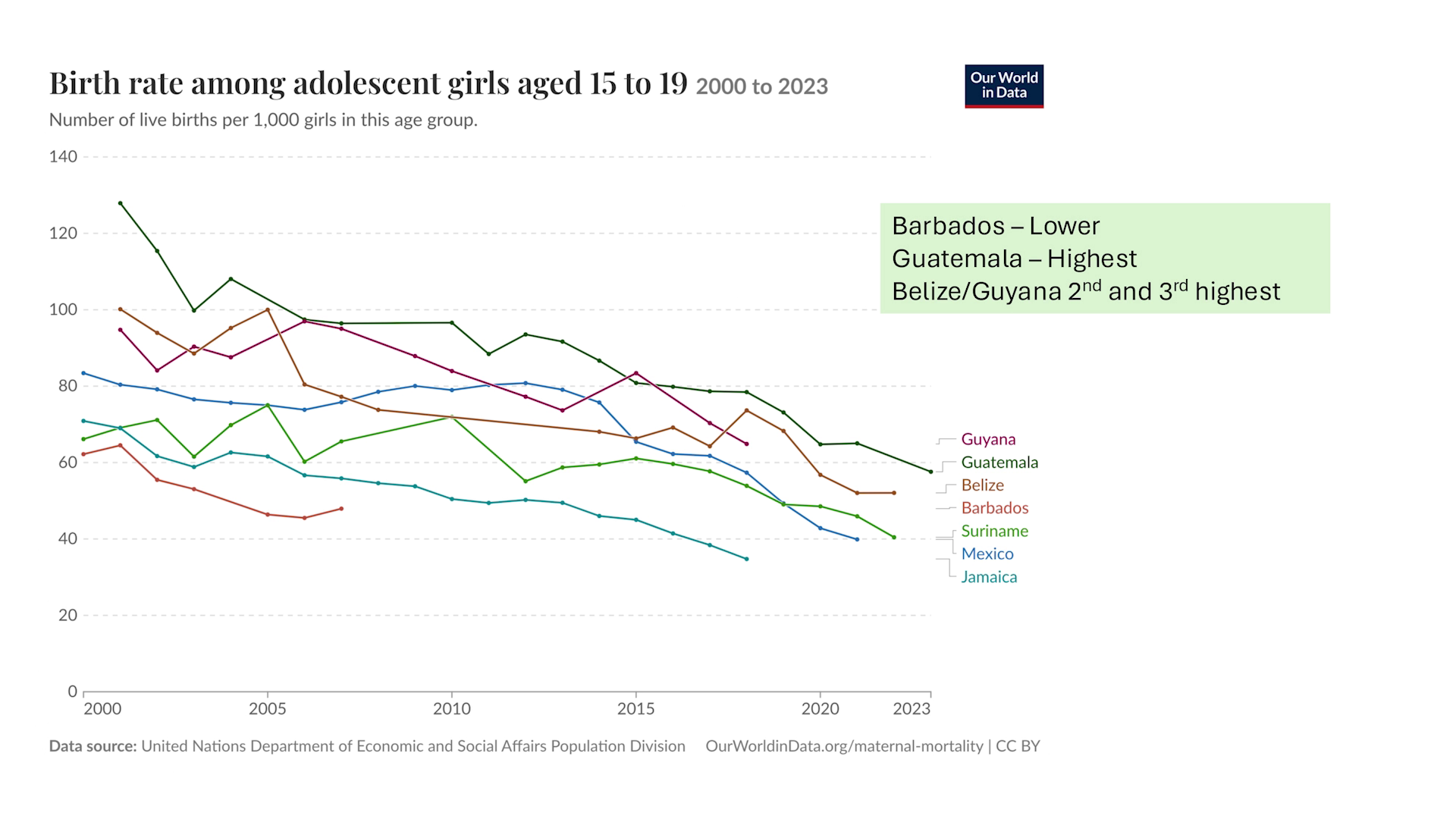
Scheduled for observance in October 2026, Adolescent Pregnancy Prevention Week has brought Belize into a coordinated regional movement aimed at empowering young people to overcome systemic and personal barriers and build more stable, promising futures. At the core of this campaign is the simple but powerful message: a single life choice can shape long-term life trajectories.
Public health leaders in Belize emphasize that adolescent pregnancy extends far beyond individual and family disruption, creating ripple effects that undermine national progress. It correlates with lower educational attainment, reduced long-term employment prospects, and slowed socioeconomic development across the country. Through targeted public awareness campaigns, expanded access to evidence-based information, and strengthened links between young people and essential health services and community support systems, Belize is aligning its local action with global development goals that aim to improve public health outcomes and expand equitable opportunity for youth by 2030.
Dr. Natalia Beer, Maternal and Child Health Technical Advisor at Belize’s Ministry of Health and Wellness, outlined the multifaceted case for proactive prevention in comments shared during the campaign launch. “Adolescence should finish at twenty-five years, not at nineteen, for many biological reasons. Studies that have been done on the brain demonstrating that by twenty you are still not able to make the best decisions for our lives. So definitely consequences are multidimensional. You lose educational years. There are health consequences, economic consequences that effect even the country and one thing we barely speak about is violence. Girls engaging in formal relationships early because they are still children, by definition. They are exposed to all forms of violence.”
Dr. Beer stressed that existing community infrastructure does not need to be rebuilt from scratch to address the issue. Instead, all established community groups and institutions should integrate adolescent-focused sexual health information and services into their existing offerings. For young people who are already sexually active, Dr. Beer emphasized that families and communities have a critical role to play in ensuring unimpeded access to contraception to prevent unintended and unplanned pregnancies.
“Adolescents need to focus on themselves, reach their educational goals, enjoy their lives before assuming adult responsibilities. Even sexual intercourse is an adult responsibility, much more having a child. No child should be having a child,” Dr. Beer said. She further recommends that women wait until the age of 30 to have their first child, to support better long-term health and socioeconomic outcomes for both parent and child.
This report is a transcript of an evening television broadcast, with Kriol language comments transcribed using a standard spelling system for accessibility.