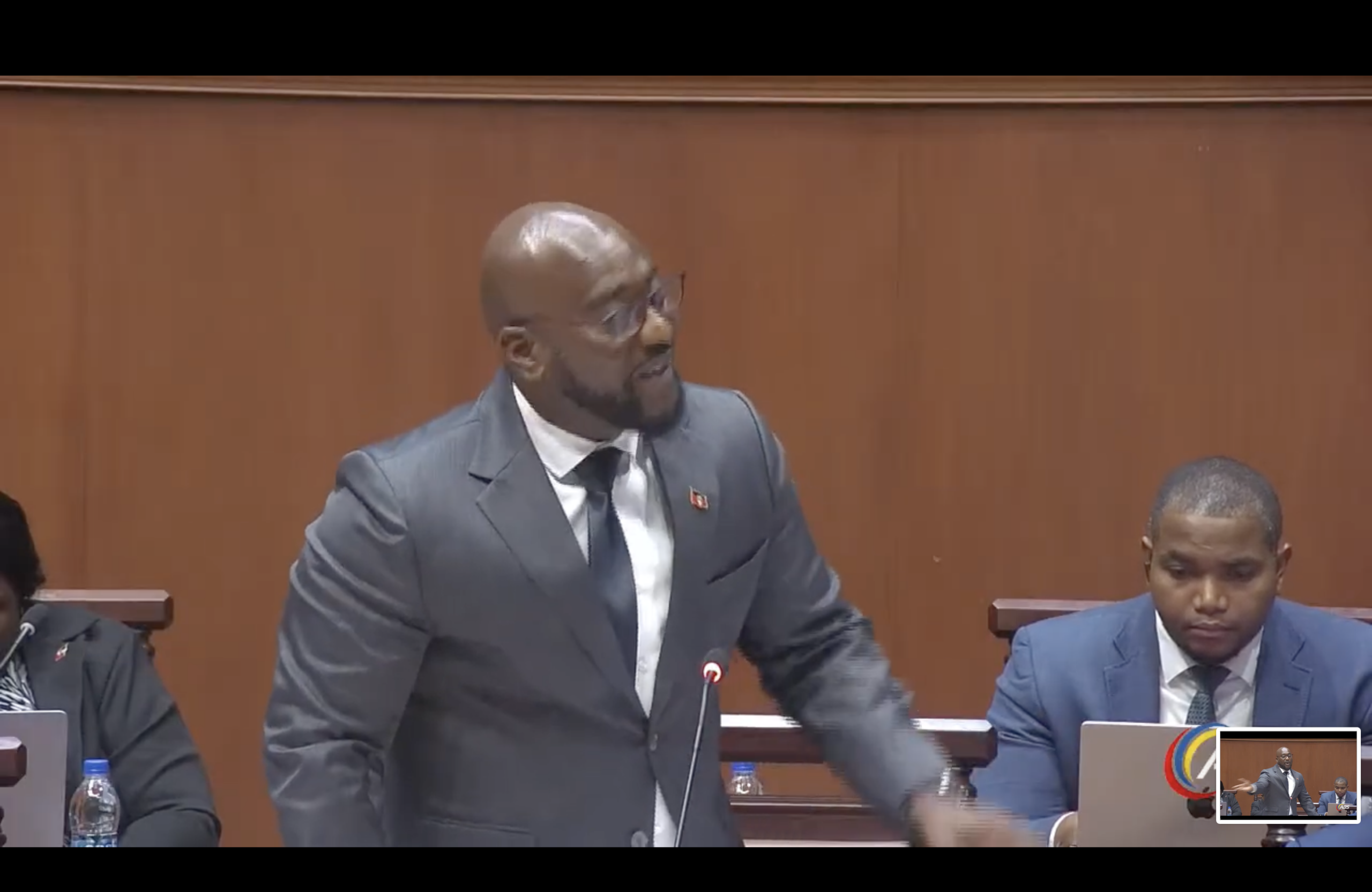
As the upper legislative chamber debated sweeping updates to the nation’s gun control framework, one sitting senator has made a forceful case for expanding legal liability beyond direct gun offenders to people who knowingly harbor armed criminals or hide illegal weapons in their residences.
Sen. Lamin Newton’s intervention during floor debate on the Firearms Amendment Bill argues that current enforcement efforts incorrectly focus exclusively on individuals who pull the trigger or commit crimes with firearms, while ignoring the critical support network that allows illegal gun activity to continue unpunished. Under Newton’s proposed framework, anyone who knowingly shelters armed offenders, conceals their illegal weapons, or aids them in evading capture by law enforcement would face the full force of the law alongside the primary offenders.
“This proposed legislation must also sweep these enablers into the legal net,” Newton told fellow members of the Senate, emphasizing that many community members continue to protect romantic partners or close relatives even when they are fully aware their household is harboring illegal firearms and facilitating criminal activity.
Newton questioned the plausibility of widespread claims of ignorance from household members, pointing out the obvious red flags that accompany criminal gun involvement. How can family members genuinely claim they have no idea that a relative is involved in illegal activity, he argued, when that same person regularly brings home high-priced goods and enormous stacks of cash despite having no verifiable legitimate source of income?
“When you walk through the door carrying a bag with $100,000, even $200,000, and you haven’t held a steady job anywhere, where on earth do you think that $200,000 comes from?” he asked during his floor speech.
The senator highlighted a particularly urgent risk linked to keeping illegal firearms in family residences: the direct danger these weapons pose to children and other innocent household members. Beyond giving armed offenders a safe space to evade police or rival criminal groups, Newton warned that storing unsecured firearms in homes with minors puts vulnerable people at unnecessary risk of accidental harm or violence.
Newton’s plea included a direct call for the sitting government to ensure the final version of the amendment explicitly addresses aiding and abetting gun crime, noting that anyone who knowingly harbors or protects armed offenders deserves to face proportional criminal penalties. He also pushed back against the widespread culture of silence that has hampered law enforcement efforts across the country, arguing that widespread fear of being labeled a snitch has left communities overrun by gun violence.
To illustrate the impact of this culture of inaction, Newton shared a recent anecdote from a preacher in Grace Farm. During an attempted street robbery of a local woman, the preacher stepped in to intervene, only to be kicked violently in the stomach by the attacker. As the preacher called out for bystanders to help, not a single onlooker stepped in to assist, Newton recounted.
He urged local residents to set aside their fear and share any information they have about illegal gun activity with law enforcement, stressing that bringing offenders to justice does not just make the community safer — it may ultimately save the life of the person who comes forward. “The life you save by speaking up may just be your very own,” he said.
Following the conclusion of floor debate, the Senate advanced and passed the Firearms Amendment Bill, which updates the original Firearms Act to introduce harsher criminal penalties for individuals convicted of gun-related offenses.