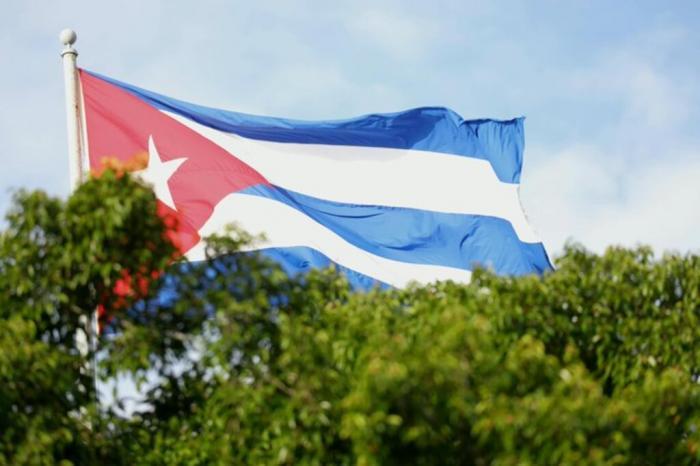
HAVANA – On a Saturday marked by remembrance of Cuba’s centuries-long fight for sovereignty, Cuban officials officially announced the full schedule of commemorative events for the 68th anniversary of the Triumph of the Revolution, scheduled to take place on January 1, 2027. The announcement comes against a backdrop of growing economic and political pressure from the longstanding United States blockade against the Caribbean nation, which Cuban authorities say has intensified in recent years.
The announcement was made during a national ceremony honoring the 158th anniversary of the start of Cuba’s wars of independence from Spanish colonial rule. José Ramón Monteagudo, a member of the Secretariat of the Central Committee of the Communist Party of Cuba (PCC) and head of the Party’s Agri-food Department, delivered the keynote address at the event, which was also attended by Cuban President Miguel Díaz-Canel, other members of the PCC Political Bureau, and senior state and government officials.
In his remarks, Monteagudo framed the 1959 revolutionary triumph as the fulfillment of the independence vision first laid out by Cuba’s founding father Carlos Manuel de Céspedes, who launched the anti-colonial struggle on October 10, 1868, by freeing the people he had been enslaved and calling on Cubans to rise up against Spanish rule. Monteagudo noted that Céspedes issued an early warning about the expansionist ambitions of U.S. political leaders toward the island – a warning that Monteagudo emphasized remains deeply relevant today, as Cuba navigates renewed external pressure from Washington.
“The Revolution stands as a living, enduring force,” Monteagudo stated, crediting its persistence to the unwavering solidarity of the Cuban people and the foundational legacy of revolutionary leaders Fidel Castro, the former Commander-in-Chief, and Army General Raúl Castro.
The multi-week commemorative period leading up to the January 1 anniversary has been designed to center the continuity of Cuba’s revolutionary process, honor the decades of popular resistance the country has maintained amid external interference, and uplift the political, historical, cultural and social values that have shaped the modern Cuban state. Monteagudo stressed that national unity around the Communist Party of Cuba remains the country’s most valuable strategic asset in facing external challenges.
Key planned activities for the anniversary include national tributes to Cuba’s independence and revolutionary heroes and martyrs, programs to reinforce the country’s national defense preparedness, accelerated work on key socioeconomic development priorities, and continued rollout of the nation’s ongoing structural transformation agenda.
Monteagudo called on all Cuban political organizations, mass grassroots movements, and state institutions to ramp up preparations for the anniversary, prioritizing broad public participation to deliver meaningful progress for the Cuban people tied to the historic milestone.
Against the severe economic strain caused by the intensifying U.S. blockade, Monteagudo reaffirmed the Cuban leadership’s unshakable conviction that national unity, steadfast commitment to sovereignty, and collective faith in a sovereign future are an invincible force. To address current economic challenges and deepen Cuba’s socialist development project, the country has already approved 176 targeted socioeconomic reforms across 23 distinct thematic areas, Monteagudo confirmed. These reforms are focused on advancing social justice, expanding national wealth generation, and ensuring that new prosperity is distributed equitably across all Cuban communities. Successful implementation of these changes, he added, depends on the shared understanding and active, intentional participation of every sector of Cuban society.
The 1959 revolutionary victory that Céspedes’ independence ideals made possible, Monteagudo concluded, imposes a daily responsibility on all Cubans to continue building a nation that is more just, fully sovereign, and unwaveringly committed to international solidarity.