On October 6, an intense tropical wave swept across the Windward Islands, bringing more than 130 millimeters of torrential rain to Saint Vincent and the Grenadines (SVG) over a 24-hour period. The extreme weather triggered widespread flash flooding, multiple landslides, rockfalls, and swollen, overflowing rivers across the Caribbean nation, leaving a trail of destruction: major transportation routes were paralyzed, roadways in the capital Kingstown were completely blocked, hundreds of residential properties suffered damage, and core public infrastructure including the country’s main healthcare facility, Milton Cato Memorial Hospital (MCMH), saw operations severely disrupted.
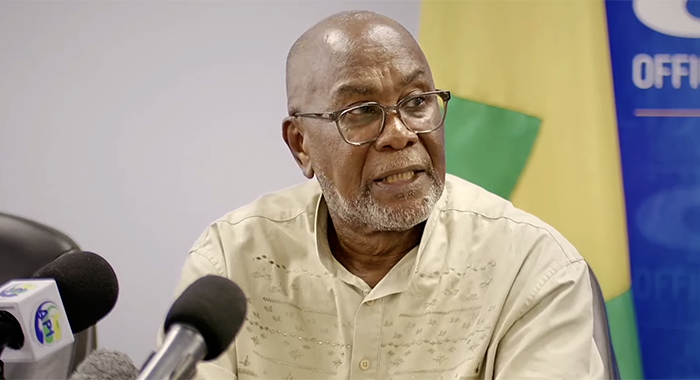
Four days after the storm hit, Deputy Prime Minister and National Security Minister St Clair Leacock, who also oversees the country’s disaster management portfolio, shared key updates on the national response during an official press briefing in Kingstown on Friday. He highlighted one unexpected bright spot amid the chaos: widespread cooperation from the general public allowed emergency response teams to dedicate all their resources and efforts to post-storm recovery work, rather than diverting attention to public disorder issues that often complicate disaster responses.
Leacock drew on insights from a national security simulation exercise he had just attended in neighboring Barbados, noting that maintaining public law and order is a common gap and source of vulnerability during natural disaster events. He explained that it is not uncommon for bad actors to exploit the chaos of a crisis to engage in activities that go against the national interest, creating unnecessary extra burdens for recovery teams and slowing rebuilding work.
“There are things we very often take for granted. Only the other day, I was in Barbados for a national security exercise, and we discussed how recovery efforts are often made far more difficult by those who take advantage of others’ misfortune for personal gain,” Leacock told reporters.
The minister expressed sincere gratitude that no large-scale public unrest or looting occurred in SVG following the storm, and he praised the rapid readiness and deployment of officers from the Royal St. Vincent and the Grenadines Police Force, particularly members of the force’s Special Services Unit (SSU) assigned to MCMH. According to Leacock, SSU officers were deployed to the main hospital early on the morning after the storm hit, where they helped clear standing floodwater and supported nursing staff with the massive cleanup operation required to restart healthcare services.
“I was particularly heartened to know that the SSU responded promptly and efficiently to the day’s highest-priority emergency,” Leacock said, also extending commendation to Prime Minister Godwin Friday for his clear, focused leadership through the crisis. He noted that the prime minister prioritized visiting affected communities starting with MCMH, a decision rooted in the hospital’s critical role in national public health.
Leacock also shared that he was impressed by the resilience of SVG’s state infrastructure, reporting that inter-agency coordination was fully synchronized before dawn on the morning after the storm hit. After receiving initial briefings from his permanent secretary, police leadership, the National Emergency Management Organisation (NEMO), and NBC Radio, senior officials were already making critical, time-sensitive management decisions by 4 a.m.
“I am pleased to say that the state apparatus is intact and it works effectively when we need it,” Leacock stated.
Following those early morning coordination meetings, Prime Minister Friday took direct charge of field operations, leading on-the-ground inspections of damaged properties. He developed a targeted deployment strategy for recovery teams before launching his site visits, which began as planned at MCMH.
“Experience teaches us that we cannot always rush to conclusions based on what we see at first glance. The full extent of damage often only becomes clear as we conduct more thorough assessments,” Friday noted during his field visits.
As recovery operations continue to progress, national security officials have called on the public to remain patient as teams work to map the full long-term extent of damage from the storm. Already, Infrastructure Minister Nigel Stephenson and Central Leeward Representative Conroy Huggins have begun detailed structural assessments of damaged properties and infrastructure in the Buccament area. These inspections will not only support immediate restoration work but also inform plans to engineer reinforced, climate-resilient infrastructure that will reduce homeowners’ risk of similar damage during future extreme weather events linked to shifting climate patterns.