A transformative urban upgrade initiative is underway to revitalize the cruise passenger departure area at the Taíno Bay Cruise Terminal, nestled in the lower district of Puerto Plata’s Historic Center. Spearheaded by Presidency Minister José Ignacio Paliza in partnership with the Executive Unit for Neighborhood and Environment Readaptation (URBE), the project targets four key zones: the Old Pier, Francisco Alberto Caamaño Avenue, the lower stretch of Duarte Street, and the abandoned historic railway corridor.
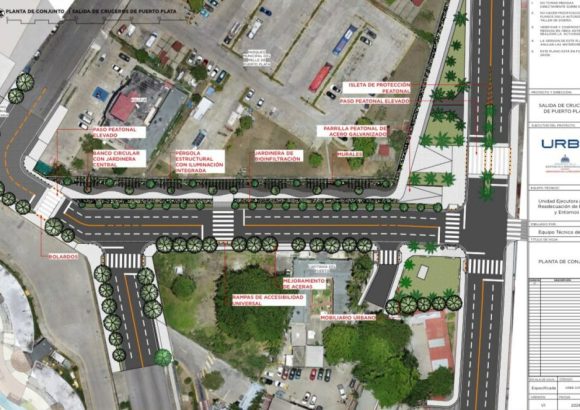
The core goal of the redevelopment is to craft a structured, easily navigable public space that aligns with the growing volume of international tourists flocking to the coastal Dominican city. Preliminary designs for the Puerto Plata Cruise Ship Terminal Project outline a full suite of public space enhancements, from elevated pedestrian overpasses and universally accessible ramps to upgraded sidewalks, pedestrian safety islands, protective bollards, and all-new street furnishings.
Additional planned features include circular seating built around central planters, bio-infiltration garden beds for sustainable drainage, a structural pergola outfitted with integrated lighting, culturally themed murals, and a galvanized steel pedestrian grating for improved walkability. A standout component of the scheme is the restoration and adaptive reuse of the old railway line’s terminus. This underutilized historic space is set to be transformed into a multi-purpose hub that could house a local heritage museum, public restrooms exclusively for cruise passengers, and dedicated tourist information centers.
Beyond improving the visitor experience as guests exit the Taíno Bay terminal, the project is designed to strengthen connectivity between the port district, the iconic Historic Center, and other popular tourist draws across Puerto Plata. As part of the redevelopment, the local Civil Defense unit currently based in the project area will be relocated to a new facility offering significantly improved working conditions for its staff.
Across all design elements, the initiative integrates best practices for pedestrian mobility, inclusive accessibility, sustainable landscaping, road safety, and public space revitalization. The end goal is to deliver fit-for-purpose urban infrastructure that serves the needs of both local residents and the millions of visitors that pass through the terminal annually.
Before the project can move forward to formal approval, URBE and project leaders will conduct targeted complementary studies to assess the area’s groundwater table, with a specific focus on drainage systems and flood risk mitigation. Once these technical assessments are finalized, Minister Paliza will officially present the full proposal to the Puerto Plata City Council, where all details of the plan and its implementation scope will be shared publicly with local governance leaders and stakeholders.