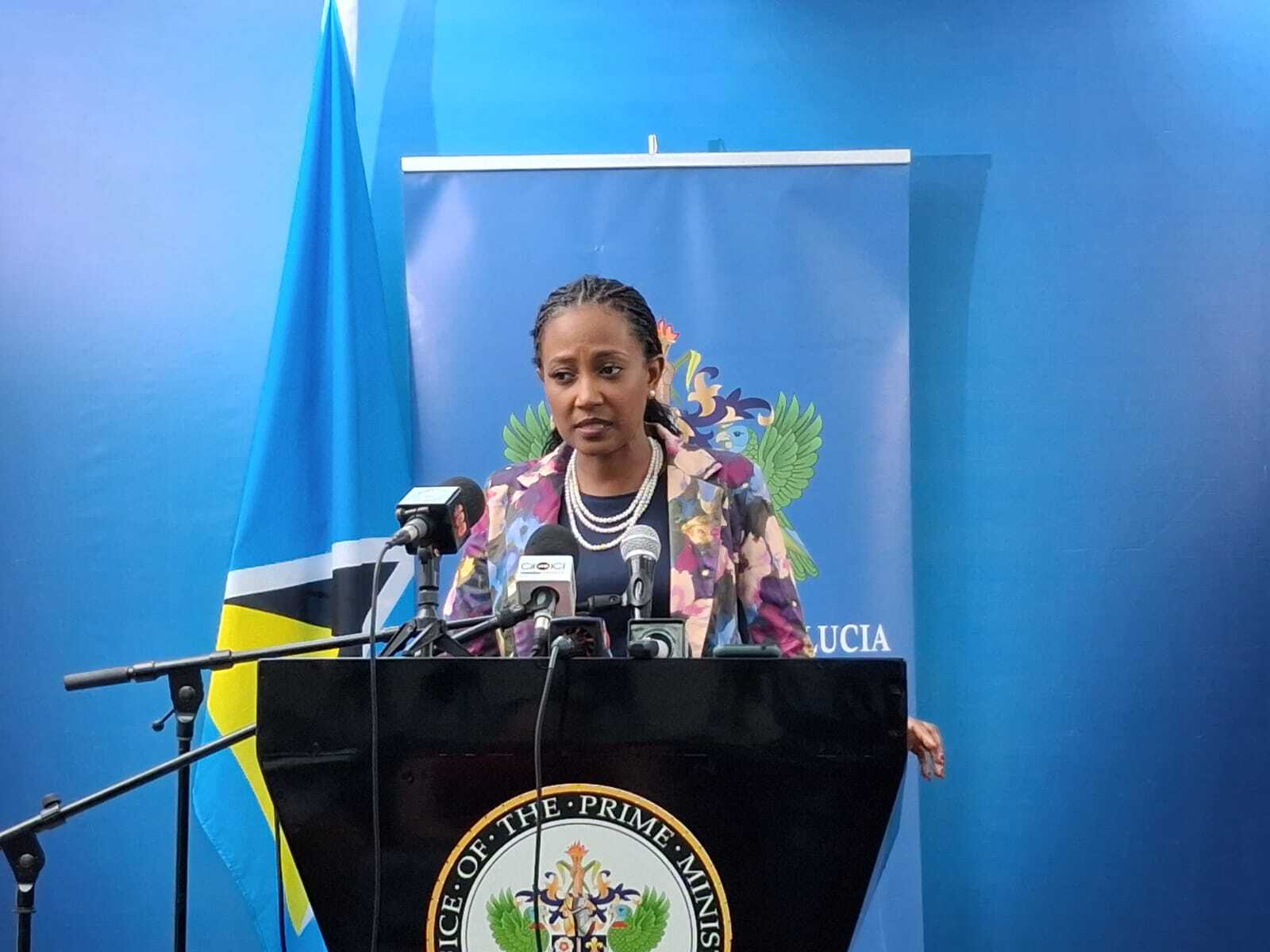
After wrapping up participation in the 2025 Caribbean Week of Agriculture (CWA), hosted in Jamaica between September 27 and October 2, Saint Lucia’s Minister for Agriculture, Fisheries, Food Security and Sustainable Development Lisa Jawahir is pushing regional stakeholders to move past decades of discussion and accelerate action to resolve persistent barriers to the movement of goods and people across the Caribbean.
Addressing reporters at a pre-Cabinet press briefing held Tuesday, Jawahir highlighted one key takeaway from her time in Jamaica: the country’s rapid, coordinated response to the impacts of 2025’s Hurricane Melissa, a demonstration of effective crisis response that she called a critical lesson for regional governments.
During her visit, Jawahir also toured Jamaican farms and agro park facilities, a model she confirmed will soon be rolled out across Saint Lucia to boost the island’s agricultural capacity. But beyond these positive takeaways, this year’s CWA meeting once again centered on long-unresolved challenges that have topped regional agendas for years — with the free flow of goods across Caribbean borders topping the list, especially as Saint Lucia works to establish itself as a leading agricultural hub in the southern Caribbean.
Jawahir expressed growing frustration with the slow pace of progress on key regional integration initiatives, noting that core issues remain unaddressed despite repeated discussion at multiple regional summits and working meetings. “I find it very difficult to sit back and listen to the same things being said over and over,” she told media. “While there are positives coming out of these meetings on the way forward, we are still at the same place as it relates to regional travel.”
One high-profile example she called out is the years-long proposal for a dedicated regional cargo vessel to transport livestock between Caribbean nations. When Saint Lucia looks to expand its domestic livestock production, Jawahir questioned where the promised regional transport capacity is, asking “Where is the boat that we have been talking about as a Caribbean, to take cows or swine from Jamaica to Saint Lucia?”
To advance the island’s livestock sector despite ongoing cross-border delays, Jawahir announced that her ministry has already launched an artificial insemination laboratory in Volet, Micoud. The facility allows local producers to import genetic material from Jamaican livestock to improve domestic herds, sidestepping the need to ship live animals across regional waters for the time being. “We are at least able to get the semen samples from Jamaica and use that home and take it from there,” she explained.
Looking ahead to her broader policy priorities, Jawahir also outlined plans to develop satellite abattoirs across the island, noting that a large share of Saint Lucia’s working butchers hail from her own Castries South-East constituency. She emphasized that any expanded production will need to align with strict quality standards to meet the demand for consistent, high-quality meat cuts from local supermarkets and tourist hotels.
The push for a reliable, affordable regional ferry service that connects CARICOM member states for both passenger and cargo transport has been on the regional integration agenda for more than 50 years. Most recently, the issue was revisited during the 51st Regular Meeting of the Conference of Heads of Government of CARICOM, hosted by Saint Lucia back in July. At that summit, Trinidad and Tobago stepped forward with a pilot proposal: the country would lead the initiative by repurposing one of its existing active vessels to launch an initial service, with the long-term goal of developing a private sector-led operation backed by harmonized maritime regulations, legal frameworks, and insurance coverage.
Jawahir closed by reiterating her call for urgent, tangible progress. “Moving forward, the discussions will have to continue on regional travel and regional trade…but that was the biggest challenge, you know, knowing that this issue has existed for some time now,” she said. “And I really want to urge you, all of the participants, to take an active role, and I certainly will be an advocate for it, that we need to talk a little less and act quicker.”