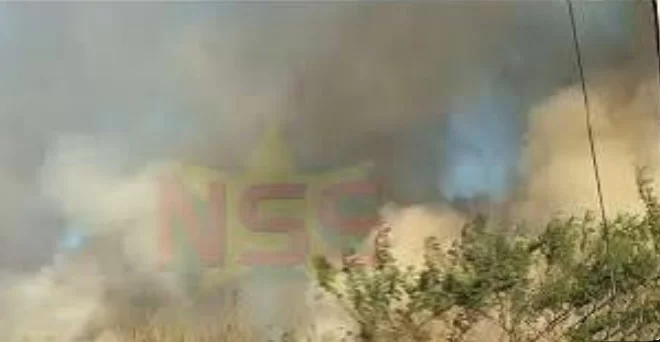
A growing public safety crisis is unfolding in Suriname, where the national fire service is confronting an unprecedented spike in wildgrass fires just as a significant share of its critical firefighting equipment remains out of service due to mechanical failures. With overlapping fire emergencies becoming increasingly common, officials have implemented a new triage protocol that prioritizes structure fires and incidents threatening human life over uncontained grass blazes. Minister of Justice and Safety Harish Monorath is issuing an urgent warning that extreme caution with open flames is non-negotiable through the coming months of October and November, when fire risk will remain at elevated levels.
According to official statements from the Ministry of Justice and Safety, persistent unseasonal heat, intense direct solar radiation, and prolonged drought conditions have created a tinder-dry landscape that increases both the likelihood of ignition and the speed at which fires can spread. Officials specifically cite the ongoing El Niño weather phenomenon as a key driver of these abnormal drought and heat conditions. In recent weeks, the number of reported grass fires has jumped sharply, with multiple incidents spreading rapidly from open vegetation to residential homes and other built structures, forcing firefighters to respond to multiple large blazes simultaneously across affected regions.
Compounding the challenge of the rising fire risk, the fire service’s operational capacity is already stretched to breaking point. Both staffing and equipment are in limited supply, with a number of core firefighting trucks currently non-operational due to unrepaired defects. Ministry officials confirmed they have now allocated emergency funding to repair salvageable vehicles, with replacement parts set to be sourced from international suppliers. Longer-term, the government is also moving forward with plans to expand the fire service’s fleet with additional new firefighting vehicles. However, the official announcement did not disclose how many vehicles are currently out of service, nor how many new units will be purchased to address the gap.
Under the new prioritization framework rolled out to manage overlapping incidents, fire response teams are required to triage calls based on immediate risk to life and property. Structure fires and incidents where human life is endangered will always be dispatched to first before grass fire responses. Even with this policy in place, ministry officials stress that grass fires remain an inherently major hazard: under dry, windy conditions, flames can expand across hundreds of acres in mere hours, putting entire communities at risk.
One community is facing particular scrutiny from officials: Ornamibo, which has already seen multiple major grass fires break out in a short span of time. The Ministry of Justice and Safety is now partnering with the Ministry of Public Works, Spatial Planning and Public Green Space to develop targeted long-term measures to reduce fire risk in the area.
In a public appeal, the government is urgently urging local communities to refrain from burning waste, clippings, or any other combustible material in open air through October and November. Officials also advise residents against storing flammable vegetation and materials in close proximity to homes and other buildings, to reduce the risk of accidental spread.
Minister Monorath closed his statement by expressing public appreciation for the nation’s firefighters, noting that personnel continue to carry out their daily duties faithfully despite limited resources and extreme, sustained work pressure. He emphasized that preventing catastrophic fire events is not solely the responsibility of emergency services – it requires shared action and caution from every member of society.