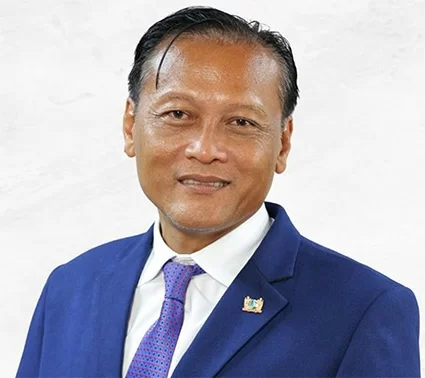
Surinamese National Assembly member Raymond Sapoen of the National Democratic Party (NDP) has delivered a measured critique and assessment of the government’s 2027 annual policy address, breaking down the plan’s strengths, gaps, and implications for the South American nation’s economic and social trajectory.
Sapoen outlined that the 2027 policy address appropriately grounds its priorities in the country’s current socio-economic reality, laying out cautious, achievable targets for the upcoming legislative year. For his part, the assembly member reaffirmed his core policy focus for the next two to three years: preserving macroeconomic stability while upholding robust social protection for the most vulnerable segments of Surinamese society.
Sapoen welcomed the president’s pledge to strengthen household purchasing power through necessary wage adjustments, noting that the ruling coalition has delivered meaningful, underrecognized progress in maintaining social stability and, critically, exchange rate stability. This achievement, he emphasized, carries even greater weight given Suriname’s heavy reliance on imports and the ongoing regional conflict in Eastern Europe that has sent global energy prices soaring.
On the critical front of oil and gas development, a key growth driver for Suriname’s future, Sapoen repeated his earlier criticism that political leadership has so far shown insufficient commitment to strategic planning, leaving almost all operational and strategic responsibility entirely up to state-owned oil company Staatsolie. That said, he highlighted two positive steps laid out in the policy address: the president’s commitment to advance the Local Content Bill for legislative consideration next year, and the plan to integrate a dedicated oil and gas strategy into Suriname’s overarching long-term national development framework — a necessary move that Sapoen says deserves full cross-party support.
Despite these promising commitments, Sapoen raised urgent concerns about a critical gap in preparedness across government ministries. He noted that key cabinet departments, including the Ministry of Education, the Ministry of Agriculture, Livestock and Fisheries, and the Ministry of Economic Affairs, have tabled business-as-usual budgets that fail to integrate planning for the massive economic and social shifts that will accompany the expansion of the oil and gas sector. Sapoen added that the president’s address was vague on this critical coordination: while the administration voiced concern over potential food price spikes tied to the emerging oil economy, it offered no clear roadmap for adjusting agricultural policy to offset these risks.
Turning to the gold sector, another cornerstone of Suriname’s economy, Sapoen praised the president’s straightforward, action-oriented stance on cracking down on illegal environmental pollution from mining activities, a pledge that the NDP lawmaker says his side will fully support. Sapoen stressed that any effective crackdown requires strict enforcement of existing environmental regulations, and that parliament, the cabinet and individual ministers will be held accountable for delivering on these enforcement commitments, with no exceptions for special interests. He did, however, point to a notable omission: the president failed to address the temporary six-month reduction in gold royalties implemented last year, with no update on whether the cut will be extended or allowed to expire.
On fiscal matters, Sapoen noted that the projected 2027 budget deficit stands at 10.8 billion Surinamese dollars, roughly 2 billion Surinamese dollars lower than the deficit forecast for the current fiscal year. This reduction marks a positive step toward bringing Suriname’s still-fragile public finances under greater control, he said. Even so, Sapoen called for strict, proactive fiscal management in the 2027 fiscal year, led by a vigilant finance ministry and clear priority-setting from the national government, with targeted investments focused on four core areas: education, public health, infrastructure, and domestic production.