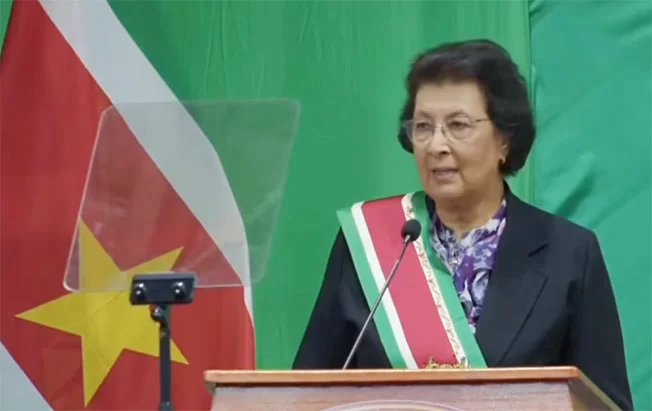
Suriname is pushing forward with an ambitious energy sector overhaul, aiming to eliminate rolling blackouts (known locally as loadshedding) and shift its national power grid away from heavy fuel oil dependence toward cleaner natural gas and solar energy. This strategic roadmap was laid out by President Jennifer Simons in her 2027 annual address to the nation.
The plan centers on targeted new investments in the energy sector that will address long-standing, widespread power outages that have disrupted daily life and economic activity across the country. Beyond solving current infrastructure gaps, the investments are designed to prepare Suriname for a projected rise in electricity demand as the nation’s economy and population grow in the coming years.
According to President Simons’ address, the national Electricity Sector Plan has already received formal approval from the Surinamese government. The year 2027 will mark a major ramp-up of implementation efforts, advancing the country’s overarching goal of delivering reliable, affordable electricity to all citizens by 2030, dubbed the “Energy for All by 2030” initiative.
A key milestone on the 2027 timeline is the launch of the BIO-SWEET project, scheduled to begin mid-year. This multi-purpose infrastructure project will extend both electricity access and clean drinking water to 26 underserved communities across Suriname. It also includes provisions to expand the national power transmission grid into the largely undeveloped eastern region of the country, opening new opportunities for economic growth in that area.
In her address, the president highlighted that progress toward the clean energy transition is already well underway. Over recent years, the government has expanded renewable power generation capacity through the addition of three new utility-scale solar power plants. It has also completed critical upgrades to existing power distribution networks to reduce transmission loss and improve reliability, and launched pilot projects testing small-scale mini-hydropower systems for rural communities.