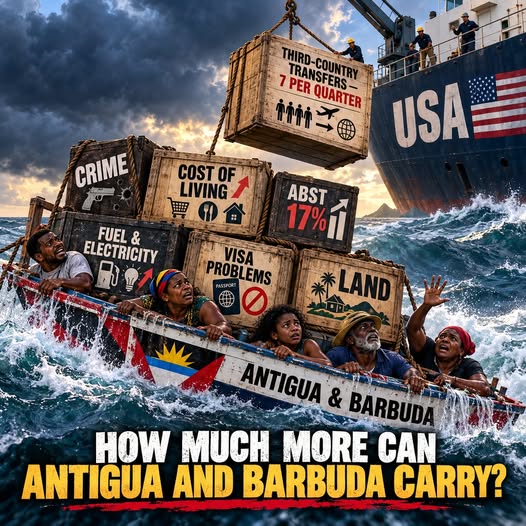
A controversial agreement struck by Antigua and Barbuda’s government to accept up to seven third-country deportees from the United States every quarter has sparked fierce public backlash, with critics slamming leaders for prioritizing U.S. security interests over the safety of their own citizens amid an ongoing national violent crime crisis.
The quarterly quota translates to an average of at least two deportees entering the small Caribbean nation each month, for an as-yet-unannounced timeline. Local commentator Yves Ephraim has emerged as a leading voice of opposition, arguing that the deal effectively sacrifices Antiguan and Barbudan public safety as a goodwill gesture to Washington at a time when the current administration is already struggling to bring widespread violent crime under control.
Critics question the judgment of a government already grappling with unmanaged crime that would voluntarily agree to absorb dozens of deportees annually with undisclosed backgrounds, including potential criminal histories. The opposition points out that harsher sentencing alone has failed to deter crime in the country, and recent comments from Prime Minister suggesting current inmates live comfortably in custody undermine arguments that incarceration will deter new offenses from deportees.
The deal draws particular controversy following comments by U.S. Senator Marco Rubio, who framed the Biden administration’s deportation policy as an effort to remove what he described as dangerous offenders, including perverts and pedophiles, from U.S. communities to keep American citizens safe. Critics argue that even with the vast economic and law enforcement resources of the U.S., Washington has chosen to offload these high-risk individuals to small nations like Antigua and Barbuda, which already lack the capacity to manage its current domestic security challenges.
Opponents of the agreement say the decision reveals the Antiguan and Barbudan leadership holds little regard for the well-being of its own population, willingly accepting people deemed too dangerous for U.S. communities regardless of the risk to local women and children. Critics go further, arguing the deal exposes a longstanding pattern of putting foreign interests ahead of domestic needs — from prioritizing foreign investment to now compromising national sovereignty for the sake of U.S. relations.
The outrage has been compounded by a litany of existing grievances against the administration, from land seizures on Barbuda and the Booby Alley neighborhood to the erosion of the nation’s Afro-centric political identity in exchange for voting support from foreign nationals. Local residents also face mounting economic pressures: skyrocketing fuel and electricity costs, an increase in the Antigua and Barbuda Sales Tax from 15% to 17%, a surging cost of living, the closure of the national cancer treatment center, and new restrictions that block local students from obtaining U.S. study visas.
With the nation now set to become a dumping ground for people the U.S. has deemed a threat to its own citizens, critics are asking Antiguan and Barbudans to question how much more of their safety, sovereignty and quality of life they are willing to give up. They also point out the stark hypocrisy of a government that actively campaigns for colonial reparations to benefit descendants of enslaved people, yet disregards the immediate safety of those same descendants today. Many residents have already noted that the deal helps explain why growing numbers of Antiguans and Barbudans choose to resettle permanently in the U.S., where they can access greater personal safety than in their home nation.