A fresh diplomatic dispute has erupted between neighboring Central American nations Guatemala and Belize, after independent flight tracking data purportedly recorded an unauthorized Guatemalan military aircraft operating in Belizean airspace last week. At the center of the controversy is Guatemalan President Bernardo Arévalo, who has issued a categorical denial that any such incursion took place, even as Belizean officials have raised formal objections over the alleged violation of national sovereignty.
The incident first came to public attention after regional outlet News 5 tracked a single-engine Guatemalan Air Force plane, identified by its callsign FAG706 and registration number 706, a Pilatus PC-12 NG model. According to flight data from both News 5 and major global flight tracking platforms FlightAware and Flightradar24, the aircraft departed Guatemala City at 6:01 p.m. on the Thursday prior to Arévalo’s announcement, conducted multiple low passes near the Lighthouse Reef Atoll off Belize’s coast, and had its transponder signal lost near the popular tourist destination Caye Caulker at 8:06 p.m. the same evening. Belizean Prime Minister Briceño later told the United Nations General Assembly that the aircraft intentionally disabled its transponder while operating over Belizean territory.
Shortly after the flight tracking data was published, Belize’s Ministry of Foreign Affairs issued an official statement confirming it had received preliminary reports of the unauthorized aircraft presence. The ministry warned that any incursion into Belizean airspace constitutes a clear violation of the country’s national sovereignty, and that any such act would be met with an appropriate official response. Guatemala’s Ministry of National Defence released a general statement the same day affirming that the country’s armed forces always operate in full compliance with international and domestic law, but stopped short of directly addressing the specific flight in question.
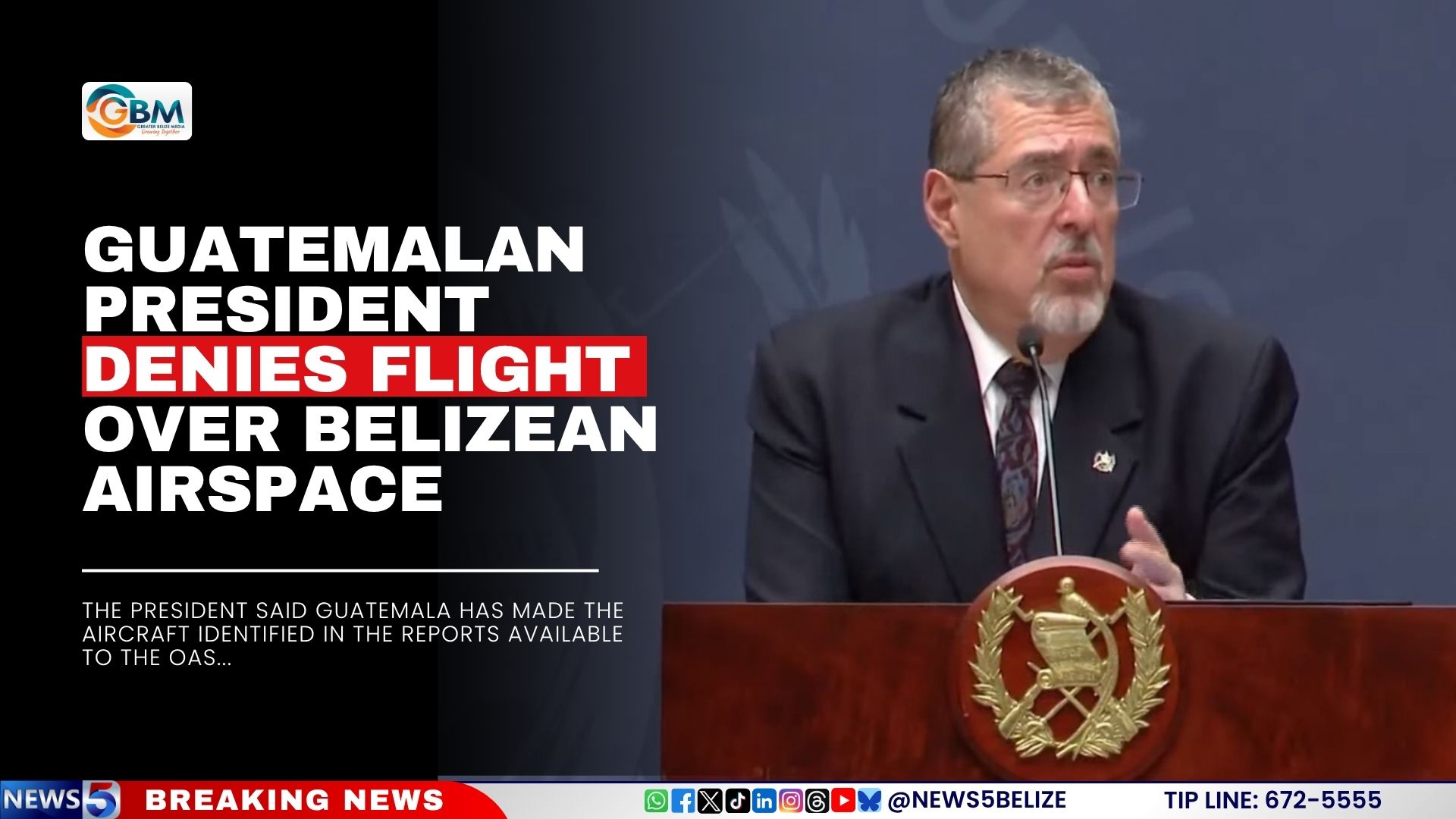
Speaking publicly for the first time on the controversy following the matter being raised at the UN General Assembly, Arévalo told reporters that the claim of an unauthorized flight was unfounded. He noted that Guatemalan officials were caught off guard when the accusation was brought forward at the UN, prompting the country to exercise its formal right of reply under United Nations procedural rules. The president cast doubt on the origin of the flight tracking claims, suggesting the report may have originated from a teenage hobbyist using a public flight-tracking application.
To resolve the dispute transparently, Arévalo announced that his government has made the specific aircraft identified in flight tracking reports available for independent inspection by the Organization of American States (OAS). OAS observers will be granted full access to the plane’s logged flight records, which Arévalo says will definitively prove the aircraft never entered Belizean airspace and confirm its actual flight route.
Arévalo also referenced the permanent OAS liaison office that operates in the border adjacency zone between Guatemala and Belize, a body established specifically to facilitate open communication between the two governments and monitor developments along their shared border. He noted that the office releases regular public reports on border activity, and that the vast majority of incidents in the area are minor and resolved through existing diplomatic channels. Closing his remarks, Arévalo reiterated once again that the reported incursion “did not take place”, and said his government awaits the outcome of the OAS verification to formally confirm this position.