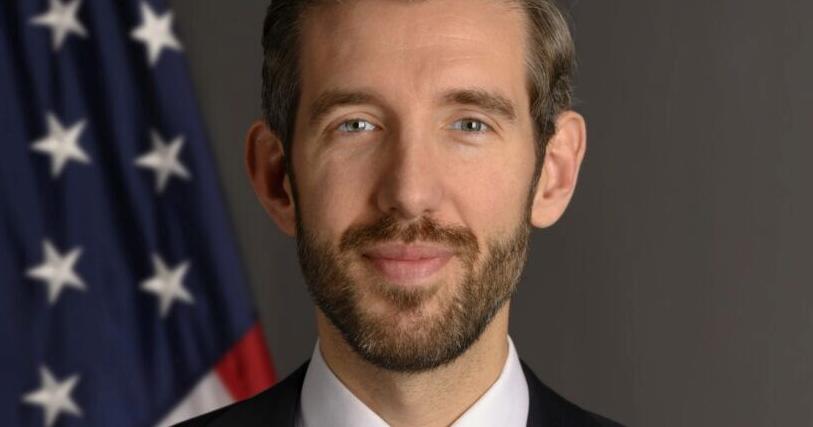
Trinidad and Tobago has cemented its place as a trailblazer within the U.S.-led Shield of the Americas coalition, becoming the first member state to align with Washington in labeling 25 transnational criminal groups as foreign terrorist organizations. The landmark move earned public praise from top U.S. hemispheric affairs official Juan Pablo Segura, who framed the decision as a major leap forward in the coalition’s shared fight against the cross-border harm of narcoterrorism.
Just days ahead of the designation announcement, Prime Minister Kamla Persad-Bissessar joined U.S. President Donald Trump and other regional leaders at a high-level Shield of the Americas summit to coordinate collective security strategies. Shortly after that meeting, she took the stage at the 81st United Nations General Assembly in New York to outline Trinidad and Tobago’s global security agenda ahead of its 2027-2028 term on the UN Security Council.
During her UN address, Persad-Bissessar emphasized that transnational criminal networks pose disproportionate risks to small island states like her own. Trinidad and Tobago, she noted, already bears the direct costs of these activities, from rising gang violence and drug trafficking to the uncontrolled flow of illegal weapons and illicit funds across its borders. Restoring public safety has been a core priority of her administration, she added, and the government has deepened collaboration with the U.S. and other international partners to dismantle criminal syndicates operating in the region. She confirmed that countering the illegal cross-border movement of firearms and narcotics will be a top policy priority during her country’s Security Council tenure, with plans to push for improved weapons tracing mechanisms, expanded cross-border intelligence sharing, enhanced maritime and border cooperation, and tighter coordination between source, transit and destination nations for illicit goods.
The landmark decision has sparked nuanced discussion among regional security experts. In an interview with local outlet *Express* following the official announcement, prominent regional security consultant Dr. Garvin Heerah acknowledged the clear security benefits Trinidad and Tobago can gain from deeper alignment within the Shield of the Americas initiative. Launched by the United States in March 2026, the coalition’s stated core goals include combating drug cartels, transnational criminal networks, illegal migration and foreign interference in the Western Hemisphere. Heerah noted that the entire Caribbean region, including Trinidad and Tobago, faces a growing array of transnational threats — from drug and weapons trafficking and human smuggling to maritime crime, money laundering, cyberattacks and organized criminal networks. Expanded intelligence sharing, coordinated cross-border operations, enhanced maritime surveillance, tightened border security and closer law enforcement cooperation would deliver tangible benefits to Trinidad and Tobago and its Caribbean neighbors, he said.
At the same time, Heerah urged policymakers to carefully weigh the geopolitical implications of the partnership, warning that the country must guard against advancing a foreign security agenda at the expense of local interests. “The important question, however, is whose security agenda are we advancing, and how do we ensure that Caribbean interests remain at the centre of the equation?” he said. Heerah stressed that Trinidad and Tobago’s participation in the coalition goes far beyond a standard security cooperation arrangement, carrying clear geopolitical weight given competing strategic priorities: the U.S. holds broad strategic interests across the Western Hemisphere, while Trinidad and Tobago and the broader CARICOM bloc have their own distinct national and regional priorities.
Heerah clarified that closer cooperation does not require surrendering national sovereignty, nor should sovereignty be used as an excuse to reject mutually beneficial security collaboration. “For me, the principle should be partnership without dependency; cooperation without compromising sovereignty,” he outlined. He called on the Trinidad and Tobago government to secure clear, public clarity on key terms of the partnership, including what types of intelligence will be exchanged, the legal framework that governs data sharing, who retains control over shared intelligence, and what operational powers foreign partner forces will hold within Trinidad and Tobago’s borders. He also raised questions about the rules governing joint operations and how potential disagreements will be managed if U.S. and Trinidad and Tobago strategic interests diverge down the line. Heerah emphasized that these questions are not anti-American, but rather fundamental responsible national security planning for any sovereign state.