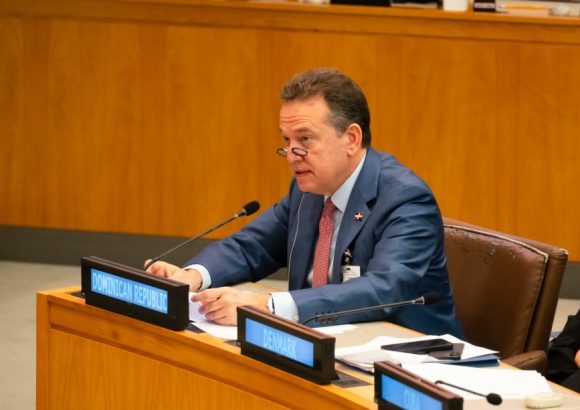
In a recent official statement, Dominican Republic’s Foreign Minister Víctor “Ito” Bisonó has publicly voiced support for the United Nations Security Council’s latest decision to extend the operational mandate of the Gang Suppression Force (GSF) deployed in Haiti for an additional six months, extending the mission’s authorization through March 31, 2027.
Bisonó emphasized that the Dominican government stands firmly behind this mandate renewal, noting that the extension is critical to allowing the multinational security force to maintain its on-the-ground deployment. The core mission of the GSF, he reiterated, is to dismantle widespread gang control across Haiti and rebuild the basic security and stability that Haitian communities desperately need.
Despite backing the extension, Bisonó flagged that the six-month timeline is inherently limited when measured against the enormous scope of security and governance challenges currently confronting Haiti. He issued a clear call to the global community, urging nations and international bodies to step up and deliver the full suite of resources the GSF requires to boost its operational effectiveness: additional personnel, specialized equipment, sustained financing, and robust logistical backing.
Looking ahead to the 2027 mandate review, the foreign minister shared his expectation that the Security Council will approve another extension when the current term expires, pushing for a full one-year extension this time around. He argued that a lengthier mandate would deliver far greater planning certainty for the countries that contribute troops, equipment, and funding to the mission, enabling more consistent and effective long-term operations.
Bisonó also warned that the incremental security gains Haiti has achieved to date remain extremely fragile. He stressed that alongside supporting the GSF’s security work, the international community must prioritize strengthening Haiti’s domestic governmental institutions, and lay the stable groundwork required to hold free, fair, and secure national elections.
The foreign minister went on to outline the Dominican Republic’s own tangible contributions to the GSF mission, underscoring his country’s ongoing commitment to stabilizing its neighboring nation. These contributions include financial donations to the UN Trust Fund established to support the force, provision of medical facilities for evacuations and emergency care for mission personnel, and cross-border logistical support routed from Dominican territory.
Closing his statement, Bisonó reaffirmed a core principle: any sustainable, long-term solution for Haiti must ultimately be led by Haitians themselves. That said, he added, the international community has a critical responsibility to turn its pledges of support into tangible, positive outcomes that improve daily life for the Haitian people.