In the wake of the recent high-profile US-China summit in Washington, the White House has outlined a clear dual-track approach to artificial intelligence cooperation with Beijing, emphasizing that the United States will not slow its AI development progress or integrate its AI sector with China, while agreeing to establish a limited, structured dialogue mechanism to address cross-border AI risks.
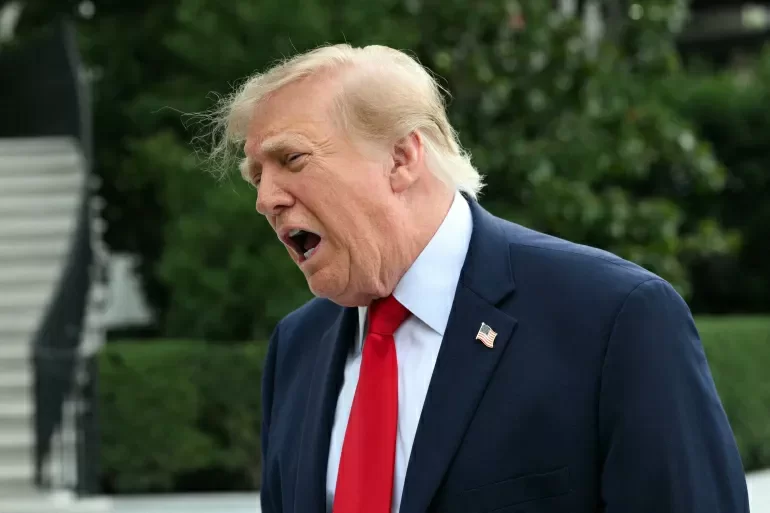
Speaking to reporters Saturday as he departed the White House, former President (note: as per the source’s timeline) Donald Trump said Washington had no plans to “tap the brakes” on AI innovation, arguing that heavy-handed regulatory restrictions would erode the technological edge the US currently holds over China. “We are leading China by a lot,” Trump told journalists, adding that this leading position must be preserved. He flatly rejected the idea of deeper integration between the US and Chinese AI industries, noting “I would rather not integrate, because we’re leading by a lot.”
Trump’s remarks came just days after Chinese President Xi Jinping completed a three-day state visit to the US, where advanced artificial intelligence was included on the bilateral agenda, though Trump said the topic did not take up a large portion of the leaders’ talks. Despite that, the summit produced a tangible outcome on AI governance: the two sides agreed to launch the U.S.-China Super Intelligence Dialogue, a structured forum for exchanging views on the risks and opportunities of cutting-edge AI systems, with the first formal meeting scheduled to take place no later than November 2026. Additionally, the two powers will set up a dedicated bilateral communication channel to handle emergency incidents involving what both sides have agreed to term “super intelligence” (SI).
Details of what types of incidents will fall under this new communication mechanism, and how reporting and coordination between Washington and Beijing will operate, remain undisclosed. The agreement stops far short of joint AI development or a unified global regulatory framework, with deep differences remaining between the two nations on core AI governance priorities.
Notably, Trump has adopted the term “super intelligence” or SI in place of the standard phrase “artificial intelligence” since his address to the United Nations General Assembly, and the White House confirmed both Washington and Beijing have agreed to use this terminology for discussions under the new dialogue framework. China’s Ministry of Foreign Affairs confirmed Saturday that the two sides will continue holding consultations on AI issues, stating that as AI technology evolves continuously, enhanced dialogue and exchange can help countries reach consensus on governance. During his Washington visit, President Xi emphasized that AI must be developed and governed responsibly, and must remain under human control at all times.
The bilateral AI discussions unfold against a backdrop of growing global concern over the rapid development of increasingly powerful AI systems, with many world leaders calling for binding international safety safeguards at the recent UN General Assembly. UN Secretary-General António Guterres warned of the risks posed by unregulated, unaccountable AI development. Top leaders of major US AI firms have also pushed for international cooperation on safety measures in recent weeks: Anthropic CEO Dario Amodei told the UN Security Council that poorly managed AI could eventually pose existential risks to humanity.
Trump, however, has downplayed these warnings, comparing public concern over AI risks to what he frames as earlier “hoaxes,” including the scientific consensus on climate change and the investigation into Russian interference in the 2016 US presidential election. He argues that safety concerns are being weaponized to slow US technological progress.
The divergent approaches between Washington and Beijing extend beyond the debate over how urgently AI regulation is needed. The Trump administration prioritizes maintaining US technological supremacy and strategic competition with China, while Beijing balances investment in AI development with a focus on proactive risk management. China has already implemented a series of national-level AI regulations covering areas including AI-generated content, algorithmic transparency, and high-risk AI applications. China’s willingness to engage in dialogue does not mean strategic competition between the two powers has ended: Washington is focused on preserving its lead, while Beijing continues to build out its domestic AI industry and reduce its reliance on US technology.
Analysts frame the new AI agreement as primarily a confidence-building and communication mechanism for a sector where both sides view each other as core strategic competitors. While Trump has rejected joint development or sector integration, both Washington and Beijing acknowledge that AI risks are inherently cross-border, and that emergency communication is necessary to prevent miscommunication if a serious AI incident occurs. The coming months will test how substantive this new dialogue will be, with the first formal SI meeting scheduled by the end of autumn.