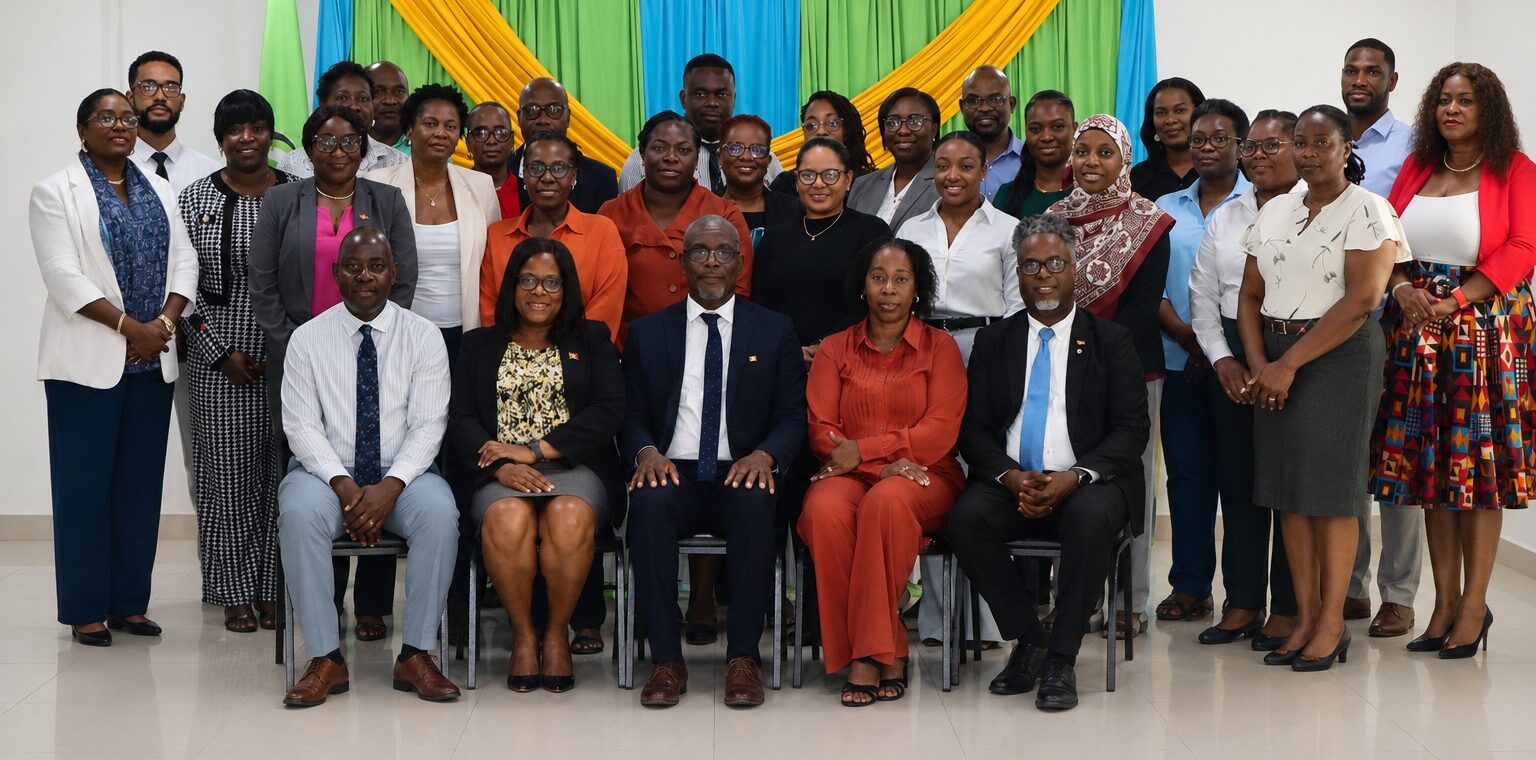
Against a backdrop of growing global economic integration and the rising importance of services as a core growth engine for small island economies, the Trade Policy Development Unit of the Organisation of Eastern Caribbean States (OECS) Commission has rolled out an ambitious cross-sector capacity-building programme designed to strengthen trade policy development, regulatory reform, and trade negotiation capacity across OECS Protocol Member States. The initiative engages key services trade stakeholders from three critical spheres: the public sector, private industry, and civil society.
Officially named *Technical Support to OECS Independent Protocol Member for Specialised Training to Strengthen and Enhance Knowledge Capacity, Policymaking, and Negotiating Skills of Public and Private Sector Stakeholders in the Services Sector*, the 12-month project receives full financial backing from the European Union through the 11th European Development Fund (EDF) Regional Integration through Growth, Harmonisation, and Technology (RIGHT) Programme.
The initiative kicked off with a well-received Inception Meeting in February 2026, which laid out programme priorities and aligned stakeholder expectations across participating member states. Between June and August 2026, the OECS commission delivered in-person national training sessions in six member states: Antigua and Barbuda, Dominica, Grenada, St Kitts and Nevis, St Lucia, and St Vincent and the Grenadines. A final virtual training session for Montserrat is scheduled for September 2026, bringing the national-level training phase to a close.
For small island developing states across the Eastern Caribbean, the services sector has long been recognized as the most critical driver of sustainable economic growth and economic diversification, moving regional economies away from overreliance on a small number of traditional commodity sectors. Beyond boosting near-term economic activity, this capacity-building initiative directly advances implementation of the commitments laid out in the Revised Treaty of Basseterre, which sets the framework for the creation of a fully integrated OECS Economic Union – a single, unified financial and economic space across the bloc.
Speaking at the launch of the Regional Specialised Services Sector Training and Capacity Building Workshop in Antigua and Barbuda, Delores Francis, Senior Technical Specialist for Trade at the OECS Commission, emphasized the long-term value of the programme. “This series of specialised workshops forms part of the OECS Commission’s continuing investment in supporting OECS Protocol Member States to enhance and strengthen the technical skills and knowledge needed to confidently navigate the rapidly evolving landscape of international services trade,” Francis explained. “Our goal is to help stakeholders translate the commitments of trade agreements and the Revised Treaty of Basseterre into tangible commercial opportunities for local businesses and everyday citizens across the region.”
The comprehensive training curriculum is structured across nine targeted modules that build participants’ technical expertise and core competencies in three core areas: services trade policy formulation, regional integration, and international trade negotiation. Key modules cover high-priority topics tailored to the region’s needs: exploration of complementarities and regulatory convergence between the CARICOM Single Market and Economy (CSME) and the Protocol on the OECS Economic Union (ECEU); guidance on identifying non-conforming measures (NCMs) under Articles 26 and 27 of the Revised Treaty of Basseterre and adoption of best-practice frameworks for intergovernmental regulatory cooperation; hands-on training with leading digital trade tools, including the interactive Trade in Services for Development (TS4D) Competitiveness Diagnostic Dashboard and the WTO Statistical Portal; and strategic capacity-building for shaping negotiating positions in emerging areas such as e-commerce, digital trade, and the WTO Joint Statement Initiative (JSI) on E-Commerce.
The curriculum also addresses modern global trends, including the growing servicification of manufacturing, highlighting how expanded business services can boost national employment, increase overall economic output, and strengthen regional participation in global value chains. The initiative prioritizes 10 high-growth priority sectors with strong potential for the region: information and communications technology (ICT), higher education, architecture, engineering, cultural industries, the blue economy, digital health, business process outsourcing (BPO), construction, and medical tourism.
By addressing long-standing regulatory bottlenecks, reducing unnecessary trade barriers, and equipping public, private and civil society stakeholders with modern policy-making and negotiating skills, this project lays the foundation for a sustainable pathway toward stronger regional economic competitiveness and deeper, more effective integration across the OECS bloc.