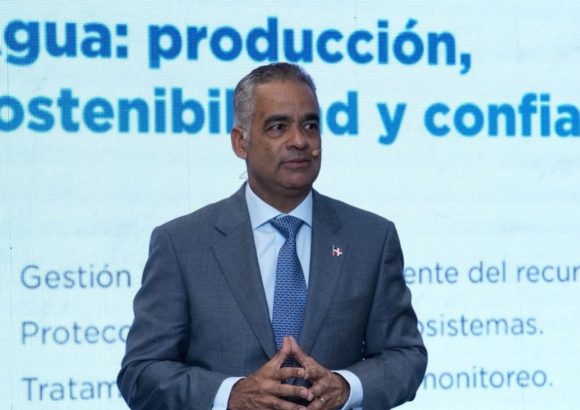
As global demand for critical raw materials and cross-border energy connectivity accelerates, Dominican Republic’s Energy and Mines Minister Joel Santos is heading a high-profile delegation to 2026 Dominican Week in Washington, D.C., where he will put the Caribbean nation’s untapped potential in rare earth elements and critical minerals at the center of international dialogue. A core highlight of Santos’ agenda will be his keynote address at the Inter-American Development Bank (IDB) event titled *Rare Earths and Critical Minerals: A Strategic Opportunity for the Dominican Republic*, where he will outline the country’s ongoing work to map and evaluate potential mineral deposits, as well as its policy push to build collaborative, responsible development partnerships with global stakeholders. This engagement comes amid a sharp uptick in global interest in the Dominican Republic’s mineral reserves, a shift driven by the nation’s recent efforts to forge international cooperation frameworks. Just recently, the Dominican government and the United States formalized a joint agreement focused on bolstering resilient critical mineral and rare earth supply chains, attracting private sector investment, and advancing mutually beneficial development projects. Parallel to that, the Dominican Republic and the European Union have also moved forward with a pact to fund and support geological studies of rare earth elements, gallium, and scandium embedded in bauxite reserves located in the Ávila Mining Fiscal Reserve in Pedernales, a project that could unlock significant new resource potential for the region. Beyond mineral development, Santos will also contribute to a high-level panel discussion focused on the transformative Hostos Project, an ambitious infrastructure initiative that plans to build a submarine electricity interconnection between the Dominican Republic and Puerto Rico across the Mona Passage. Developed by the Caribbean Transmission Development Company, the project calls for a high-capacity undersea cable that will be able to transmit up to 700 megawatts of power between the two territories. The panel will unpack the far-reaching implications of the proposed interconnection, including the potential integration of the two regional electricity markets, improvements in cross-border energy security, the expansion of usable generation capacity, and the long-term goal of strengthening holistic energy interconnection across the broader Caribbean region.
Energy and Mines Minister to address Dominican Republic’s rare earth potential in Washington