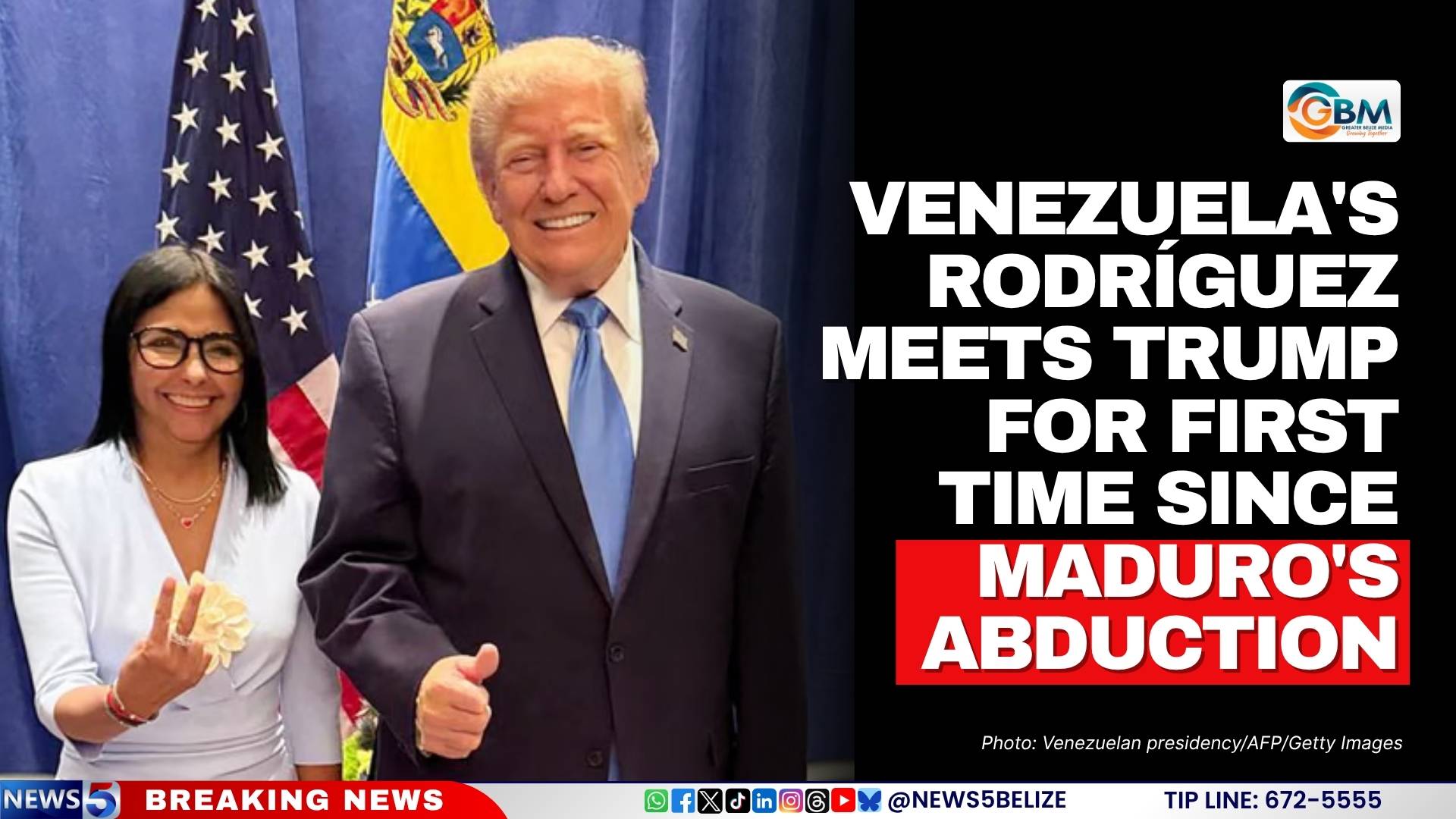
On the sidelines of the 2026 United Nations General Assembly in New York, a landmark high-stakes encounter unfolded late Tuesday, when U.S. President Donald Trump sat down with Venezuela’s interim president Delcy Rodríguez for their first face-to-face talks since American special forces carried out a January raid that captured sitting Venezuelan leader Nicolás Maduro.
The location of the closed-door meeting carried heavy symbolic weight: it was held just a few kilometers from the maximum-security New York jail where Maduro remains in custody as he awaits trial on U.S. drug trafficking charges, with U.S. Secretary of State Marco Rubio also in attendance for the negotiations.
Speaking via her official Telegram channel after the talks wrapped up, Rodríguez framed the discussion as a critical opening step toward building expanded, constructive cooperation between Caracas and Washington. “Venezuela and the United States share a centuries-long relationship, and in this new chapter, it is our responsibility to guide that connection forward through open dialogue,” Rodríguez stated. She added that her interim administration is laser-focused on delivering “tangible outcomes and shared prosperity” for the Venezuelan people.
This high-profile meeting comes just weeks after Rodríguez’s government signed a sweeping energy agreement that grants a U.S.-led corporation 100-year concession rights to 17 mature and untapped Venezuelan oilfields, putting more than 65 billion barrels of crude reserves under foreign control – equal to more than one-fifth of Venezuela’s total proven reserves. Trump has already hailed the deal as “perhaps the biggest energy deal ever struck” and has made clear his goal of attracting at least $100 billion in new investment to rebuild and expand Venezuela’s struggling oil sector.
In his keynote address to the UN General Assembly one day before the meeting, Trump doubled down on his administration’s approach to the new Venezuela relationship, stating that the U.S. and its new Venezuelan partner now jointly control “more than 60 percent” of the world’s total proven crude oil reserves. In unvarnished remarks, he added, “To the victor belong the spoils.”
Not all reactions to the meeting and the shifting U.S.-Venezuela dynamic have been positive. Outside the UN headquarters, more than 50 demonstrators gathered to protest the talks, waving Venezuelan national flags and holding placards reading “No Vote, No Oil” and “New Face, Same Regime.” Political critics of the arrangement argue that the U.S. has intentionally sidelined prominent Venezuelan opposition leader Maria Corina Machado, choosing instead to prioritize lucrative oil and investment deals with Rodríguez’s interim government, undermining broader democratic transition efforts in the country.
Looking ahead, Rodríguez is scheduled to deliver her own address to the full UN General Assembly on Wednesday, where she is widely expected to lay out her administration’s vision for Venezuela’s future and its new ties with the United States.