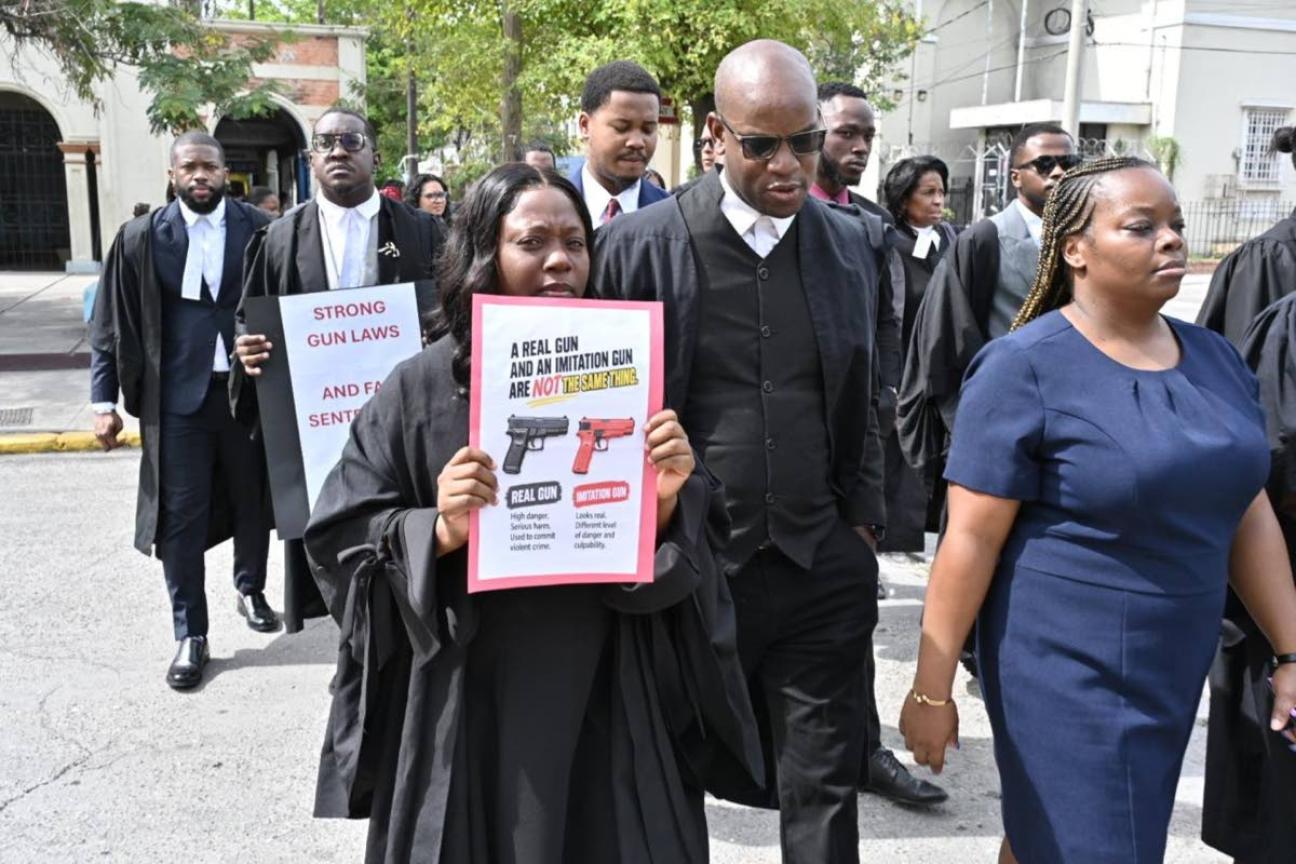
A fierce regional debate over mandatory minimum sentencing has escalated this week, as Antigua and Barbuda prepares to table new legislation introducing harsher fixed prison terms for serious crimes, just days after Jamaican defence attorneys staged a high-profile protest against existing strict sentencing rules on the island.
At the center of the push for tougher penalties is Antigua and Barbuda Prime Minister Gaston Browne, who has defended the policy push amid growing pushback from legal professionals across the Caribbean. In a recent public statement, Browne emphasized that his government remains committed to upholding fundamental human rights, constitutional protections, and judicial independence. But he drew a clear line: the rights of convicted offenders, he argued, can never override the collective right of ordinary citizens to live free from violence and harm.
Browne leveled sharp criticism at what he describes as a long-standing “lenient sentencing orthodoxy” that has taken root across Caribbean judiciaries, a trend he says has systematically eroded public safety. Short, lenient sentences, he explained, allow repeat offenders to return to communities quickly and resume their criminal activity, placing unnecessary additional strain on already overstretched law enforcement agencies.
To illustrate his point, Browne cited several troubling, unspecified examples of what he calls unjustifiably soft sentences. He claimed that in multiple cases, offenders caught in illegal possession of firearms and ammunition have received prison terms of just one to two years, only to be released back into society to go on to commit far more brutal, heinous crimes. He also alleged that some offenders convicted of sexually abusing children as young as two years old have been sentenced to just two or three years behind bars. Browne did not name specific cases or provide court documentation to back up these claims in his public statement.
Against this backdrop, Browne argued that regional parliaments have no choice but to step in to counter the trend of leniency. By codifying mandatory minimum sentencing into law, he said, lawmakers can curb the judicial practice that some officials have sought to normalize. Browne acknowledged that the Caribbean’s current crisis of violent crime requires extreme, unprecedented intervention. While he recognized the critical roles that lawyers and judges play in the justice system, he stressed that elected parliamentary bodies and executive branches hold ultimate constitutional responsibility for protecting public safety.
Browne’s comments came in direct response to a silent demonstration organized by Jamaican defence lawyers outside the Supreme Court in Kingston earlier this week. The attorneys, all dressed in black, carried handwritten placards calling for a full legislative review of the mandatory sentencing provisions included in Jamaica’s 2022 Firearms (Prohibition, Restriction and Regulation) Act. One prominent sign at the protest read: “Tough on guns: yes. Tough on children: no.”
Under the existing Jamaican law, certain firearms offences carry a mandatory minimum prison sentence of 15 years, with no opportunity for judicial leniency. Protesting attorneys argue that these rigid provisions strip judges of the flexibility needed to account for the unique circumstances of each case and distinguish between minor, non-violent offenders and career violent criminals.
King’s Counsel Peter Champagnie, a prominent legal figure who participated in the demonstration, emphasized that the legal profession is not opposed to cracking down on dangerous gun crime. He told reporters that the legal community simply wants a full, transparent review of the controversial legislation, adding that the Office of the Director of Public Prosecutions shares many of the same concerns about the law’s inflexibility.
Tenneshia Watkins, President of the Jamaican Bar Association, echoed these calls, noting that judges must retain the discretionary power to hand down sentences that fit the unique facts of each individual case. Jamaica’s main opposition party, the People’s National Party, has also publicly raised concerns about key provisions of the 2022 law.
Despite the growing opposition, Jamaican Justice Minister Delroy Chuck has ruled out any full repeal of the mandatory minimum sentencing provisions. Chuck cited data and input from Jamaica’s national security forces, who argue the law has already contributed to measurable reductions in murder and shooting rates across the island.
As the debate over judicial discretion versus public safety continues to simmer across Jamaica, the conversation is now shifting east: Antigua and Barbuda is set to hold its own parliamentary debate on introducing tougher mandatory minimum penalties of its own, with the outcome likely to set a precedent for other Caribbean nations grappling with rising violent crime.