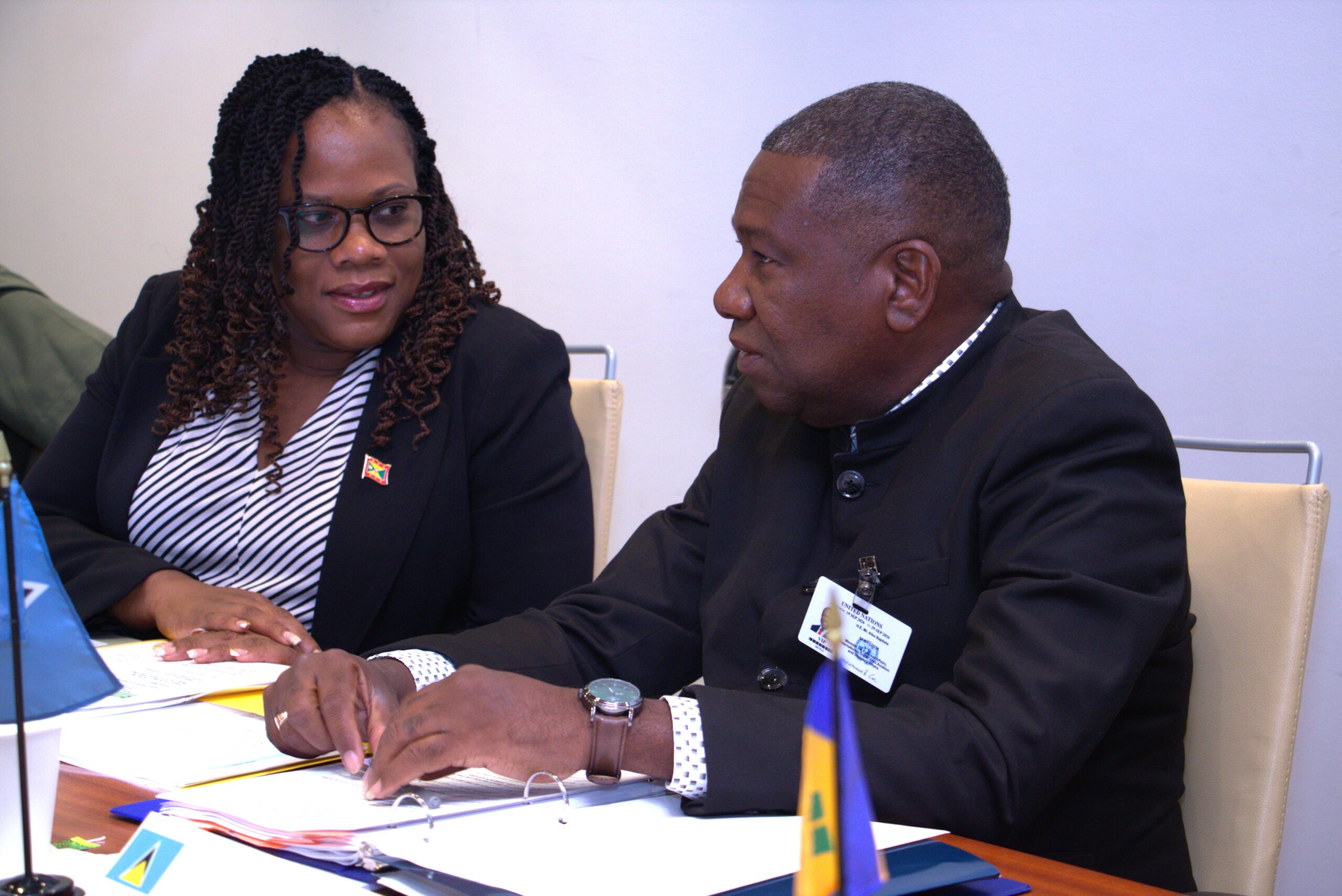
Against the backdrop of the 81st United Nations General Assembly, foreign affairs leaders from across the Organisation of Eastern Caribbean States (OECS) gathered on September 20 for the 10th Meeting of the Council of Ministers: Foreign Affairs (COM:FA), hosted by Antigua and Barbuda’s Permanent Mission to the UN. The high-level gathering centered on one core mission: building stronger collective diplomatic power, deepening cross-regional coordination, and equipping the bloc to respond strategically to a fast-changing global order.
In his opening remarks to the assembled ministers and senior diplomatic representatives, OECS Director General Dr. Didacus Jules underscored that regional unity has long been the bloc’s greatest asset amid mounting global uncertainty. “Our region’s strength has always been our capacity to act together, and this meeting reaffirms that our diplomatic architecture must keep pace with a world that is changing quickly around us,” Jules said, stressing that sustained coordination between member states is critical to keeping regional diplomatic institutions responsive to evolving global challenges.
The meeting marked a formal leadership transition for the council, with the chairmanship passing from Honourable D Fitzgerald Bramble, Foreign Affairs and Trade Minister of Saint Vincent and the Grenadines, to Honourable E P Chet Greene, Antigua and Barbuda’s Minister of Foreign Affairs. The handover comes at a defining moment for OECS members, which face growing pressures as small states navigating shifting geopolitical alliances, rising demands for coordinated action on trade, climate action, finance, connectivity, and global diplomacy.
Outgoing chair Bramble emphasized the unprecedented strain on long-held international norms in his farewell remarks, noting that “the established certainties of the international system are increasingly being tested, reinforcing the need for a more cohesive and strategically aligned OECS.”
In his first address as incoming chair, Greene highlighted the unique vulnerabilities that small island developing states face in the current global landscape, and called for renewed sub-regional unity, strategic alignment, and collective action to advance shared interests. He pointed to critical infrastructure gaps holding back regional integration, noting: “We need stronger air links among our islands, regular sea transport for people and cargo, and new connections to nearby markets in Central and South America. Governments can create the policy framework, but carriers, ports, exporters, importers, financial institutions and investors must help design, finance and manage viable services.”
Greene laid out a clear set of core policy priorities to reframe OECS foreign policy as a deliberate tool to drive economic growth and development across member states. The five key priorities include safeguarding the OECS Economic Union, securing fair, equitable treatment for the bloc’s Citizenship by Investment and financial services sectors, expanding access to affordable climate finance for climate adaptation and mitigation, strengthening resilient air and maritime connectivity across the sub-region, and upholding multilateralism and international law as foundational pillars of global order.
Ministers also unanimously backed Greene’s proposal to strengthen the diplomatic implementation capacity of the OECS Commission, a change designed to boost the bloc’s collective diplomatic influence on the global stage through tighter coordination and more effective execution of shared policy goals.
Over the course of the meeting, ministers held wide-ranging strategic discussions on pressing issues impacting the OECS, including diversifying the bloc’s external partnerships, advancing trade and maritime connectivity, addressing regional developments with humanitarian and diplomatic ramifications, and further strengthening the bloc’s shared diplomatic and institutional frameworks. Leaders also reviewed progress on ongoing regional integration programs and reaffirmed their commitment to regular, close consultation in the coming months.
To further refine the bloc’s collective strategic response to global shifts, ministers agreed to convene a dedicated Foreign Ministers’ Retreat before the end of 2024. The closed-door retreat will create space for deep, focused discussion of OECS’s strategic positioning and core priorities in an increasingly fragmented global order.
The 10th COM:FA drew broad high-level participation from across OECS member states, with attendees including St Lucia Foreign Minister Honourable Alva Baptiste, Grenada Permanent Secretary for Foreign Affairs Roxie McLeish-Hutchinson, St Kitts and Nevis Permanent Representative to the UN Dr Mutryce Williams, Antigua and Barbuda Permanent Representative to the UN Ambassador Walton Webson, and OECS Chief of Staff and Strategic Diplomacy Dr Kisha Grant, among other senior officials.
In closing, the meeting reaffirmed the OECS’s unwavering commitment to a unified, forward-looking foreign policy agenda, and to strengthening the region’s collective capacity to advance and protect the interests of all member states in an increasingly complex international landscape.