Escalating tensions in the Middle East, sparked by U.S. military action against Iran, have sent shockwaves through global energy markets. While analysts warned of catastrophic price spikes that could push crude oil above $150 per barrel, these doomsday scenarios have yet to materialize — and a surprising actor has emerged as the key stabilizing force: China. Despite ongoing geopolitical friction between Washington and Beijing, strategic policy decisions made under Chinese President Xi Jinping have indirectly supported the U.S. economy by keeping oil price growth in check.
### How China Damped Market Volatility: The Unintended Stabilizing Effect
When the U.S. and Israel launched military operations and Iran effectively blocked the Strait of Hormuz — the chokepoint through which roughly 20% of global oil trade flows — markets braced for immediate acute supply shortages. As the world’s largest importer of crude oil, China could have triggered a panic buying spree that would have sent prices skyrocketing. Instead, Beijing took the opposite approach, cutting crude oil imports by roughly 32% in the second quarter, from 12 million barrels per day to just 8.1 million barrels per day.
Two core strategic policies have allowed this measured response. First, over the past decade, China has built up a record strategic petroleum reserve estimated at 1.4 billion barrels. Drawing on these stockpiles eliminated the need for China to enter an already tight global market to purchase overpriced crude. Second, China’s rapid push for energy transition — including mass adoption of electric vehicles and rapid expansion of renewable energy capacity — has reduced domestic demand for fossil fuels, lowering its overall dependence on foreign oil imports even as economic growth continues.
The ripple effect of China’s demand reduction has been felt globally. By cutting its own purchases at the exact moment Middle Eastern supply contracted, China kept global price gains relatively muted. Instead of spiking to $150 per barrel, Brent crude has held steady around the $100 per barrel mark, avoiding the catastrophic shock many forecasters predicted.
### China’s Move Is Driven by Self-Interest, Not Altruism
Analysts stress that China’s strategy is not a goodwill gesture to the U.S. or incumbent U.S. President Donald Trump, but a calculated move rooted in Beijing’s own national economic and strategic interests. A global recession triggered by sky-high oil prices would hit China’s export-dependent economy disproportionately hard, threatening domestic growth and social stability. Additionally, the build-up of China’s massive oil reserves was already a core component of Xi Jinping’s five-year national security and contingency planning, developed in large part to prepare for potential conflicts and supply disruptions, including tensions over the Taiwan issue. The fact that these reserves are now proving critical during a Middle Eastern supply crisis has vindicated Beijing’s long-term strategic approach in the eyes of Chinese policymakers.
### The Fragile Stability: Risks Loom for Sustaining the Balance
Despite the current calm, the global energy market remains extremely vulnerable, and the sustainability of China’s stabilizing strategy is already under growing pressure. Recent attacks by pro-Iranian militias have shut down alternative supply routes, including the major Saudi pipeline to the Red Sea, while Houthi operations continue to disrupt shipping through the Bab el-Mandeb strait, another critical global energy chokepoint. As China draws down its reserves to avoid market purchases, it will eventually need to re-enter the market to replenish its stockpiles, creating new upward pressure on prices.
Analysts at institutions including Bank of America warn that if Iran’s blockade of the Strait of Hormuz continues and China resumes large-scale imports, prices could still jump to between $95 and $120 per barrel, and even hit the previously predicted $150 per barrel mark if further escalation occurs.
### Geopolitical Tensions Cast Shadow Over Upcoming Trump-Xi Summit
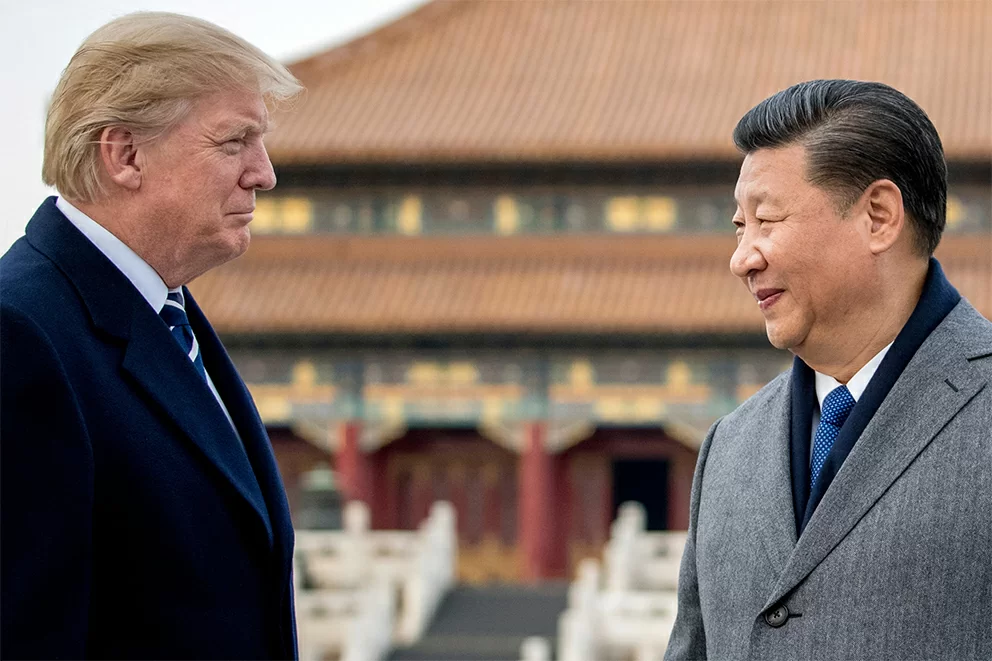
The unfolding energy crisis has also complicated diplomatic relations between the U.S. and China, casting a shadow over the upcoming planned summit between President Trump and President Xi in Washington. For Trump, high domestic gasoline prices represent a major political liability for his Republican Party ahead of elections. The president is currently walking a fine line between preserving the fragile existing trade relationship with China and maintaining pressure on Beijing to join U.S. efforts to economically isolate Iran.
Beijing has pushed back firmly against U.S. demands, opposing American secondary sanctions on countries that continue to trade with Iran, and calling for a diplomatic resolution to the conflict and an immediate reopening of the Strait of Hormuz. For his part, Trump has adopted a pragmatic approach to avoid escalating tensions with Beijing: he has downplayed reports of potential Chinese support to Iran, including allegations of shared intelligence such as satellite imagery, while repeatedly emphasizing that energy markets have been less severely impacted than initial forecasts predicted.
Six months into the ongoing Middle East conflict, oil prices have remained anchored around $100 per barrel, a stability that can be traced almost entirely to China’s massive strategic reserves and disciplined import cuts. For now, this has kept a lid on global inflationary pressures that would have otherwise squeezed economies around the world. But this balance is inherently temporary. As Chinese reserves dwindle and conflict escalation continues in the Middle East, economic and diplomatic pressure on both Washington and Beijing is set to grow in the coming months.