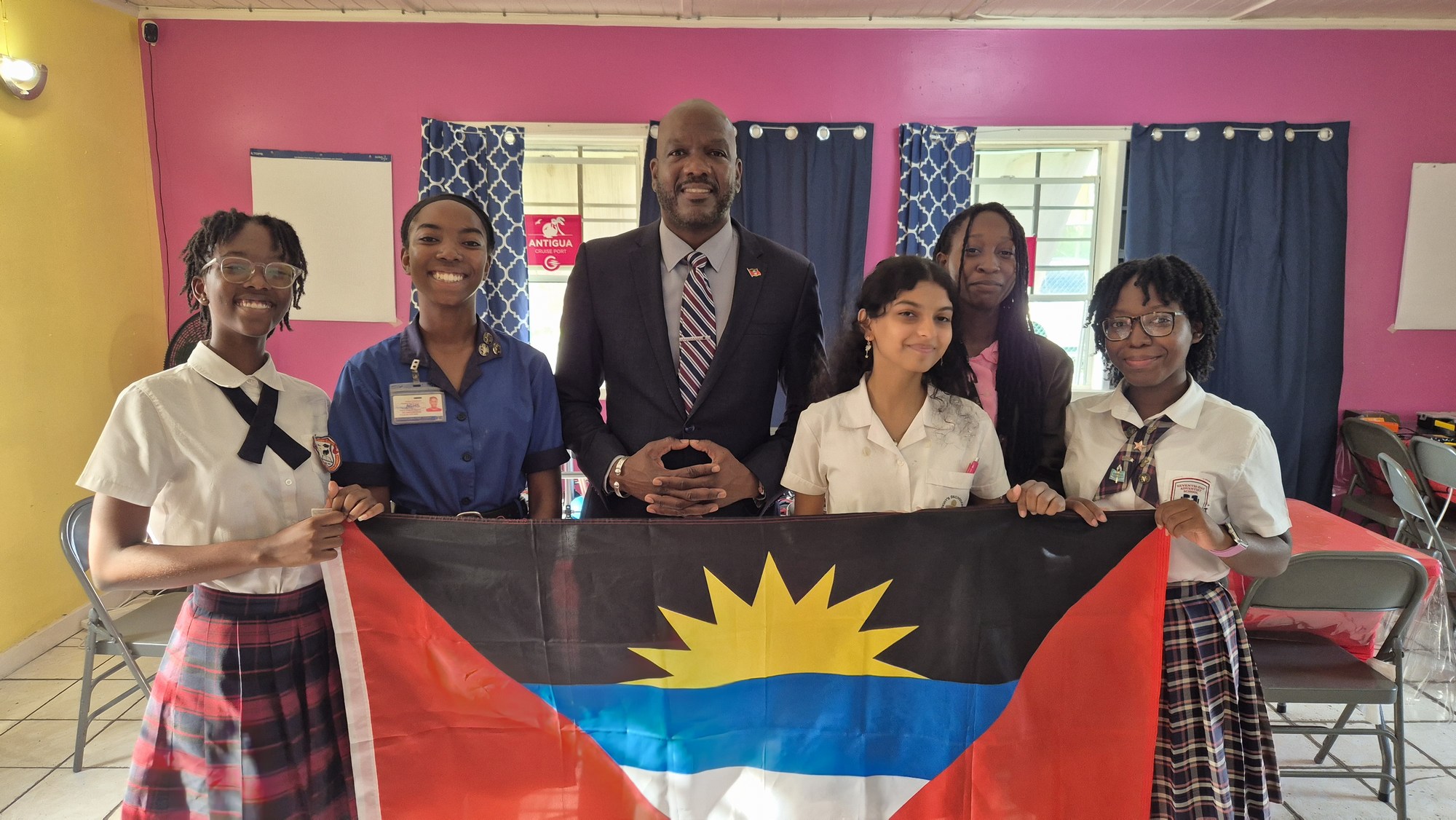
Five young female innovators from Antigua and Barbuda are putting the final touches on their competition robot, gearing up to make history as the nation’s first all-girls robotics team at the 2026 FIRST Global Challenge in Incheon, South Korea. Ahead of their international debut, the team sat down for a working meeting with Daryll Matthew, the country’s Minister of Education, Science and Technology, to walk through their months of preparation and discuss their journey into STEM.
During the session, the student team guided Matthew through every detail of their robot’s core functionalities, from collecting and storing game pieces to climbing structures and scoring points. The students explained how their design has transformed through dozens of rounds of building, testing, and adjusting, highlighting how every failed prototype helped them refine their approach. They also emphasized a key rule of the FIRST competition: to advance to the final rounds, teams must build robots that can collaborate seamlessly with international competitors, reinforcing the event’s focus on global partnership.
The conversation naturally centered on a core lesson the team has already learned through the process: groundbreaking innovation almost never comes together perfectly on the first try. Minister Matthew expanded on this idea, sharing that persistence through early failure is one of the most valuable skills young people can develop.
“One of the things that we take for granted is critical thinking,” Matthew told the students. “Just because your first version doesn’t work, doesn’t mean you should give up, you should always keep innovating.” Drawing from his own personal experience, he encouraged the young engineers to reframe unsuccessful attempts not as defeats, but as critical stepping stones toward stronger, more robust solutions. He added that this problem-solving mindset extends far beyond robotics, helping students excel in all areas of academics and future careers.
Every step of the team’s iterative design process is carefully documented in their shared engineering notebook, where each student takes a daily turn logging challenges, adjustments, and key insights as the robot evolves. Beyond technical preparations, Matthew took time to connect with each team member individually, learning about what first sparked their interest in STEM fields and what career paths they hope to pursue after their competition. He congratulated the team on their groundbreaking progress and urged them to keep chasing the ideas that inspire them.
Matthew also encouraged the students to look beyond the competition itself, and embrace the full experience of representing their nation on a global stage. Meeting young innovators from different cultural backgrounds, exchanging ideas, and building long-term cross-cultural friendships will help them expand their worldviews and grow as professionals, he noted.
Now, the team is in the final stretch of refining their robot ahead of the Olympic-styled international event, which carries the theme “Igniting Innovation.” The 2026 FIRST Global Challenge will bring more than 190 national student teams together to apply STEM principles to real-world inspired challenges, while fostering global collaboration and cultural exchange. For these five young women preparing to carry Antigua and Barbuda’s flag, the competition is more than a technical contest: it is a chance to show the world what the next generation of Caribbean innovators can accomplish on the global stage.