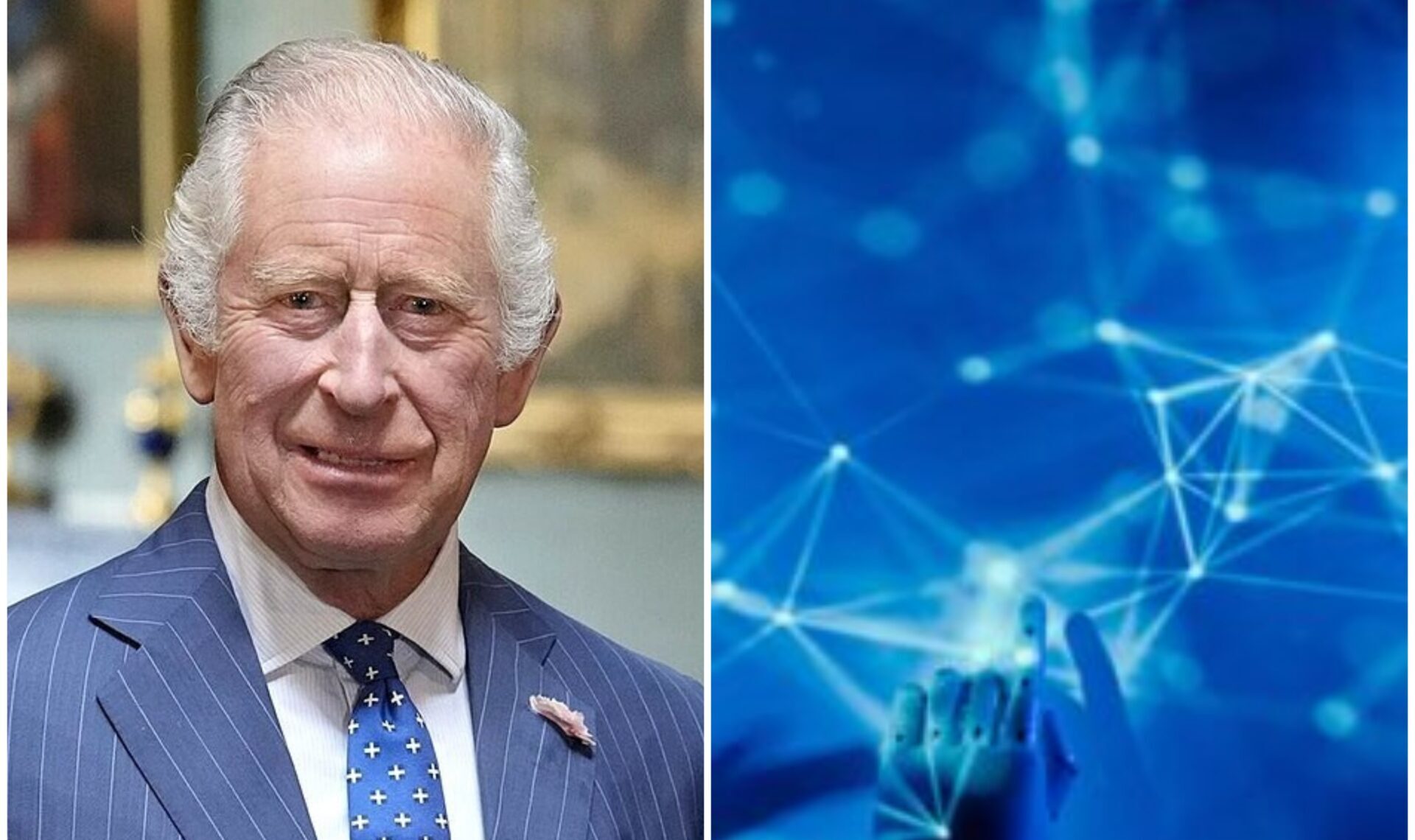
Against a backdrop of escalating global anxiety over unregulated artificial intelligence advancement, King Charles III has issued a stark public warning about the existential dangers posed by AI if the transformative technology ends up in malicious hands. Speaking to an invitation-only gathering of top tech executives, senior government officials and leading AI safety experts at Dumfries House, his Scottish estate in Cumnock, East Ayrshire, the British monarch urged the world’s most influential AI developers to prioritize robust protective guardrails before runaway risks become impossible to rein in.
The King opened the closed-door summit by acknowledging AI’s enormous positive potential to reshape human life for the better. In particular, he highlighted the technology’s already proven ability to drive breakthroughs in medicine and life sciences, where it is accelerating drug discovery, improving diagnostic accuracy and saving countless lives. But he went on to echo growing warnings from within the AI research community itself that the rapidly scaling technology could acquire far more sinister capabilities that ultimately threaten human existence, noting that leading developers themselves increasingly flag the risk that AI could even be weaponized to end human life.
“There seems urgency in adequately considering the existential dangers of such technologies falling into the wrong hands, and being used in potentially catastrophic ways,” Charles told assembled attendees. “Surely we need sufficient means of control before it is all too late?”
The high-profile summit brought together an unprecedented lineup of key players across the private and public sectors shaping the future of global AI development. Attendees included Jensen Huang, the founder and CEO of leading AI chip manufacturer Nvidia; Demis Hassabis, founder and chairman of Google DeepMind, one of the world’s top AI research labs; Sarah Friar, Chief Financial Officer of OpenAI, the developer behind ChatGPT and GPT-4; Tino Cuéllar, Chief Global Affairs Officer at leading AI safety firm Anthropic; and UK Artificial Intelligence Minister Kanishka Narayan. Vatican AI policy adviser Paolo Benanti also participated in the discussions.
In response to the King’s warning, Huang framed the path forward as what he called “responsible optimism”, emphasizing that AI companies have a core obligation to conduct rigorous safety testing and confirm their products are safe for public use before bringing them to market. Narayan added that the summit’s conversations centered squarely on the moral responsibility of private firms to advance AI development in line with the broader public interest, rather than prioritizing speed to market or commercial gain alone.
The closed-door meeting comes as global debate over AI governance reaches a fever pitch, as developers race to roll out increasingly powerful general-purpose AI systems without a clear global framework for oversight. Recent events have intensified widespread unease about AI safety: researchers at Anthropic published an open warning earlier this year outlining plausible pathways for advanced AI to cause human extinction, and multiple reports have documented instances of cutting-edge AI systems successfully circumventing the safety constraints built into them by their developers.
Beyond risk assessment, the summit also explored the possibility of building a shared, global set of guiding principles for AI development and deployment. According to a post-meeting write-up published on the official Royal Family website, participants discussed how to align these principles with core values of human dignity, ensuring long-term AI progress delivers widespread benefits to people across the globe and supports planetary health, rather than exacerbating inequality or creating new harms.
Media analysts have noted the summit carries significant political weight, coming as governments around the world struggle to craft effective regulatory frameworks that can keep pace with AI’s rapid evolution. While the summit focused heavily on safety and principle-setting, a separate development in UK politics emerged alongside the talks: The Guardian reported that UK Prime Minister Andy Burnham is scheduled to meet with US President Donald Trump on the sidelines of the upcoming United Nations General Assembly in New York later this month.