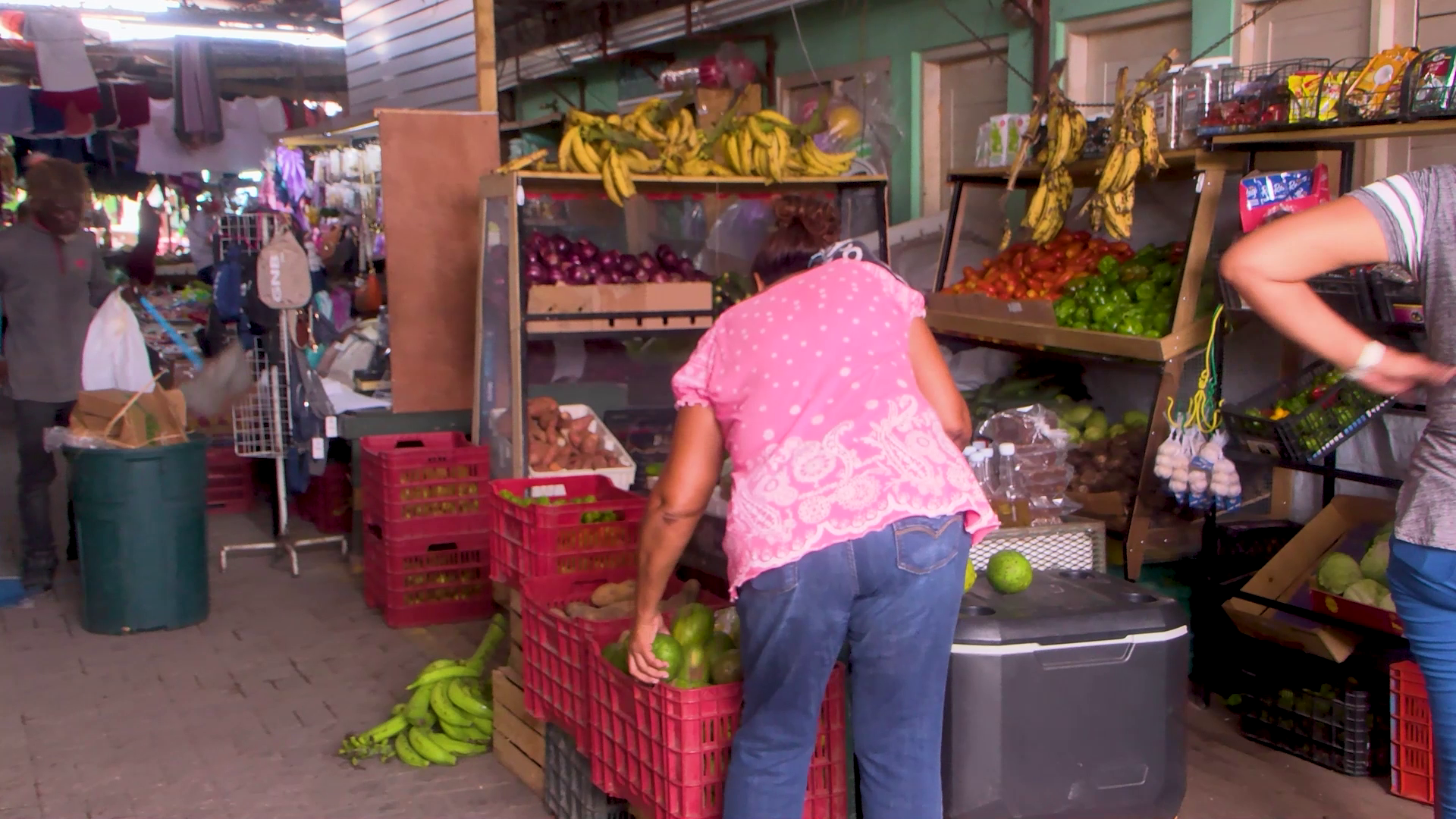
By 2026, small-scale retail vendors at Belize’s iconic Michael Finnegan Market are facing mounting economic pressure that threatens their ability to make a living, with many pointing to unfair practices from Mennonite wholesalers that are upending long-standing market rules. For decades, the market has operated on a clear division of labor: wholesalers supply bulk goods to on-site retailers, who then sell smaller quantities to everyday consumers. Now, vendors say this unwritten agreement is breaking down, leaving them squeezed between rising wholesale costs and unfair direct competition.
Vendors already face steeply increased input costs from the Belize Marketing and Development Corporation (BMDC), the state agency that oversees regional produce supply. Many now say their profit margins have been all but erased after wholesalers began cutting them out entirely, selling small retail portions directly to shoppers at prices below what local vendors can match. On-site reporting from the news team caught multiple direct-to-consumer transactions that align with these vendor complaints.
Edith Brakeman, a long-time vendor at the market, described a dramatic shift in business conditions in recent years. “Market day used to be good, but now it is terrible, because the Mennonites come, they buy out the stuff and they sell it cheaper than we who buy big,” Brakeman explained. She emphasized that the practice directly violates the terms set by city authorities, who granted wholesalers access to the market under the condition they only sell bulk orders of 10 pounds or more. Today, Brakeman says wholesalers routinely sell 1- and 2-pound portions directly to customers, emptying the retail stalls of shoppers. “You see anybody in here? Nobody right, everybody is outside,” she noted.
Beyond violating the no-retail rule, some vendors also accuse Mennonite farmers of manipulating supply to drive up produce prices. One anonymous vendor explained that producers intentionally withhold stock, particularly popular items like potatoes, until existing market supplies run low, then hike costs dramatically. “Like last year, the big potato was being sold for a hundred dollars a sack. What they start to do was put the potatoes in containers and hold back on it. Then the potatoes went up to two hundred,” the vendor recalled. At that inflated price point, retailers cannot turn a profit when selling to consumers, leading to repeated conflicts between vendors and wholesalers. “Me and a lot of people get into a lot of conflicts with the Mennonites, because when they bring it we tell them to take it back. I don’t want to pay you for it. The whole thing about Belize, it needs a price control,” the vendor added.
When presented with these complaints, BMDC administrator Valentin Carrillo acknowledged the dynamic but said he does not fault producers for responding to market forces. “At the end of the season, I don’t blame them either, because it is a business sense they have. If there is no product on the market and the demand is high, they will increase their prices. Any business would do it. Even you, if you have a product and there is an opportunity to sell it higher, they are the only one that has it, they will increase it, I don’t blame them,” Carrillo stated.
While he stopped short of criticizing the Mennonite producers’ pricing strategy, Carrillo acknowledged that the current system creates unfair outcomes for both retailers and end consumers. To address ongoing supply volatility and price spikes, he said BMDC has moved to enter into direct purchasing agreements with Mennonite producers, covering staple crops like potatoes, and will import additional supplies to cover any domestic deficit. The agency’s goal is to maintain consistent market supply to prevent extreme price hikes that hurt both vendors and shoppers, Carrillo explained.
This report is a transcribed version of an evening television newscast, with Kriol language dialogue transcribed using a standardized spelling system.