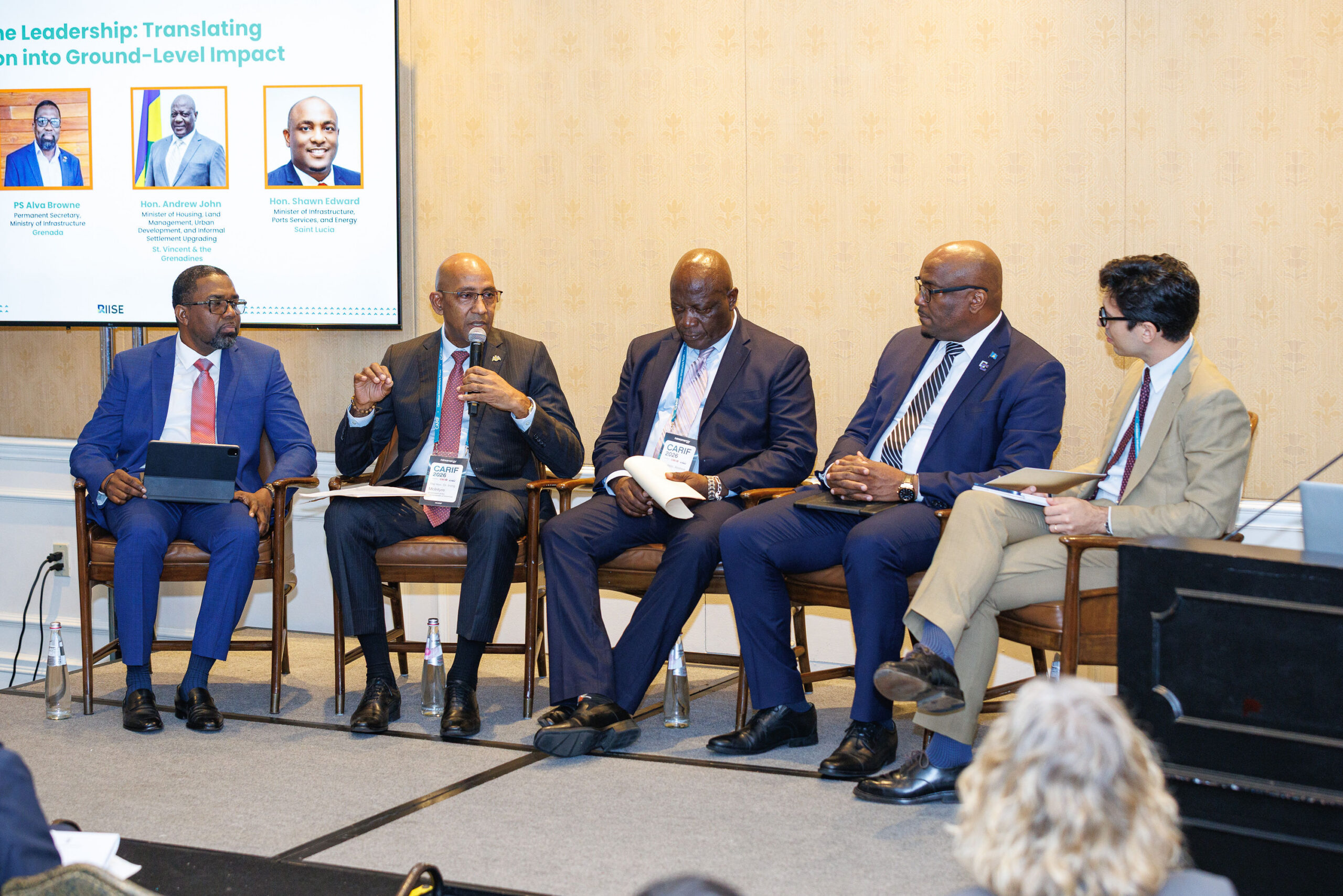
Four Eastern Caribbean nations, including Saint Lucia, are now the first beneficiaries of a newly launched regional initiative that delivers specialized technical support to help governments cut through implementation bottlenecks and complete climate-resilient infrastructure projects.
The Caribbean Resilient Infrastructure Implementation and Skills Exchange (RIISE) Facility, which began operations following its official launch on September 14 during a side event at the Caribbean Infrastructure Forum in Miami, targets the persistent delays that often derail critical infrastructure projects across the region. Joining Saint Lucia as initial participating countries are Dominica, Grenada, and Saint Vincent and the Grenadines.
For Saint Lucia, eligible projects span a wide range of climate-critical sectors, from water access, sanitation, and coastal protection to transportation, renewable energy, public buildings, disaster recovery, healthcare, education, and affordable housing. The support RIISE offers covers nearly every stage of project delivery, including project management, procurement and contract administration, engineering and technical reviews, and financial oversight. It also brings specialized expertise in climate resilience planning, environmental and social risk mitigation, gender equality and social inclusion, cross-stakeholder engagement, public communications, progress monitoring and reporting, and proactive risk management.
Participating governments have two flexible pathways to access support: short-term targeted technical advice to resolve specific, immediate challenges, or temporary on-site deployment of specialists to boost the capacity of local project teams. Ministries and public institutions in the four member countries can submit assistance requests through their appointed National Focal Points via an online portal, where they are required to outline project details, the specific implementation challenge they face, and the desired outcome. After submission, the RIISE Secretariat evaluates each request and collaborates with the requesting institution to define the exact scope of support and match it with the appropriate technical expertise.
The initiative is funded by the Government of Canada and hosted by the United Nations Office for Project Services (UNOPS), with its secretariat based in Barbados. It is governed by the participating Caribbean countries, with independent technical guidance provided by a panel of regional and global experts.
Brenda Wills, Canadian High Commissioner to Barbados and the Eastern Caribbean, emphasized that climate-resilient infrastructure forms the backbone of long-term economic development, effective climate adaptation, and improved quality of life for Caribbean communities. “Canada is pleased to support RIISE as a regionally led facility that will help governments access the expertise and support needed to deliver priority infrastructure investments,” she stated.
Giuseppe Mancinelli, UNOPS Caribbean Director, echoed this sentiment, noting that the organization’s core role is to fill gaps in government capacity and deliver hands-on implementation support. “Governments across the region have set a bold vision for more resilient infrastructure; our role is to help turn that ambition into results by providing national institutions with the additional capacity, expertise and implementation support they need to deliver for their people,” he explained.
Beyond addressing immediate implementation hurdles, RIISE has a longer-term goal of building and retaining local technical expertise across the Caribbean. Over time, the facility plans to facilitate knowledge exchange between regional specialists and public sector teams, allowing countries to share lessons learned and best practices for resilient infrastructure delivery. While the initiative currently focuses on four Eastern Caribbean nations, its framework is designed to support expansion to additional Caribbean countries as new needs emerge and additional funding and partnerships are secured.