For small island developing states across the Eastern Caribbean, climate change is not a distant hypothetical threat—it is a daily reality reshaping core industries and endangering the most vulnerable populations, according to Saint Lucia’s top agriculture official.
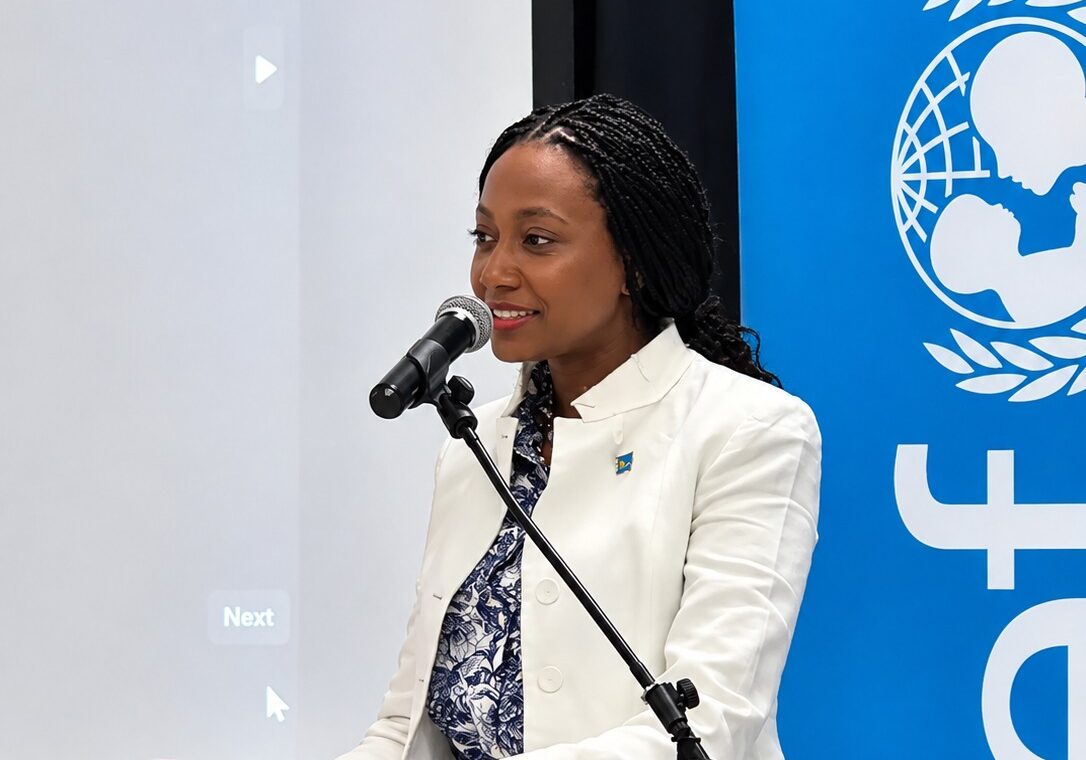
At a Wednesday event held at Rodney Bay’s Bay Gardens Hotel, Agriculture, Fisheries, Food Security and Sustainable Development Minister Lisa Jawahir shared how shifting weather patterns have already upended local food systems, delivering stark warnings ahead of the launch of a groundbreaking UNICEF-commissioned climate resilience study. The new analysis, conducted by research firm Meru Labs, spans six Eastern Caribbean nations: Saint Lucia, Barbados, Dominica, Grenada, St Kitts and Nevis, and St Vincent and the Grenadines. It focuses on the understudied impact of climate hazards on children, a group disproportionately affected by rising global temperatures despite contributing the least to emissions.
Jawahir outlined the cascading harms Saint Lucia is already facing: more intense extreme rainfall that triggers devastating flooding, longer and more severe dry spells that drain water reserves, accelerating coastal erosion that erodes critical marine habitat, and steadily climbing average temperatures. These shifts do not stay confined to environmental systems, she emphasized—they ripple through households and communities, hitting low-income families hardest. “When drought reduces agricultural production, the consequence can reach the dinner table of a family already struggling to make ends meet,” Jawahir said. “When water becomes scarce, households must make difficult choices about how that limited resource is being used.” Disruptions to climate-sensitive sectors from farming and fishing to tourism, she added, generate widespread economic pressure that destabilizes home life for generations. “Our vulnerability is therefore not only environmental, it is social, developmental, and intergenerational,” she noted.
The groundbreaking Child-Centered Climate Analysis for Building Resilience paints a sobering picture of current and future risk for children across the region. The study cross-references climate hazard maps with local socioeconomic data to map how climate change impacts children, their schools, local health facilities, and household livelihoods. Right now, more than one-third of all children, schools and health clinics in the six study countries sit in zones exposed to at least three separate climate hazards. Under a high-greenhouse gas emissions scenario that follows current global emission trends, that proportion is projected to jump to more than 90 percent by the middle of this century.
Jawahir explained that the child-centered framework used in the research fills a critical gap, making visible how climate vulnerability overlaps with existing systemic inequities across poverty, education, health care, food and water security, housing, livelihood support and social protection. “Climate resilience, food security, and sustainable development are inseparable,” she stressed. Investing in climate-smart agricultural practices, secure water infrastructure and climate-resilient public systems is not just about protecting national economic sectors—it is about protecting families, communities, and the future of the region’s children, she argued.
The minister stressed that the research’s findings must not remain unused, gathering dust on government shelves. Instead, the data should be leveraged to pinpoint unaddressed gaps in existing resilience efforts, challenge outdated policy assumptions, strengthen national climate planning, and guide targeted investment from both national governments and international development partners. She doubled down on this call during a post-presentation question-and-answer session, noting that governments hold a particular responsibility to vulnerable children to act on the clear evidence the study provides. To turn these findings into tangible protection, Jawahir said, climate action priorities must be embedded in formal government strategies, policies, and annual national budget deliberations. “We need to make sure when there are budget discussions, some of these issues on climate are reflected as something that the Ministry of Finance should see the need to say, you know what, we need to put money now on a yearly basis so that we don’t get our children to that place,” she said.
Using a simple, vivid metaphor to illustrate the urgency of pre-emptive investment, Jawahir compared proactive climate preparation to having an umbrella ready before a storm hits. “So that our children will have umbrellas when the rain starts, not buying the umbrella when it’s raining,” she explained.
Beyond calling for targeted investment and policy change, Jawahir pushed for a shift in how children are positioned in climate action. Too often, she said, children are framed solely as vulnerable groups in need of assistance, but they have a critical role to play as active contributors to resilience building. “Our children must not be viewed only as vulnerable recipients of assistance. They must be recognised as participants, innovators, and partners in building resilience,” Jawahir said. “Their voices absolutely belong in this conversation.”
Closing her remarks, Jawahir reaffirmed Saint Lucia’s commitment to collaborating with regional and international partners to boost climate resilience across the Eastern Caribbean. She emphasized that the new data now demands urgent translation into tangible action. “We must move from evidence to policy, from policy to investment, and from investment to measurable improvements in the lives of our people,” she said.