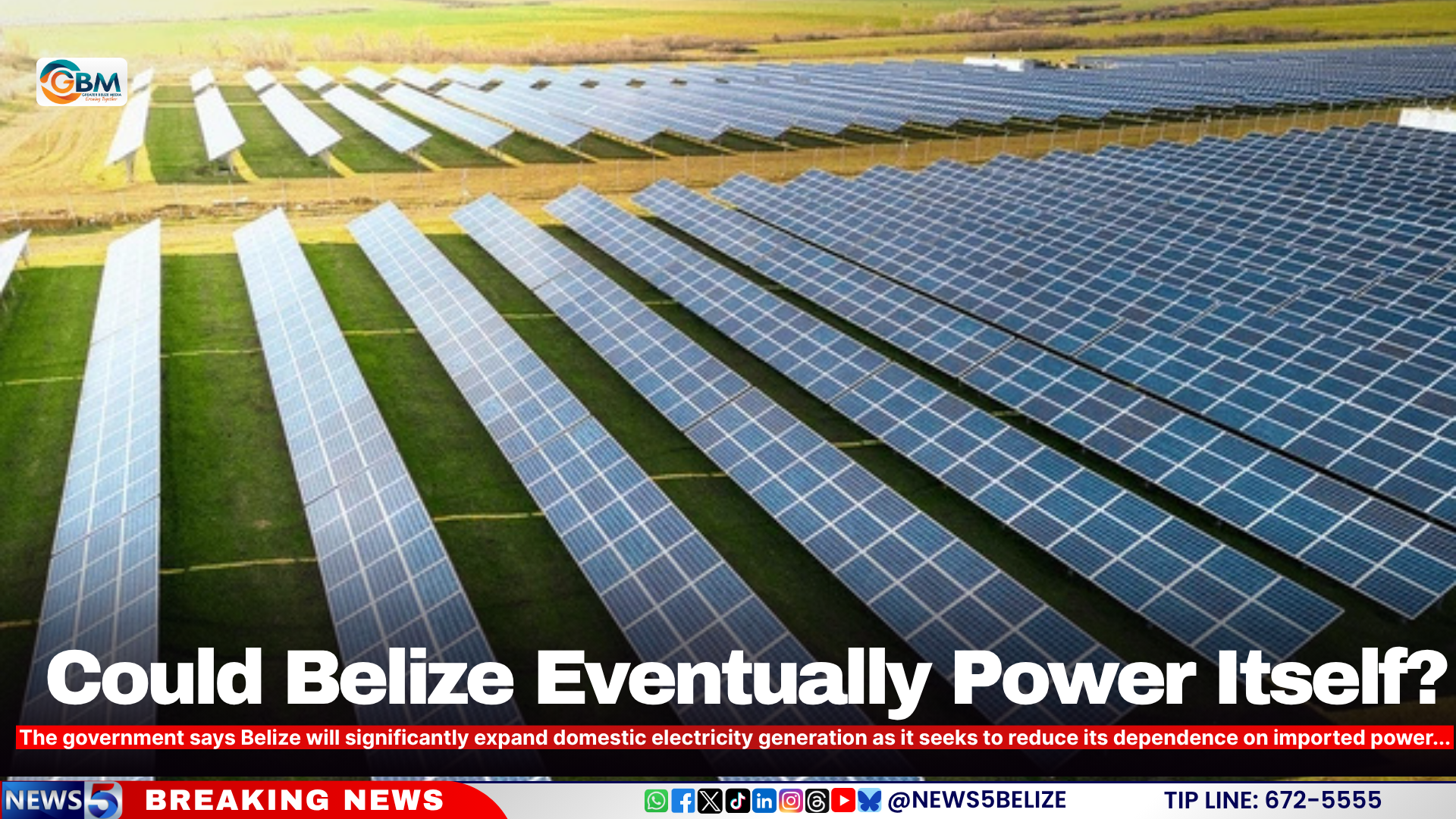
In a major policy announcement delivered during his 2026 State of the Nation Address, Prime Minister John Briceño has outlined Belize’s bold strategy to achieve greater energy independence by rapidly scaling up domestic renewable power generation. The initiative comes in response to a recently declared national energy emergency, which cleared the way for Belize Electricity Limited (BEL) to partner with local investors and accelerate the rollout of utility-scale solar infrastructure paired with grid-scale battery storage. Briceño confirmed that the first phase of the project will deliver approximately 30 megawatts of new solar generating capacity, backed by five-hour duration battery storage, with all installations scheduled for completion by June 2027. Looking beyond the near-term target, the government has set a long-term national goal to develop 120 megawatts of solar generation across the country alongside 40 megawatts of battery storage capacity. The core motivation behind this expansion is to reduce Belize’s longstanding dependence on imported electricity, a vulnerability that has been exposed during periods when neighboring Mexico, the country’s primary foreign energy supplier, is unable to meet Belize’s peak demand. Dr. Leroy Almendarez, Chief Executive Officer of Belize’s Ministry of Public Utilities, emphasized that the push for domestic generation does not signal a break from the existing energy relationship with Mexico. Mexico will remain a key, trusted supplier of electricity to Belize for the foreseeable future, he clarified. As part of its broader effort to diversify energy security options, Belize is currently conducting a pre-feasibility study to assess whether a new power grid interconnection with neighboring Guatemala would be practical, reliable, and cost-effective. Dr. Almendarez stressed that the study itself does not commit Belize to moving forward with electricity purchases from Guatemala, noting that any cross-border interconnection project requires rigorous upfront analysis to confirm consistent reliability, manageable costs, and alignment with national interests. This standard process of due diligence was followed when Belize established its current interconnection with Mexico, he added, and it is only reasonable to apply the same careful evaluation to any new potential partnership. In the most ambitious long-term vision for the country’s energy sector, Belize aims to eventually generate enough domestically produced electricity to fully meet domestic demand, and even export excess power through SIEPAC, the Central American regional interconnected electricity network. This shift would not only strengthen Belize’s energy resilience but also position it as a regional contributor to renewable power trade, supporting broader decarbonization goals across Central America.