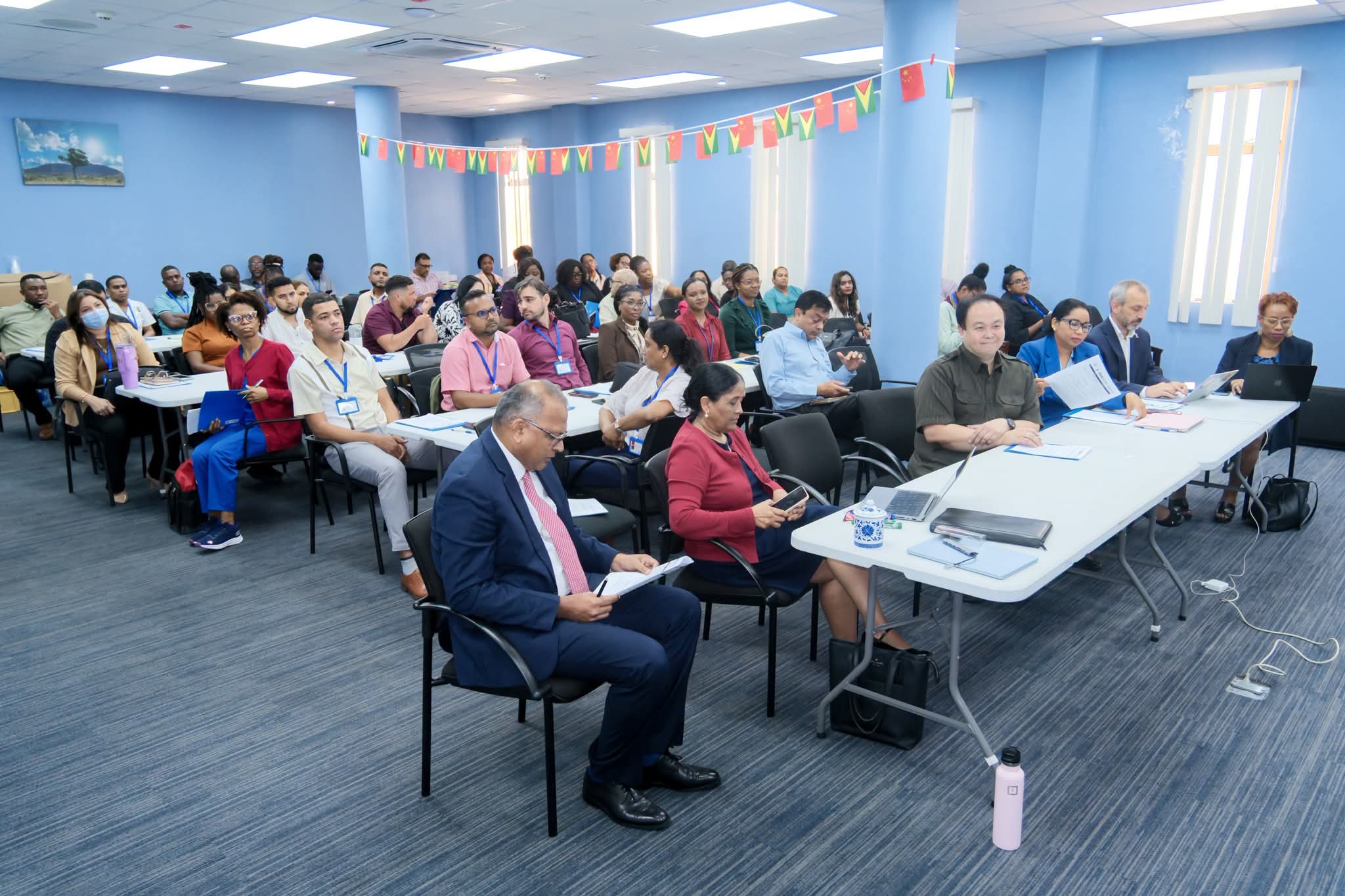
As Guyana charts a bold course to rid its population of multiple high-burden infectious diseases, the country is pursuing sweeping upgrades to laboratory infrastructure, healthcare workforce training, and national clinical quality standards, according to Health Minister Dr. Frank Anthony.
Dr. Anthony laid out these sweeping public health initiatives during opening remarks at the two-day *Strengthening Clinical Capacity for the Management of Advanced HIV Disease in Guyana* workshop, which convened September 14–15, 2026 in the Ministry of Health’s Brickdam boardroom. The gathering brings together healthcare providers to refine care protocols for one of the country’s priority public health concerns, while serving as a platform to announce broader system-wide improvements.
Addressing attendees, the minister outlined targeted progress toward elimination for five key pathogens: lymphatic filariasis, leishmaniasis, leprosy, malaria, and hepatitis C. For lymphatic filariasis, Guyana is currently undergoing the final evaluation phases required for official international elimination certification, and Dr. Anthony shared that the country is closing in on that milestone. Work to scale up interventions for leishmaniasis and leprosy continues apace, while national malaria policy is undergoing a strategic shift from long-term outbreak control to full elimination, he added.
One of the most notable breakthroughs has come in hepatitis C response, where the historically prohibitive cost of curative treatment created a major gap in care for diagnosed patients. For years, Guyanese health authorities could only identify hepatitis C cases during routine blood transfusion screening, with no viable path to connect patients to life-saving treatment. That barrier has now been removed through a collaborative partnership with the Pan American Health Organization (PAHO), which has secured access to treatment for less than $100 USD per patient. The minister noted that the policy focus now turns to building care linkage programs that ensure every diagnosed patient can access affordable, curative treatment.
Beyond targeted disease elimination programs, Dr. Anthony outlined major capital investments in national public health infrastructure, most notably a new national reference laboratory currently under construction. The facility will be outfitted with cutting-edge molecular diagnostic technology, drastically expanding Guyana’s capacity for early disease detection and routine molecular surveillance of existing and emerging pathogens. “These investments will strengthen Guyana’s capacity to respond to emerging infectious diseases,” the minister said, adding that the upgraded lab could eventually serve as a regional reference hub for specialized disease testing. He emphasized that integrating new diagnostic technologies into routine care will be a core priority to speed up detection and response for all public health threats.
Sustained investment in healthcare human resources is equally critical to building a resilient, high-performing health system, Dr. Anthony stressed. To that end, the government has secured new training and fellowship opportunities for Guyanese clinicians through international partnerships with leading academic and medical institutions across Brazil, the United States, Canada, India, and the United Kingdom. Participating institutions include Harvard University, Mount Sinai Health System, Northwell Hospital, McMaster University, and Apollo University, among other global collaborators. Additional flexible online training opportunities are also available through United Kingdom-based university programs, and the minister urged all practicing physicians, nurses, and allied health professionals to take advantage of these opportunities to build their skills and improve patient outcomes across the country.
To raise the standard of clinical care across all national hospitals, the Ministry of Health is launching a new formal clinical quality governance initiative. Under the program, mobile review teams will conduct regular on-site audits of patient medical records to assess whether care aligns with evidence-based national clinical guidelines published by the Ministry. Where gaps in care or deviations from protocol are identified, the teams will work directly with local care teams to address deficiencies and update clinical practice. The long-term goal is to ensure all facilities consistently meet national care standards, with targeted follow-up action for facilities that fail to sustain adherence to protocols. The Ministry is also partnering with Joint Commission International (JCI) on a structured pathway program to help national hospitals meet international quality care standards.
Throughout all these system-wide improvements, Dr. Anthony emphasized that patient-centered care must remain the core guiding principle. “Ultimately, the people that we should have in focus are our patients,” he said, noting that all upgrades to the health system are designed to deliver the best possible health outcomes for Guyanese communities.
Taken together, the minister explained that the full portfolio of initiatives—from expanded HIV care capacity to improved disease surveillance, upgraded laboratory infrastructure, workforce training, and clinical quality governance—are designed to build a more resilient national health system capable of addressing both long-standing infectious disease priorities and new emerging health threats. He closed by urging workshop participants to bring the new knowledge and skills they gained back to their home facilities, a step that will advance the broader national goal of delivering high-quality care to all Guyanese and building the capacity to prevent, diagnose, treat, and ultimately eliminate the country’s priority infectious diseases.