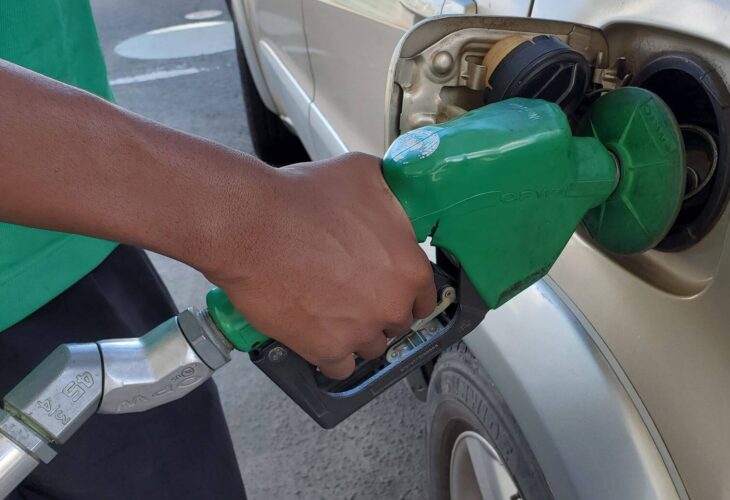
Residents of Saint Lucia woke up to a modest but noticeable increase in fuel and cooking gas prices on Monday, September 14, 2026, after the national government formalized adjustments tied to shifting global crude oil costs. The new price schedule, which will remain in place through October 4, 2026, adds 50 Eastern Caribbean dollar (EC$) cents per imperial gallon to gasoline and diesel prices, and raises Liquefied Petroleum Gas (LPG) — commonly used for cooking across the island — by an average of EC$2 across all cylinder sizes.
Per the updated rates released by the Office of the Prime Minister, both gasoline and diesel now retail at EC$17.25 per imperial gallon, equal to EC$3.79 per liter, up from the previous rate of EC$16.75 per imperial gallon (EC$3.68 per liter). For LPG consumers, the cost of a standard 20-pound cooking cylinder has risen from EC$34 to EC$36, while 22-pound cylinders now cost EC$40, up from EC$38. A 100-pound bulk cylinder saw a larger increase, jumping from EC$288.50 to EC$314.88, and bulk LPG now retails at EC$3.02 per pound, up from EC$2.76. Notably, the retail price of kerosene will hold steady at its current rate of EC$10.41 per imperial gallon (EC$2.29 per liter) through the three-week adjustment period.
Government officials explained that the price changes are driven by the country’s market-based pass-through pricing framework, which aligns domestic retail rates with recent trends in global oil markets. Between the reference period of August 17 and September 6, 2026, the benchmark West Texas Intermediate (WTI) crude oil price rose 6.7% to average US$86.08 per barrel, a shift that necessitated the domestic adjustment.
Despite the increase, the government stressed it will continue absorbing a large share of global price volatility through targeted subsidies to protect consumers from steeper jumps. Subsidies will remain in place for diesel, kerosene, and all LPG products during this adjustment cycle, softening the impact of global market instability on household budgets.
Prime Minister Philip J Pierre had foreshadowed the coming changes during a press briefing last week, noting that domestic fuel prices had held steady since 2025 even as international oil costs trended upward. “The time is coming when Government has to review fuel at the pumps,” Pierre told reporters, adding that global energy markets remain “unpredictable.” The prime minister emphasized that prolonged full absorption of global price increases has put unsustainable pressure on public finances, limiting the government’s ability to fund other critical public services for Saint Lucians. “It is causing a drain on the treasury, it is causing a drain on what we can make available to the people of Saint Lucia,” Pierre explained.