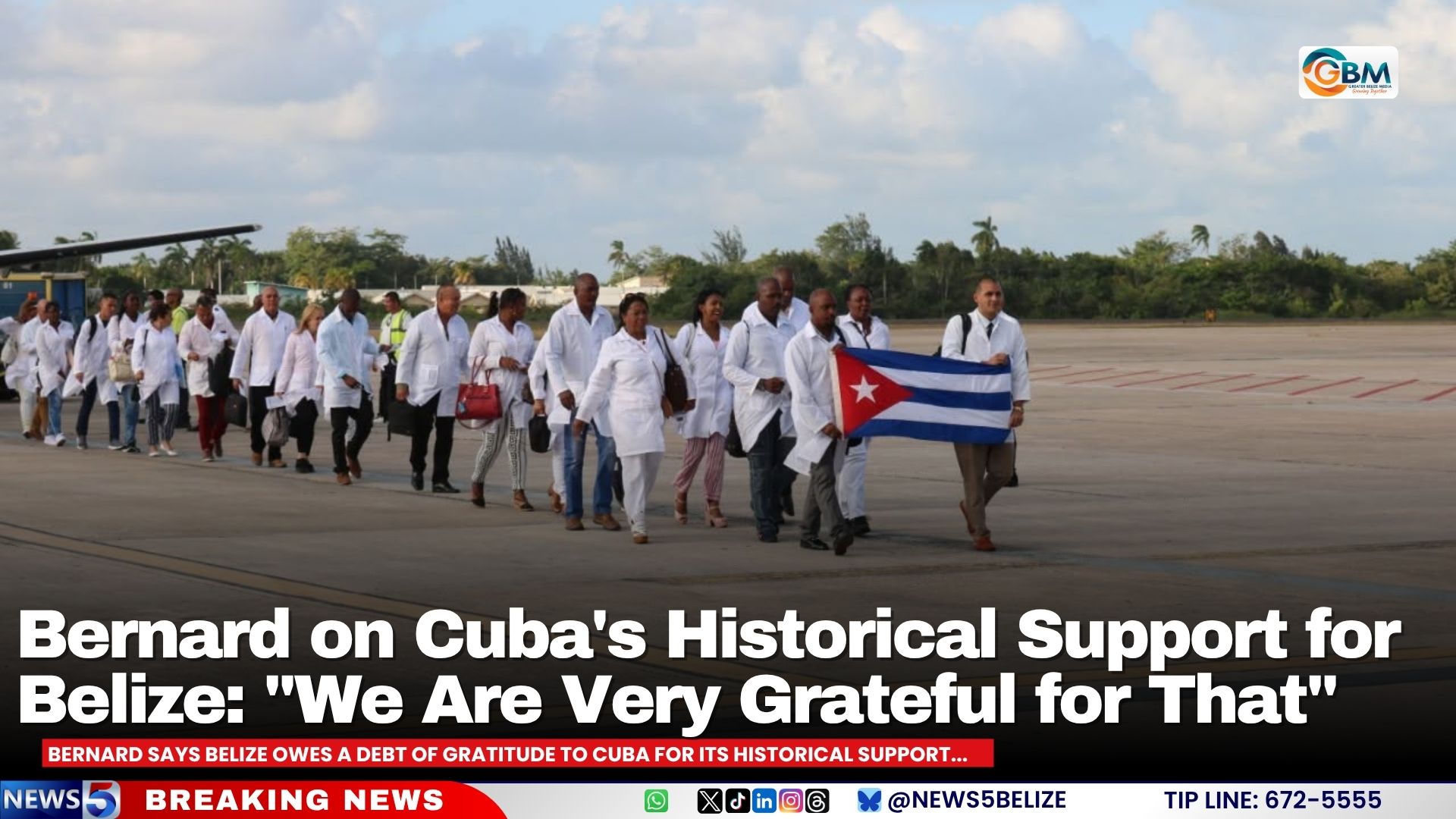
As Belize’s cabinet prepares to make a final decision on the future of the Cuban medical brigade operating within its borders this September, the country’s Minister of Health and Wellness Kevin Bernard has opened up about the complex balancing act the government faces: reconciling Cuba’s decades-long historical support for Belize with shifting global diplomatic pressures and the nation’s modern domestic priorities.
Speaking publicly on the issue, Bernard echoed the sentiments shared last week by former Belizean Prime Minister Said Musa, who emphasized that Cuba stood beside Belize during its fragile push for independence when most other nations remained on the sidelines. Bernard affirmed that this decades-long solidarity has left a lasting mark on bilateral ties between the two Caribbean nations. “Indeed, as the former Prime Minister did say, we have built a deep, enduring relationship with both the government and people of Cuba,” Bernard stated. “Through the most pivotal stage of our history, when Belize was working toward full sovereignty, they remained on our side. That support is something we will always be grateful for.”
Yet despite this debt of gratitude, Bernard made clear that the government’s final call will center first and foremost on the current interests of Belize and its people. He acknowledged that whatever decision the cabinet reaches may not align with popular political opinion, but argued that pragmatic, forward-looking action is non-negotiable.
“As a sovereign nation, we cannot allow historical ties to overshadow what is best for our citizens and our country today,” Bernard explained. “Tough choices are an inevitable part of governance, and this is one such moment. It may not win popular support in political circles, but given the current global geopolitical climate, we have to make tough, measured, realistic decisions that deliver tangible benefits to Belizeans. At the end of the day, protecting the welfare of our people is our core responsibility.”
The decision comes amid mounting external diplomatic pressure, most notably from the United States, which has leveled unsubstantiated forced labor allegations against Cuban medical international missions. When asked about this pressure, Bernard noted that Belize is working to navigate the competing interests at play to find a sustainable middle ground.
“We recognize and respect the position of the United States government, and we also value the support we have received from the U.S. and its people over the years,” Bernard said. “But the reality of our position is clear: we are caught between competing stances from global powers, and we have to steer this course with extreme care. Belize remains committed to finding a common ground solution that serves all our interests, and I believe we have already made significant progress toward that goal.”
The cabinet is scheduled to deliver its final ruling on the status of the Cuban medical brigade before the end of September, marking a pivotal moment for Belize’s public health system and its diplomatic positioning.