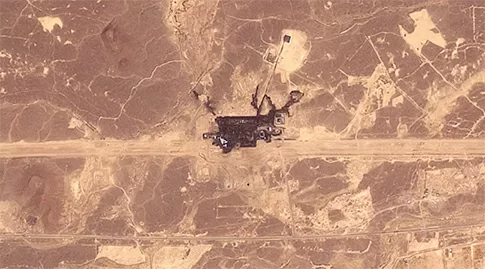
A dramatic escalation of regional unrest in the Middle East has sent shockwaves through global energy markets, after Saudi Arabia ordered an emergency temporary shutdown of its critical East-West crude oil pipeline on Saturday, triggered by a damaging drone attack.\n\nSpanning 1,200 kilometers across the Arabian Peninsula, the East-West pipeline serves as a linchpin of global oil exports from the Middle East, a role that has grown increasingly vital in recent months as the Strait of Hormuz, another key energy chokepoint, has been largely rendered unusable by ongoing regional conflict. Satellite imagery captured by Planet Labs PBC on September 11, 2026, shows visible damage to infrastructure along the pipeline’s route, located southeast of Medina. The assault left multiple casualties and destroyed multiple structures, including a local mosque in the Jazan region.\n\nBoth Baghdad and Riyadh have pinned responsibility for the attack on Iran-backed militias operating within Iraqi territory. In response to the security breach, Iraqi military officials have dismissed a senior regional military commander amid the fallout.\n\nThe pipeline shutdown has immediately disrupted global oil flows. The route carries 4 to 5 million barrels of crude daily, accounting for roughly 4% to 5% of total global oil supply. Saudi Arabia’s ability to maintain consistent export volumes is now under threat, piling unprecedented pressure on already tight energy markets worldwide.\n\nCompounding the crisis, Yemen’s Houthi rebels have expanded their military control over key Red Sea shipping lanes by seizing the strategic island of Perim, which sits at the heart of the Bab el-Mandeb Strait—commonly known as the “Gate of Tears,” another of the world’s most critical chokepoints for global oil trade. The capture significantly strengthens the Houthi’s ability to disrupt maritime traffic in the region.\n\nGrowing insecurity around major energy transit routes has already triggered sharp volatility in energy pricing. Global crude benchmarks have risen steeply over the past week, while diesel prices in the United States have surged to an all-time record, topping $6 per gallon.\n\nIn response to the expanding threat, Saudi Arabia has formally requested direct military support from the United States to counter Houthi advances. U.S. President Donald Trump confirmed he has held discussions with Saudi Crown Prince Mohammed bin Salman, but clarified that Washington will not deploy direct military intervention at this stage. Instead, the U.S. will provide intelligence sharing support to Riyadh. Separately, Houthi representatives confirmed they have reached out to the U.S. government to request that Washington avoid direct involvement in the conflict.
Saudi-Arabië sluit East-West pijpleiding na aanval; Houthi’s versterken controle over Rode Zee