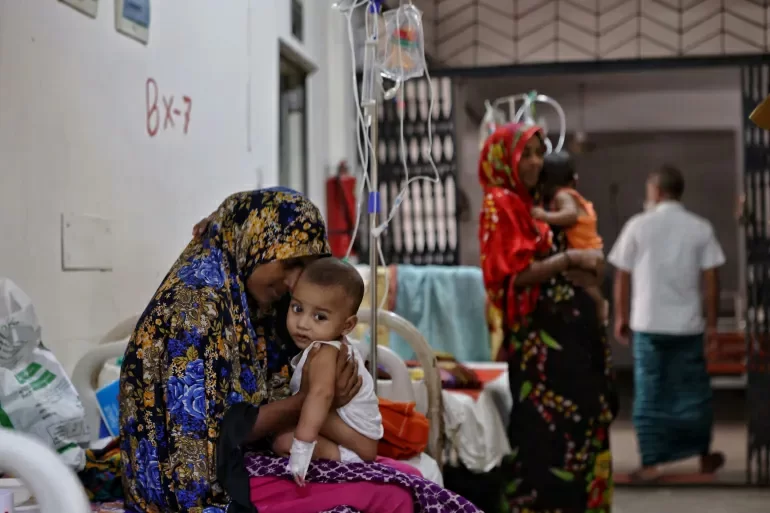
In a photograph captured at Dhaka’s Infectious Disease Hospital on September 9, 2026, 22-year-old Mariam holds her nine-month-old son Nayem, who is battling a measles infection, illustrating the human toll of a public health crisis that is currently unfolding across Bangladesh.
Bangladesh is now grappling with the most severe measles outbreak recorded globally, according to international health authorities. Official data from the country’s Directorate General of Health Services (DGHS) confirms that at least 1,002 children have died since the epidemic began spreading in March 2026, with a total of 187,484 confirmed measles cases registered to date.
Measles is an extremely contagious viral illness characterized by high fever and a distinct body rash, with no targeted antiviral treatment available. However, two doses of the measles vaccine provide highly effective protection against the disease. Children under five years old, most of whom have not yet completed their full vaccination schedule, face the highest risk of severe complications and death, accounting for more than 80% of early reported cases in this outbreak.
The U.S. Centers for Disease Control and Prevention (CDC) has officially classified this event as the largest measles epidemic currently active worldwide. Professor Mahmudur Rahman, former director of Dhaka’s Institute of Epidemiology, Disease Control and Research, described the situation as “unprecedented and extremely critical,” noting that the current death toll is higher than any previous measles outbreak recorded in the nation’s history.
Both the World Health Organization (WHO) and UNICEF attribute the crisis to major gaps in Bangladesh’s routine immunization program, which emerged during a period of political instability spanning 2024 and 2025, following the resignation of former prime minister Sheikh Hasina. Bangladesh’s Health Minister Sardar Husain confirmed that policy shifts related to vaccine procurement during that period led to widespread vaccine shortages across the country, leaving millions of children unprotected.
In response to the growing outbreak, authorities launched an emergency mass vaccination campaign in April that reached 18 million children. However, roughly 4 million children remained inaccessible and unvaccinated, leaving the population still vulnerable to continued spread. DGHS spokesperson Zahid Raihan acknowledged that the campaign failed to reach the herd immunity threshold needed to halt transmission, and that public health teams are still conducting outreach to find children who missed their doses. “While measles cannot be completely eradicated at this point, we will continue expanding vaccination access to bring down the number of deaths and infections,” Raihan stated.
Compounding the strain on Bangladesh’s already overburdened healthcare system, the measles outbreak is occurring alongside a simultaneous sharp surge in dengue fever cases. More than 45,000 people have already been hospitalized for dengue, and last Tuesday saw a new daily record for both new hospital admissions and dengue-related deaths across the country.