A decades-long fight for reparations for the transatlantic chattel slave trade has taken a groundbreaking new step, as CARICOM’s top ambassador has voiced full regional backing for Jamaica’s formal legal push against the United Kingdom, voicing confidence that the British Privy Council will formally rule that racialized chattel slavery was never lawful under historic English law.
As a constitutional monarchy that retains King Charles III as its official head of state, Jamaica has taken advantage of a unique constitutional provision to file a formal petition requesting the monarch refer three critical legal questions about slavery and British legal responsibility to the Judicial Committee of the Privy Council – the Caribbean nation’s highest appellate court. The three landmark questions cut to the core of the reparations debate: whether the mass seizure, forced transatlantic transport, and chattel enslavement of African people was ever legally valid under English law; whether these systematic abuses committed on Jamaican soil violated existing international law standards of the era; and whether the United Kingdom holds a binding legal obligation to provide reparative compensation to the people of Jamaica.
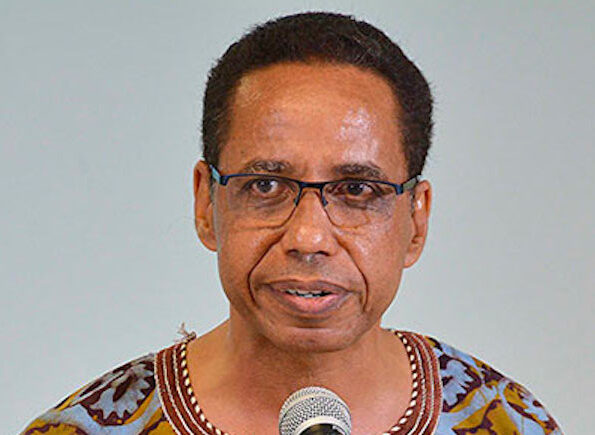
In an interview with Barbados TODAY Wednesday on the sidelines of the Barbados @ 60 Timeline launch held at Pelican Village, CARICOM Ambassador to the regional bloc David Comissiong made clear that Jamaica’s unprecedented action has the full solidarity and backing of all 15 CARICOM member states. “Jamaica’s presentation of this petition to King Charles III does not come as a surprise to us in CARICOM. In fact, CARICOM has given Jamaica its solidarity and support,” Comissiong confirmed.
The ambassador explained that Jamaican legal teams identified this little-used constitutional pathway specifically for current constitutional monarchies in the Caribbean, which allows petitions to be submitted directly to the reigning British monarch to request advisory opinions on core legal questions from the Privy Council. Comissiong noted that the question of slavery’s legal status under British law stands as the foundation of Jamaica’s entire legal push. “One of the questions they have placed is, was slavery legal under British law at the time that it was practised in the British Empire back in the 19th, 18th, 17th century,” he said.
Comissiong acknowledged that Jamaica’s strategy carries both advantages and limitations, particularly for CARICOM states that have already transitioned to republican status, such as Barbados. Former constitutional monarchies that have cut formal ties to the British crown no longer have access to this same constitutional legal avenue. For these republics, the core principle of the reparations movement centers on self-determination: achieving full sovereignty and national self-repair as a foundational form of reparative action. “For those of us who have become republics, we are conscious that a fundamental principle of reparations is the self-help, self-repair remedy of reappropriating your full nationhood, sovereignty, and self-determination,” he explained.
Even with these considerations, Comissiong emphasized that Jamaica’s petition could mark a turning point for the entire regional reparations movement that has been building for decades. “If the King responds positively, and if those three questions are put to the Privy Council, and if the Privy Council gives a positive answer, particularly in relation to that question about the illegality of slavery when it was practised, that will be a very big victory and a big step forward for our reparations cause,” he said.
The ambassador also offered a clear note of caution, stressing that even a favorable ruling affirming slavery’s illegality would not automatically result in tangible compensation for Jamaican people. “That by itself will not deliver reparations. It is one thing to declare that slavery was illegal back then, but it’s another thing to go from that to actually establish and win a judgment for actual payment of compensation,” he noted. Still, he reaffirmed that a formal ruling from the Privy Council would represent a transformative symbolic and legal victory for the movement. “I have no doubt that they will come to the conclusion that slavery, certainly the racialised chattel slavery that was inflicted on our ancestors, was never legal under the constitutional regime of Britain,” Comissiong said.
Looking ahead, the regional movement is preparing for a major gathering next month: Barbados will host a landmark CARICOM reparations conference from September 17 to 19, bringing together all strands of the global reparations movement to coordinate strategy. Comissiong explained that the conference will create a critical space to align the overlapping initiatives of CARICOM, the African Union, Ghana, and Jamaica to build a cohesive, collective strategy to advance the global reparations campaign forward. “This conference will give us an opportunity to pull together all the different strands of the reparations movement that have really come to the fore over the last year or so… plan the next [steps] collectively to take forward our reparations campaign,” he said.