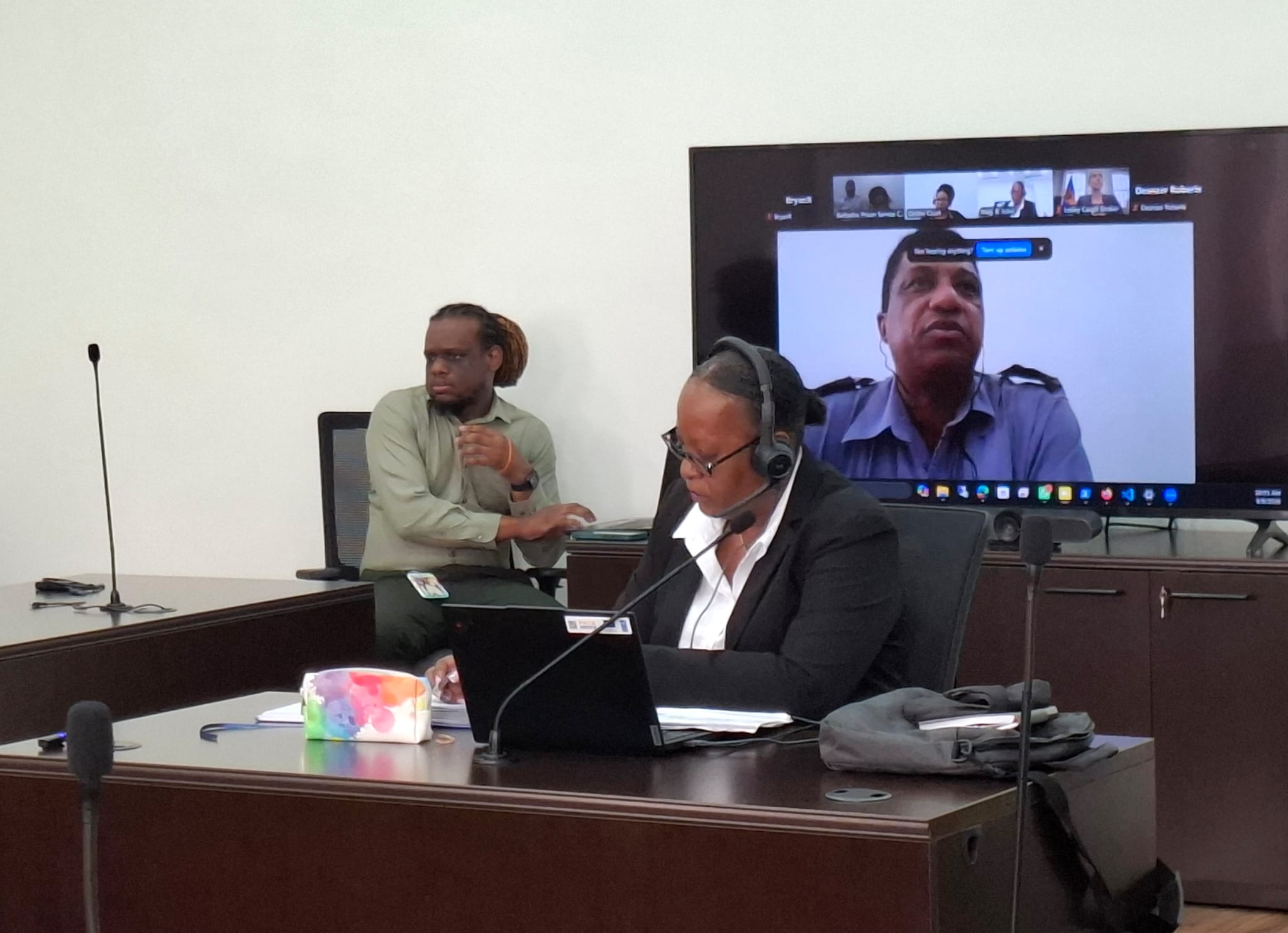
Barbados’ criminal justice system has marked a landmark shift into digital judging with the launch of permanent virtual court hearings at District ‘C’ Magistrates’ Court, a reform designed to tackle long-running case backlogs, simplify logistics for transporting remand prisoners and speed up routine proceedings before in-person court sessions begin each day.
The first official virtual session, held Tuesday, was hosted from the David Simmons and Henry Forde Legal and Judicial Complex on Coleridge Street, with Magistrate Bernadeth John presiding. Reporters invited to observe the inaugural hearing confirmed that all parties – the accused, his defense attorney and the prosecuting attorney – joined remotely via the digital platform without any technical disruptions.
Following the successful first session, Minister of Legal Affairs and Criminal Justice Michael Lashley described the rollout as a historic turning point for Barbados’ judiciary, framing digital integration as a critical solution to the system’s long-standing structural bottlenecks. Lashley emphasized that shifting routine, low-stakes matters to a virtual platform delivers widespread time and efficiency gains for every stakeholder in the legal process, most notably eliminating unnecessary security and logistical burdens associated with moving remand prisoners across the island.
“Why would we transport a prisoner who only needs a 28-day remand extension, with no disclosure or legal arguments required, just to get that new date set?” Lashley asked. “With virtual hearings, the entire proceeding can be completed remotely, the matter adjourned, and the date set without the need for in-person attendance. If a magistrate determines a submission needs to be held in person, that arrangement can still be made. This is an enormous step forward for making our court system far more efficient.”
District ‘C’ currently operates in shared physical space at the Oistins Magistrates’ Court, meaning all of its proceedings are forced to start no earlier than 12:30 p.m. each day, after Oistins’ daily sessions conclude. Under the new hybrid digital model, magistrates can clear up to 10 low-complexity, routine remand cases via virtual teleconference before in-person sessions begin each morning, directly cutting into the court’s chronic backlog.
While the virtual hearing program is currently operating under a temporary court practice direction, Lashley confirmed that legislative updates to the Magistrates’ Court Act are already in the works to formalize the reform. Lashley noted that limited virtual hearings were tested at the magistrate level during the COVID-19 pandemic, but this rollout represents the first permanent expansion of the system. Future plans include rolling out virtual hearings to other jurisdictions across the country, starting with District ‘A’, alongside upgrades to digital court reporting, transcription and digital evidence management.
Beyond operational efficiency, Lashley emphasized that the new digital system will advance core judicial principles of transparency and public access to justice. “Open court is central to access to justice, so I have no issue with the public receiving links to listen to proceedings,” he said. “We will also make links available to the families of remand prisoners so they can stay updated on their loved ones’ cases.”
Addressing common concerns around maintaining attorney-client privilege in remote proceedings, Lashley explained that the system already includes private breakout rooms for confidential consultations, mirroring the proven framework already used for virtual proceedings in Barbados’ High Court. For self-represented litigants who lack access to digital technology, as well as parties involved in complex trials that require physical document filing, all in-person accommodations will remain available, preserving access to justice for all groups.
Lesley Cargill-Straker, convenor of the Criminal Law Committee, echoed broad support for the reform, noting it will drastically streamline daily workflows for both legal practitioners and court administrative staff. Echoing the challenge of shared court space at District ‘C’, she noted that the ability to clear low-contentious remand matters in the morning will eliminate hours of wasted time for attorneys and defendants alike.
“We’re starting first with prisoners and individuals on remand who only need a new hearing date and simple case updates – no contentious matters – which cuts out so much unnecessary travel and waiting,” Cargill-Straker explained. She added that the inaugural session went smoothly for the remote defendant, who reported comfort with the process and was able to raise his concerns about file readiness, which the magistrate addressed promptly.
Cargill-Straker offered a measured update on public access rules, clarifying that while immediate access is already available to legal stakeholders, court staff and defendants’ families, formal guidelines for broader public distribution of virtual hearing links are still being finalized through judicial review. For cases that require physical documentation, affidavits, or in-person live testimony, hybrid arrangements will remain in place: all matters requiring physical attendance will be scheduled for the afternoon in-person sessions, ensuring the digital transition improves flexibility without compromising any elements of due process.
With expansion to other magistrate court districts planned in the coming weeks, judicial and government officials remain optimistic that this shift to a modern, digital judicial system will deliver long-term, widespread benefits for magistrates, defense counsel, defendants, and the Barbadian public.