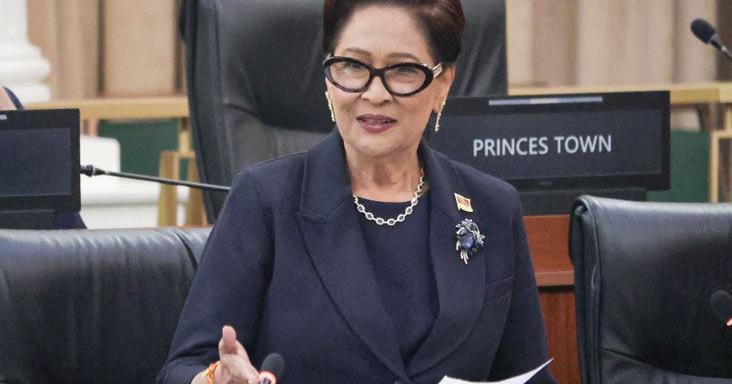
As Trinidad and Tobago prepared to welcome students back for the start of a new academic year on Monday, Prime Minister Kamla Persad-Bissessar delivered a sweeping back-to-school address that laid out strict new guidelines for addressing classroom disruption, placing clear accountability on both unruly students and disengaged parents. In her annual pre-term message released a day before classes kicked off, the Prime Minister laid out a clear mandate for school leaders and teaching staff: adopt a zero-tolerance stance toward disrespectful, disruptive behavior from students and confrontational interactions from parents, and remove uncooperative individuals from campus immediately rather than allowing them to derail learning for well-behaved peers.
Persad-Bissessar opened her remarks by acknowledging the heavy weight of responsibility carried by educators across the country, noting that effective teaching requires a rare combination of patience, authoritative leadership, and critical decision-making. She thanked teachers and principals for upholding academic standards while nurturing the next generation of Trinidad and Tobago citizens, but made clear that their well-being and ability to teach must take priority over accommodating those who refuse to engage constructively. “You are not there to be abused, intimidated, and harassed by any student or parent,” she emphasized. “If students refuse to behave properly and parents are ignoring your concerns, send them straight home and let them and their parents battle it out in their house.”
For cases involving threats or violent abuse against school staff, Persad-Bissessar instructed educators to contact the Trinidad and Tobago Police Service (TTPS) immediately, handing off disciplinary action to law enforcement for serious incidents. The Prime Minister stressed that teachers should be able to direct their full energy toward supporting and teaching students who come to school ready to learn, rather than expending emotional and professional capital on uncooperative parties.
Shifting focus to parental responsibilities, Persad-Bissessar pushed back against the common trend of caregivers shifting disciplinary and preparatory duties onto school staff, reminding parents that guiding a child’s behavior is a fundamental family obligation. “Do not dump your parental responsibilities onto teachers. That is your job. You made your children; it is not the teachers’ or anyone else’s responsibility to mind them,” she said. She urged parents to prioritize teaching core values of discipline, respect, and personal responsibility at home, maintain open lines of communication with educators, and actively monitor their children’s academic progress and social behavior. She also issued a stark warning about the long-term consequences of failing to guide children, noting that unaddressed bad behavior in school often leads to legal trouble later in life, leaving aging parents to navigate the justice system to secure bail for incarcerated adult children.
Addressing students directly, the Prime Minister urged the vast majority of young people to approach the new academic year with intention and focus, emphasizing that a strong education forms the foundation of long-term personal and professional success. She encouraged students to attend class consistently, respect school staff, take ownership of their learning, and embrace the opportunities of school to build friendships and skills that will last a lifetime. But she also called out the small minority of students who come to school to bully peers, disrupt classes, and disengage from learning, warning that these choices set students up for long-term hardship.
Persad-Bissessara pushed back against popular narratives that frame school failure as a minor setback with no long-term consequences, arguing that claims like “failing at school doesn’t end your life” are disingenuous. She noted that the people who share this glib reassurance with struggling students almost universally stress the importance of education to their own children and grandchildren. “These same persons, while publicly giving you that advice, are privately giving their own children and grandchildren the same warnings about a difficult future without an education as I am giving you today,” she said. She added that these same advocates will not step in to support students who leave school unqualified and struggle to secure stable, well-paying work, warning that life without an education often devolves into daily survival rather than a fulfilling, prosperous life. “There will always be difficult days in life, but a good education gives you many options to navigate difficulty and overcome challenges, to have a wonderful life,” she added.
In closing, Persad-Bissessar called on all three groups — students, parents, and educators — to make intentional choices that support their own long-term success and contribute to the future prosperity of Trinidad and Tobago. She ended her address with a message of spiritual guidance, saying, “May God guide and protect each of you and may you make the best decisions for a great future for yourself and the nation.”