Against a backdrop of mounting European Union pressure to phase out citizenship-by-investment (CBI) schemes across five Eastern Caribbean nations, a prominent former business leader in Dominica has emerged as a vocal defender of the country’s program, outlining its transformative economic and social impact over decades.
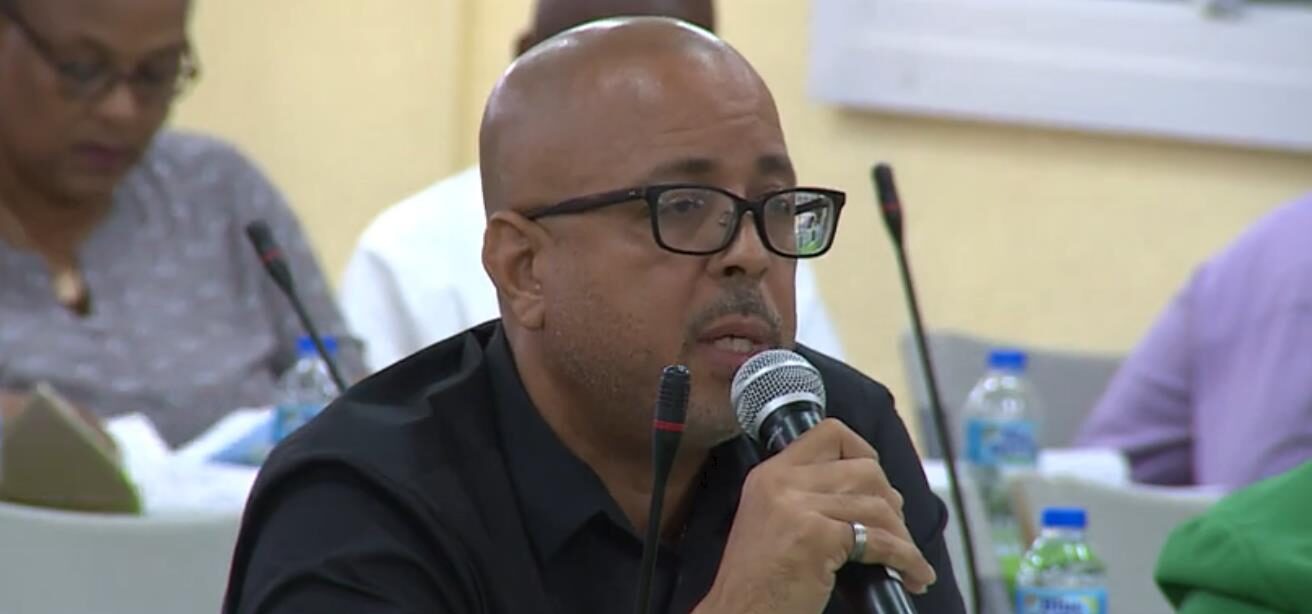
Kenny Green, a well-established local businessman and former president of the Dominica Association of Industry and Commerce (DAIC), made his case during a recent special discussion on DBS Radio, hosted by journalist Daryl Titre titled “CBI Then, Now, The Future, A Look at the Industry”. Green’s remarks center on the program’s pivotal role in pulling Dominica back from the brink of economic collapse following the catastrophic 2017 Hurricane Maria, and its ongoing contribution to large-scale national development.
When the Category 5 storm made landfall in September 2017, it leveled thousands of homes, shuttered businesses across the island, and destroyed critical public infrastructure, leaving the private sector all but decimated. Green, who led the DAIC in the aftermath of the disaster, recalled that the survival of local business relied entirely on consistent consumer spending from the country’s large public sector workforce. What made that continued spending possible, he explained, was steady salary disbursements to government employees – even for those unable to carry out their regular duties amid the widespread destruction. “Within six months, people were still getting salaries, even though many of them were at home, and they were able to function and consume. That is what brought the private sector back. People forget that,” Green emphasized. This sustained household purchasing power allowed shuttered businesses to gradually reopen and laid the foundation for Dominica’s broader economic recovery, he added.
Beyond post-disaster recovery, Green stressed that CBI revenue has granted Dominica unprecedented financial sovereignty, allowing the government to fund major infrastructure projects without taking on crippling levels of international debt that would burden future generations. Launched in 1993, Dominica’s CBI program grants citizenship to vetted foreign investors who either contribute to the national Economic Diversification Fund or purchase pre-approved real estate, with all applicants subjected to rigorous security and due diligence screenings.
Successive Dominican administrations have long credited CBI revenue for enabling progress across key public sectors, including climate-resilient affordable housing, tourism infrastructure, healthcare facilities, educational institutions, and renewable energy projects. Green pointed to a long roster of completed and ongoing developments to back up his claims: new housing developments, upgraded sports facilities, geothermal energy exploration, expanded tourism offerings, and the construction of a new international airport. He noted that the island’s cable-car tourism project is approaching completion, while the planned marina development is on track to move forward in 2025. Of all these projects, Green argued that the new international airport will stand as the ultimate testament to the CBI program’s long-term value, saying “The real project, what will deem our CBI a perennial success—will be the completion of the airport.”
When compared to CBI programs in other member states of the Organization of Eastern Caribbean States (OECS), Green argued that Dominica’s program has delivered uniquely visible, widespread benefits to local citizens. He clarified that this is not a criticism of other regional CBI initiatives, but noted that Dominica can point to an extensive portfolio of transformative national projects that directly improve quality of life for residents. “In terms of the housing component, investment in sports, geothermal, now the international airport and hotel development, would that not be an attractive thing to say, ‘Look, this is what this thing has been doing for us’?” he asked.
Green’s defense comes at a critical juncture, as Dominica and four other Eastern Caribbean countries – Antigua and Barbuda, Grenada, St Kitts and Nevis, and St Lucia – face escalating pressure from the European Union to wind down their CBI programs. The European Commission has demanded that these nations phase out their schemes by June 2028, threatening the loss of visa-free access to the Schengen Area if they refuse. The EU has cited concerns over security risks, gaps in applicant screening, and the lack of what it terms a “genuine link” between successful applicants and host countries. In response, Caribbean governments have already strengthened due diligence protocols and deepened regional cooperation to address these concerns.
Green acknowledged that regional governments now face a difficult policy choice: eliminate their CBI programs, or retain them and risk losing Schengen visa-free access. A key next step is the European Commission’s upcoming assessment under its Visa Suspension Mechanism, scheduled for December 2026, though this assessment does not automatically trigger an immediate termination of visa-free access.
Despite the external pressure, Green urged regional governments to continue making a strong case for their programs by presenting clear evidence of their development impact, while continuing to refine due diligence processes to uphold program integrity. For Dominica, Green argued that the CBI program is far more than just a revenue stream for the government: it provided critical economic stability during an unprecedented crisis, supported working families when they were most vulnerable, helped save the private sector from collapse, and allowed the country to pursue transformative infrastructure projects that would otherwise have required massive debt accumulation. To date, no Caribbean CBI program has been shut down under the EU’s proposal, and all affected nations still retain visa-free access to the Schengen Area.