An open essay from Gabriel J. Christian, Esquire, examining Dominica’s social and economic trajectory from the late 20th century to today, has triggered heated online debate, with critics labeling the piece as nostalgic, racist, and sympathetic to colonial British rule. Rejecting these uncredited attacks, Christian challenges his critics to stand behind their arguments by posting criticisms under their real names, rather than hiding behind anonymous online pseudonyms.
Christian acknowledges that the 1960s and 1970s were no golden age for Dominica: widespread poverty, underdeveloped infrastructure, limited access to education, and the lasting harm of colonial rule marked the era. But he argues that it is intellectually valid to examine historical data showing far stronger agricultural output and community institutional cohesion in those decades. Official economic records bear this out: banana exports hit 54,900 tons in 1969, and before the devastating hurricanes of 1979 and 1980, agriculture contributed nearly 40% of national GDP, accounted for more than 60% of total exports, and employed roughly 35% of the country’s workforce. Driven by strong agricultural and manufacturing performance, real GDP growth hit 11% in 1978, a figure that has rarely been matched in subsequent decades. Christian stresses that acknowledging these historical facts does not require glorifying colonialism; it is possible to condemn colonial exploitation while celebrating the work ethic and community spirit of previous generations of Dominican people.
Today, Christian argues, Dominica’s economy has shifted dramatically from one built on tangible production of goods and services to one overly dependent on its Citizenship by Investment (CBI) program. Data from the International Monetary Fund (IMF) puts 2024 CBI revenues at approximately EC$670.5 million, equal to 34.7% of the country’s total GDP. Christian does not reject the CBI program out of hand: he notes that when managed transparently and invested in core public priorities such as infrastructure, education, agricultural development, industrial growth, and climate resilience, CBI revenue can deliver meaningful support for national development. The risk, he warns, emerges when the program becomes a replacement for long-term, broad-based development, rather than a tool to enable it. A passport itself cannot plant crops, manufacture goods, teach students, maintain critical infrastructure, or build a national culture of productivity, Christian argues. While CBI revenue can finance these goals, only capable public institutions and an engaged, skilled citizenry can turn financing into tangible, lasting progress.
The IMF has repeatedly called for greater transparency and accountability around CBI revenue flows, associated investments, and held escrow accounts. While gaps in transparency do not prove illegal activity, Christian says they create an urgent public need for full disclosure. The Dominican public has a right to know how much CBI revenue has been collected, where those funds have been allocated, how much has been paid in commissions, which public and private projects have been financed, who owns assets generated through CBI investment, and that independent third-party audits have verified all financial figures. These are not partisan opposition talking points, Christian emphasizes: they are basic questions that any citizen has a right to ask.
Christian points to a bitter irony that underscores the current moment: while Caribbean nations have a legitimate, well-founded case for reparatory justice for the harms of chattel slavery and colonial rule, it is embarrassing that independent Dominica now faces pressure from Western powers including Britain, the European Union, and the United States over transparency, security, and accountability in its citizenship sales program. In 2023, Britain revoked visa-free travel access for Dominican citizens, citing unresolved security concerns linked to the CBI program. Dominicans fought hard for self-governance, Christian notes, and that victory comes with the obligation to govern responsibly. True independence means protecting the nation’s natural and cultural patrimony, guarding public funds, and planning for long-term progress beyond the next election cycle. Incompetent governance cannot be the answer to the harm of colonialism, and self-exploitation of national assets cannot be the solution to historical exploitation.
Beyond policy failures, Christian argues that Dominica faces a deeper crisis of civic participation and active citizenship. Social media has created a culture of passive spectatorship: platforms turn every user into a commentator, but there is a stark gap between online criticism and offline action. Social media serves a valuable role in exposing wrongdoing and connecting communities, but a Facebook page is not a civic organization, a viral WhatsApp thread is not a development plan, a thousand likes do not fund a student scholarship, and sharing a post does not contribute personal time, expertise, or resources to solving community problems. A republic cannot be built by spectators, Christian stresses.
In past eras, Dominica had a strong culture of collective participation: teachers, farmers, nurses, civil servants, and young people regularly joined community organizations, villagers collaborated to maintain shared farmland, support local schools, and assist neighbors in need, and cooperative institutions such as credit unions built collective economic power. Christian says it is time to recover that lost spirit. Instead of centering the question of “What can I get from my citizenship?” citizens should reframe their thinking around “What can I build for my country?” Rather than waiting for others to support children in need, citizens should contribute time to tutoring. Instead of only demanding better leadership, people should step forward to serve on community boards, local associations, cooperative groups, school governance bodies, and neighborhood organizations. That is what true civic engagement looks like.
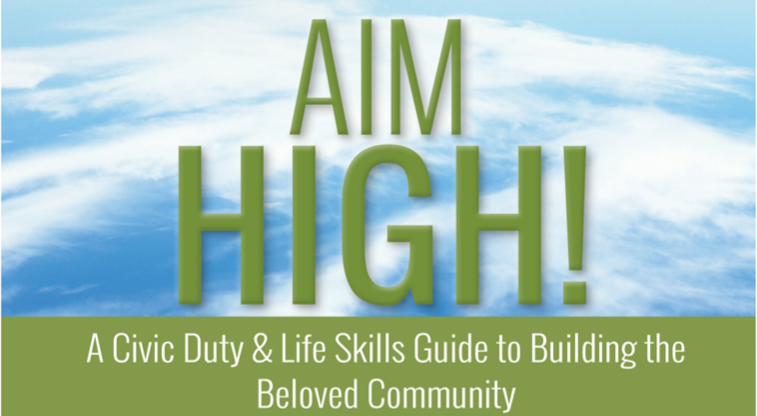
This call for renewed civic action is the motivation behind Christian’s law office publishing the free public resource “Aim High – A Civic Leadership Guide” in 2025, distributed for free across the country as a public service. The guide is a follow-up to the 2005 Dominica Cadet Corps Civic Leadership Handbook, which Christian produced as a gift to the national cadet corps, and both resources are being shared widely with Dominican communities at home and abroad. Christian notes that a trip home only for festivals and celebrations is not enough to meet the obligations of citizenship, given the declining state of community development and the erosion of the traditional Koudmen cooperative spirit that built the most unselfish, caring foundations of Dominican national culture.
The biggest barrier to progress, Christian argues, is a growing culture of selfishness. It is easy for Dominican diaspora members to criticize the country from overseas, but it is far harder to organize scholarship programs, mentor young students, invest in productive local enterprises, support smallholder farmers, fund public libraries, contribute professional expertise, or return home to work and teach. The education, success, and global access that many Dominicans achieve carry with them inherent obligations to give back: a lawyer should work to strengthen the rule of law, an engineer should contribute to building national infrastructure, a doctor should heal community members, a teacher should educate the next generation, and an entrepreneur should create local jobs and opportunity. Without this commitment to collective good, personal success becomes nothing more than empty personal decoration, Christian says.
To build a prosperous future, Christian argues, Dominica must return to a focus on tangible production, leveraging its natural advantages with modern science and technology. Agriculture can be transformed through adoption of drone monitoring, expanded irrigation, protected greenhouse production, hydroponic techniques, local food processing, cold storage infrastructure, cooperative farmer networks, and development of climate-resilient crop varieties. Local manufacturing can grow to include agro-processing, production of essential oils, high-quality furniture, specialty food products, digital fabrication, and manufacturing of renewable energy equipment. Education systems must be redesigned to connect learning to production, with students gaining hands-on experience in agriculture, engineering, coding, entrepreneurship, civics, and financial literacy. Technical vocational education deserves equal status and investment alongside academic pathways, Christian argues.
Christian points to existing successful projects that prove this model works. The Rebuild Dominica partnership with the University of Maryland Eastern Shore and Dominica State College, formalized via a memorandum of understanding, has already delivered tangible results. The collaboration brought food preservation scientists Dr. Nando from Kenya and Dr. Patel from India to the Dominica Grammar School Home Economics Center, where they worked with Principal Alicia Christian to teach local smallholder farmers modern mango canning techniques. The Mafala breadfruit project, developed in partnership with Dr. Julius Garvey, has also helped farmers develop value-added breadfruit products. One participating farmer, Adrien Augustus Bannis, has even created packaged dried breadfruit chips that match the quality and professional packaging of similar products sold in the United States and global markets. These examples prove that Dominica does not lack talent, creativity, or productive potential, Christian says: what is missing is sustained collaboration, targeted investment, access to advanced technical knowledge, and the collective will to move from ideas to implementation.
Christian also highlights the decades-long work of the late Dr. Clayton Shillingford, president of the diaspora-founded and diaspora-funded Dominica Academy of Arts and Sciences. Over 15 years of operation, the organization has raised approximately EC$14 million in cash and in-kind contributions to support development across Dominica. He also salutes the group of Dominican lawyers, engineers, working professionals, and labor organizers who gathered in Brooklyn, New York, on December 7, 2001, to organize the first ever Dominica Diaspora in the Development Process Symposium. Twenty-five years later, many of those founding organizers are now in their 50s, 60s, and even 70s approaching retirement, and Christian says their sacrifice and commitment to uniting the diaspora for national development should inspire a new generation to move beyond caustic online criticism and commit to tangible community work.
“Our little republic must not descend into chaos and crime because too few people are willing to leave the spectators’ gallery and offer noble service to the island we love,” Christian writes. “Great nations were built by great people who showed themselves noble and brave by committing themselves to the common good. No one is coming to save us. We can do it if we try. Let us do it.”
Christian also stresses that the nation is not equivalent to any government, opposition party, or political faction: the people are the nation. Citizens should support governments when they act correctly, and oppose them when they act incorrectly, judging each policy and party on its own merits. Democracy dies when partisan loyalty becomes more important than truth, and development suffers when citizens are excluded from opportunity for political reasons. With a country as small as Dominica, wasting the talent and energy of half the population after every change in government is an unacceptable luxury, he argues.
Christian clarifies that he is not calling for a return to the 1960s: instead, he wants to combine the best strengths of that era – strong community spirit, collective discipline, intergenerational agricultural knowledge, and a culture of cooperation – with modern science, cutting-edge technology, and global professional expertise. True citizenship means far more than holding a passport, he argues: it requires stewardship of national assets, personal responsibility, moral courage, and generosity to future generations. No government, outside investor, CBI program, or social media platform can create this kind of engaged citizenry. These values must be nurtured in families, schools, churches, civic organizations, professional associations, sports clubs, cooperative groups, villages, and individual consciences.
Dominica will not be rebuilt by nostalgia, empty slogans, or social media activism alone. It will be rebuilt when citizens organize, invest in the next generation, demand full transparency from public officials, restore productive domestic enterprise, and embrace the core duty of free citizenship: to leave the country better than we found it. That is the vision of Dominica worth remembering, fighting for, and building together, Christian concludes.