Santo Domingo, Dominican Republic – As remittances from Dominicans living overseas solidify their position as one of the country’s top sources of foreign currency, a leading economist from the main opposition party is pushing for a fundamental rethink of how the nation engages with its global diaspora.
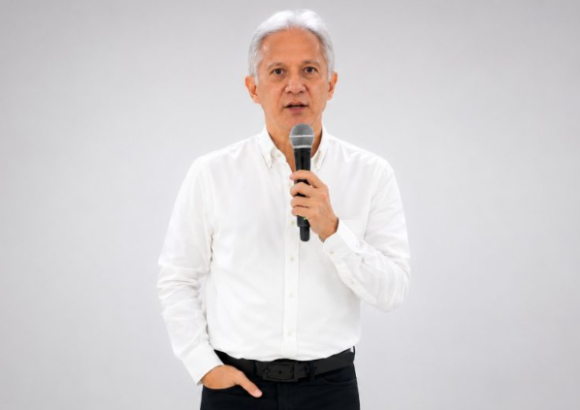
Haivanjoe Ng Cortiñas, Secretary of Economic Affairs for the People’s Force (FP) party, laid out his argument during a virtual public lecture hosted by the party’s Secretariat of Dominicans Abroad, an outreach and training arm of FP for its international membership currently led by Marco Cross. Titled “Remittances and the Dominican Diaspora: From the Importance of Remittances to a Policy of Reciprocity, Investment and Return,” the talk broke down the rapid growth of remittance flows, their far-reaching economic footprint, and the need for policy to evolve alongside shifting economic realities.
Drawing on aggregated data including figures from the Institute of Dominicans Abroad (INDEX), Ng Cortiñas highlighted the dramatic expansion of remittances over 15 years: inflows jumped from just US$3.68 billion in 2010 to a projected US$11.87 billion in 2025, representing a more than threefold increase over the period. By 2025, he noted, remittances make up roughly 25.1% of the Dominican Republic’s total foreign exchange earnings and account for 9.3% of the country’s entire gross domestic product.
INDEX data estimates that 3.03 million Dominicans currently reside outside the country, a diaspora community that Ng Cortiñas emphasized is far more than just a collection of statistics. Behind every remittance transfer, he explained, is a Dominican worker living abroad sending hard-earned income to support family members back home, a human element that is often overlooked in macroeconomic analysis.
The economist attributes the sustained growth of remittance inflows first and foremost to the tireless work and commitment of the Dominican diaspora, rather than any successful government economic policies. He also underscored how the role of remittances has shifted dramatically over the decades: what was once seen as a small supplementary source of household income for Dominican families has now become a core structural pillar of the country’s external economy.
Ng Cortiñas’ analysis also uncovered notable geographic and seasonal shifts in remittance distribution across the country. He pointed out that the share of total remittances flowing to the National District surged from 26% in 2011 to nearly half (49.7%) of all inflows between January and July 2026. Over the same period, other major provinces including Santiago, Santo Domingo, Duarte, and La Vega all recorded declines in their share of total remittances. Seasonally, he added, December consistently accounts for more than 9% of annual remittance volumes, a trend driven by diaspora members increasing their financial support to family during the Christmas holiday season.
Beyond the numbers, Ng Cortiñas argued that the large size of the Dominican diaspora should spark a urgent national conversation about why the country has not been able to generate enough economic opportunity for its citizens at home to reduce outward migration. He called on the government to move far beyond its current narrow policy approach, which only focuses on simplifying the process of sending remittances into the country. Instead, he said, policymakers must recognize the full value of Dominicans abroad as a critical source of human talent, financial capital, entrepreneurial expertise, and civic engagement for the nation.
To implement this new approach, Ng Cortiñas put forward a series of concrete policy proposals. These include the creation of a Special Investment Regime for the Diaspora, a dedicated investment and savings account product for Dominicans living overseas, targeted tax and regulatory incentives to encourage diaspora members to invest and repatriate capital to the Dominican Republic, and a National Pact with the Dominican Diaspora centered on expanding rights for overseas Dominicans, supporting investment, facilitating knowledge transfer, encouraging return migration, and expanding consular protection.
In closing his remarks, Ng Cortiñas summed up the core tension at the heart of his proposal: “Remittances are a strength of the Dominican Republic; depending on them to sustain our development would be a weakness.”