After years of stalled diplomatic and technical engagement, Trinidad and Tobago and Venezuela have taken a landmark step to reset their bilateral relationship, announcing the establishment of a joint commission designed to break long-standing inertia and advance collaborative work on issues of shared importance to both nations.
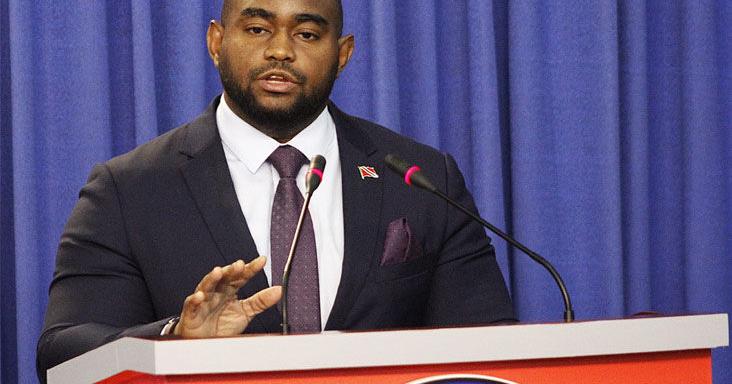
Trinidad and Tobago’s Minister of Foreign and Caricom Affairs, Sean Sobers, outlined in a recent telephone interview with local outlet *Express* that the new body’s technical working group will enable both governments to map out priority action items and deliver tangible outcomes aligned with the needs of their respective populations. According to Sobers, the joint commission will address cross-ministerial issues that have remained unresolved and untouched for years, long before the current United National Congress (UNC) administration took office last year.
Public servants from the recent Trinidad and Tobago delegation to Caracas, including Permanent Secretary and head of the country’s Foreign Service Randall Karim, have already initiated outreach to their Venezuelan counterparts to complete the foundational technical work required to launch the commission and bring it into full operation. “We will work it out; what we prioritise will be actioned and we will get the work done, and I am certain that both countries are poised for huge progress on several varying fronts,” Sobers said of the initiative.
In addition to the joint commission announcement, the bilateral talks yielded mutual reciprocal visit invitations: Sobers confirmed that Trinidad and Tobago has extended an official invitation to Venezuela’s Minister of People’s Power for Foreign Affairs and Foreign Trade Felix Plasencia to visit the twin-island nation, while Plasencia has extended a corresponding invitation for Trinidad and Tobago’s government ministers and officials to travel to Venezuela for further in-depth bilateral negotiations.
Sobers praised the warm and extraordinary hospitality extended to the Trinidad and Tobago delegation during its Caracas visit. Upon arrival in the Venezuelan capital, the delegation was greeted by Raul Li Castro, Venezuela’s Vice-Minister of Foreign Affairs for Latin America and the Caribbean, alongside other senior government officials. The delegation then proceeded to “Casa Maria”, the headquarters of Venezuela’s Ministry of Foreign Affairs and Foreign Trade, where Sobers and Plasencia held more than five hours of extensive substantive talks, running from 11 a.m. to 4 p.m.
Sobers emphasized that the wide range of topics covered during the talks had been dormant for years, predating the UNC administration that took office in 2025. Aligning with the joint official statement released by both nations’ foreign ministries last Thursday, Sobers confirmed that the two countries are now formally charting a new era of cooperative relations.
He pushed back against criticism from opposition lawmakers from the People’s National Movement (PNM), who he claimed have sought to undermine the current administration’s diplomatic efforts, saying the government would not be distracted by opposition noise and disruption. He also warned the public to guard against fake news and misinformation that may be spread by the opposition, stressing that “This team is going to get Trinidad and Tobago and Venezuela working again to deal with all the issues for the benefit for all our peoples.”
During the talks, Venezuelan officials also formally thanked Trinidad and Tobago for the critical humanitarian assistance it provided following the devastating earthquake that claimed the lives of more than 6,000 people in Venezuela. On behalf of Trinidad and Tobago Prime Minister Kamla Persad-Bissessar, Sobers assured Plasencia that the country remains ready to provide emergency assistance whenever and wherever it is needed in the future.
Sobers also addressed opposition questions over why he, rather than the Minister of Energy or Minister of Trade, led the diplomatic mission to Venezuela, responding bluntly: “Don’t blame me if my leader has confidence in me.” He defended the role of the Ministry of Foreign Affairs, noting that in any national government, the foreign ministry holds a core responsibility to maintain expertise on issues that cut across all cabinet portfolios, especially when those issues intersect with the country’s international relations.
He went on to criticize the diplomatic approach of the previous PNM administration, arguing that it failed to follow proper diplomatic protocols and concentrated key diplomatic engagements exclusively among a small group of senior government officials rather than routing negotiations through the formal, established structure of the Ministry of Foreign Affairs. “That was the kind of upside-down approach that existed before over a near decade. You had Stuart Young and (Dr Keith) Rowley being the ones to go out there and having discussions, so you had a situation where a lot of things would have happened in silos and vacuums and people don’t know about it,” he explained.